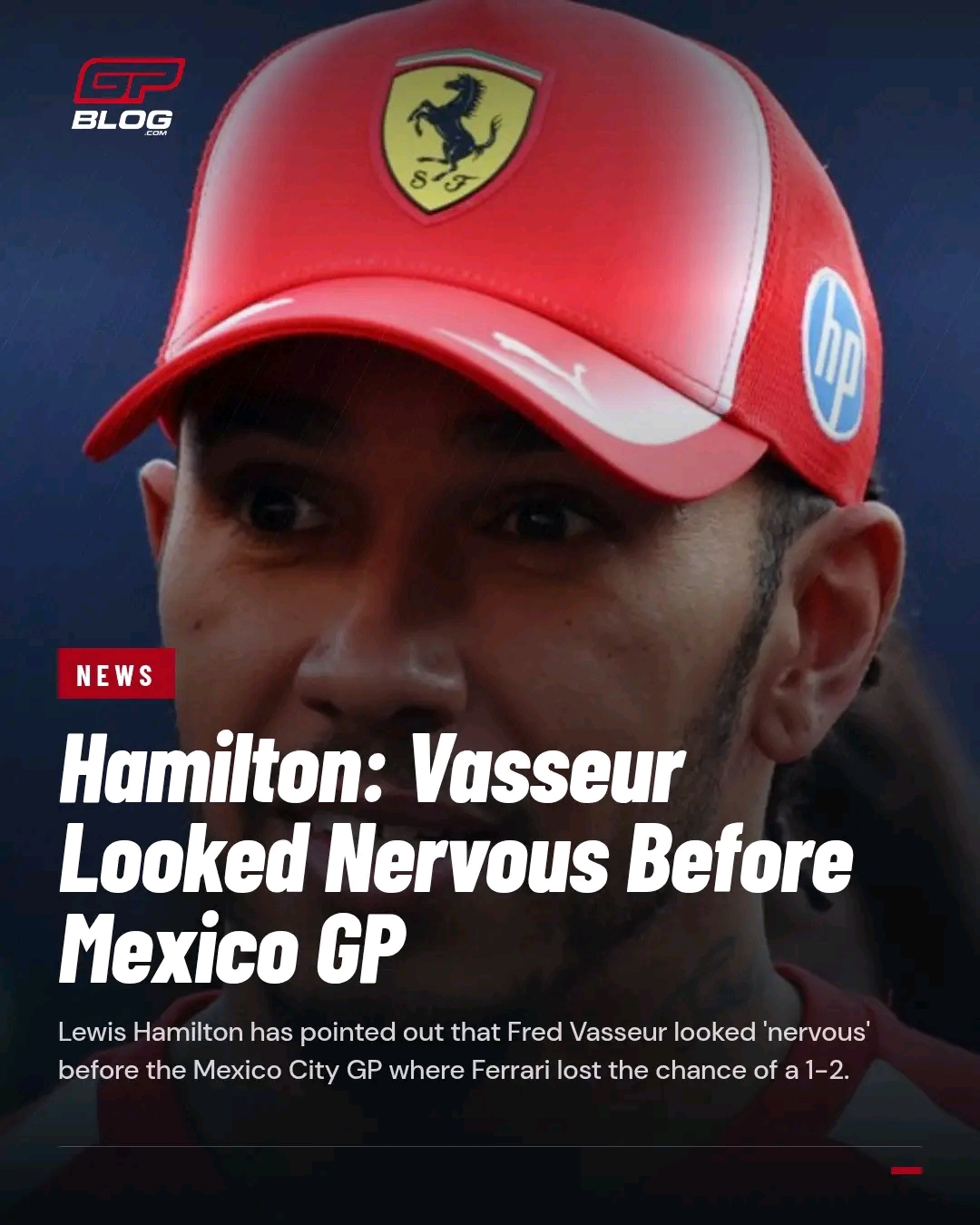
Lewis Hamilton did not hold back after the Mexican Grand Prix. The seven-time world champion revealed that Ferrari team principal Fred Vasseur appeared nervous when he approached him before the race, then delivered a clear-eyed assessment of how the Scuderia is handling the intense internal battle with Charles Leclerc. The comments cut deeper than simple post-race frustration. They highlighted a structural issue that cost Ferrari a realistic shot at a one-two finish and raised bigger questions about leadership, accountability, and the culture inside Maranello.
In Mexico City, Hamilton started from pole. Leclerc lined up third. What should have been a strong team platform quickly turned into a self-inflicted wound. The pair contested the opening corners aggressively. Both ran wide at Turn 4. Leclerc emerged ahead after cutting across, later receiving a five-second penalty. Max Verstappen slipped through the chaos, took the lead, and never looked back. Hamilton recovered to second. Leclerc finished fourth. A potential Ferrari 1-2 became a distant memory.
WHAT HAMILTON ACTUALLY SAID ABOUT VASSEUR AND THE RIVALRY
Asked how Ferrari’s approach compared to the way Mercedes once managed his battles with Nico Rosberg, Hamilton was measured but pointed. He acknowledged far worse moments during his time at Mercedes, yet noted that those situations were handled effectively. Of Vasseur he said the Frenchman is “doing his best.” Then came the revealing detail: Vasseur had come to speak with him before the race and “I think he was nervous.” Hamilton added that of course the team principal wants both drivers to succeed.
The implication was clear. Pre-race conversations alone are not enough when clear rules of engagement are missing. Hamilton stressed that if a driver arrives from behind, takes excessive risk, and the team ultimately loses out, that driver should have to answer for the impact on hundreds of people working behind the scenes. In his view the opening-lap scrap was unnecessary once he was already ahead. The absence of firm internal guidelines left both men free to prioritise personal position over collective result.
WHY THIS MATTERS FOR FERRARI RIGHT NOW
Ferrari has shown genuine progress with the car in recent events. Qualifying strength and race pace have improved. Mexico offered the clearest chance yet to convert that progress into a dominant result. Instead the team watched Verstappen capitalise on internal conflict. Points were left on the table at a stage of the season when every result carries weight for constructors’ standings and driver momentum.
The episode also lands at a delicate moment in the Hamilton-Leclerc dynamic. Two highly competitive drivers with different temperaments and career timelines share the same garage. Hamilton, at this stage of his career, brings championship experience and a clear preference for structured teamwork when the team’s interests are at stake. Leclerc continues to race with the intensity of a driver still chasing his first title. Without agreed boundaries, those differences produce exactly the kind of opening-lap incident seen in Mexico.
Vasseur’s public reaction underlined the seriousness. He spoke of a lack of respect for the brand, the sponsors, and the two thousand people in Maranello who work nights and weekends to deliver upgrades. His frustration was real. Yet Hamilton’s observation about pre-race nerves suggests the team principal is still searching for the right method to keep two alpha drivers aligned without extinguishing the competitive fire that has helped the car move forward.
THE BROADER IMPACT ON DRIVERS, TEAM, AND THE SPORT
For the drivers the fallout is personal as well as professional. Hamilton’s radio messages during the race and his post-race demeanour showed genuine anger. Leclerc has maintained that both men were racing hard and that the track layout invites these grey-area moments. Neither will want the story to dominate the next few races. Prolonged tension risks affecting focus, communication on the pit wall, and the psychological edge required at this level.
For Ferrari the stakes are higher still. The team has invested heavily in bringing Hamilton into the fold alongside Leclerc. Success depends on extracting the maximum from both without the kind of mutual destruction that defined some past pairings. Other leading teams have developed clearer protocols for intra-team racing precisely to avoid these situations. Ferrari’s apparent reluctance to impose formal rules of engagement is now under scrutiny.
Across the wider Formula 1 paddock the episode reinforces a familiar truth. Talent alone does not win championships. Culture, clarity of hierarchy, and the ability to manage ego under pressure separate the best organisations from the rest. When a team with genuine race-winning pace gifts opportunities to rivals through internal friction, the message travels quickly through the grid and the media.
WHAT COMES NEXT AND WHY THE STORY WILL LINGER
Vasseur has already indicated he will speak with both drivers. The Brazilian Grand Prix arrives quickly, offering little time for wounds to heal or new frameworks to bed in. Hamilton has called for serious talks behind closed doors. Whether those conversations produce tangible changes in how the pair are instructed to race each other will shape the remainder of the season.
The unique insight here is that Hamilton’s comments were not merely emotional. They reflected a veteran’s understanding of how high-performance environments function. Pre-race nerves from the team principal signal that the current approach is reactive rather than proactive. Until Ferrari installs clearer expectations and consistent accountability, the risk of another Mexico-style self-harm remains. For a team finally showing competitive progress, that is an unnecessary and costly vulnerability.
Hamilton’s blunt assessment has put the issue on the record. How Ferrari responds will determine whether this remains an isolated flashpoint or becomes a defining narrative of the 2026 campaign.