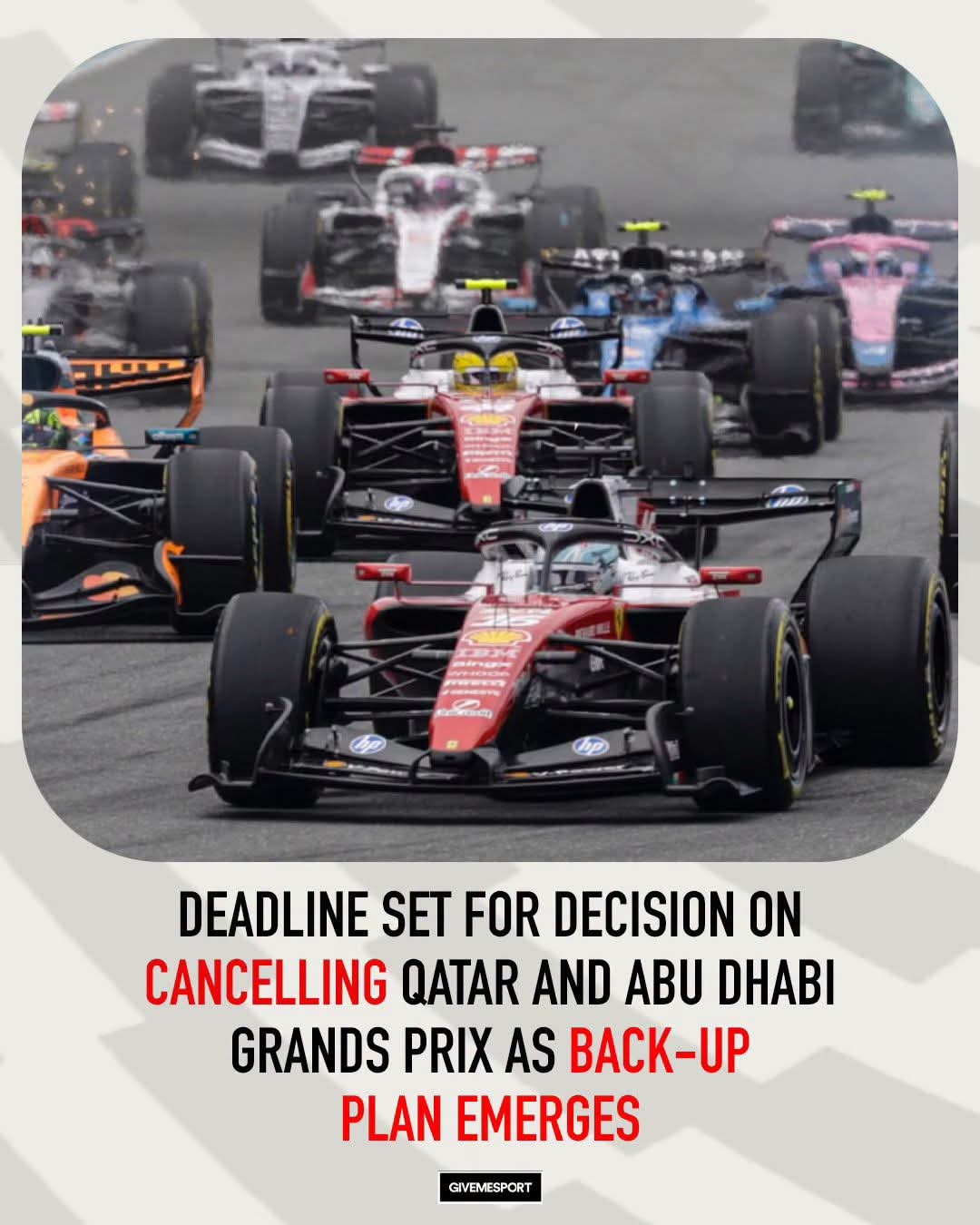
Formula 1 could be heading towards another major calendar shake-up, with a November 9 deadline reportedly set for a decision on whether Imola will replace the Qatar Grand Prix and Abu Dhabi Grand Prix as the 2026 season approaches its conclusion.
Uncertainty surrounds the final two races scheduled for November 29 and December 6, respectively, amid concerns about safety linked to the ongoing conflict in the Middle East. According to reports cited by GiveMeSport and GPblog, Imola has emerged as a potential alternative, with preparations reportedly already being considered behind the scenes. However, no official cancellation or replacement has been confirmed.
The situation has created a difficult balancing act for Formula 1 and the FIA. Organisers must consider the safety of drivers, team personnel, officials and spectators while also managing the commercial and logistical consequences of changing the calendar so late in the season.
IMOLA EMERGES AS A POTENTIAL RESCUE PLAN
The Autodromo Enzo e Dino Ferrari in Imola has reportedly been identified as a possible venue if the races in Qatar and Abu Dhabi cannot proceed. The Italian circuit has considerable experience hosting Formula 1 events and could offer a familiar alternative for teams already preparing for the final stages of the championship.
According to the report, November 9 is the deadline for Imola to learn whether it will be required to host a replacement race. The report also claims that teams have already booked accommodation in the Italian region, suggesting that contingency planning may have progressed beyond initial discussions.
Nevertheless, hotel bookings and reported preparations do not guarantee that Imola will be selected. Formula 1 would still need to confirm the final arrangements, including scheduling, operational requirements and the commercial implications of any changes.
If the Italian circuit is brought back onto the calendar, it could provide a practical solution to a complicated situation. But the decision would depend on whether the existing races can safely proceed and whether a replacement event can be organised within the available timeframe.
WHY QATAR AND ABU DHABI ARE UNDER SCRUTINY
The uncertainty follows the earlier cancellation of the Bahrain and Saudi Arabian Grands Prix because of the conflict in the Middle East. According to the supplied report, Malaysia subsequently stepped in to host the Bahrain Grand Prix, demonstrating how quickly Formula 1’s calendar can change when circumstances demand it.
Qatar and Abu Dhabi are now facing similar questions, although the FIA has publicly expressed confidence that both events can proceed as planned.
The stakes are significant. A late cancellation would affect not only the championship schedule but also teams, broadcasters, event organisers, sponsors, hospitality providers and fans who have already made travel arrangements.
Formula 1 must also consider the practical challenge of relocating a race with only a short period remaining before the scheduled event. Transporting cars and equipment, arranging accommodation and securing the necessary infrastructure would require rapid coordination across the championship.
FIA PRESIDENT INSISTS THE RACES WILL GO AHEAD
FIA president Mohammed Ben Sulayem has reportedly maintained that the Qatar and Abu Dhabi Grands Prix are expected to take place as scheduled.
In comments cited by GPblog, Ben Sulayem stressed that the governing body would not knowingly put personnel, drivers or officials in danger. He also said the situation on the ground could differ from the impression created by media coverage, while acknowledging that nobody could predict what might happen in the future.
His comments suggest that the FIA is continuing to assess the situation rather than treating cancellation as inevitable. At the same time, the president’s assurances do not eliminate the possibility of a change if circumstances deteriorate.
Ultimately, the decision will depend on the available safety assessments and the conditions closer to the events. Formula 1’s priority must remain the welfare of everyone involved, regardless of the financial consequences of a cancellation.
FINANCIAL PRESSURE ADDS TO FORMULA 1’S DILEMMA
The potential loss of two major events would carry substantial commercial consequences. Middle Eastern races are important parts of Formula 1’s international calendar, and cancellations could affect race-hosting revenue, sponsorship agreements, broadcasting plans and other commercial commitments.
Those financial considerations help explain why organisers may prefer to preserve the existing schedule if it can be done safely. However, commercial interests cannot replace the need for a clear assessment of the risks facing teams and spectators.
A replacement race at Imola could help Formula 1 maintain a full conclusion to the season, but it would also involve costs and logistical complications. The championship would need to weigh those challenges against the consequences of cancelling the final events altogether.
WHAT HAPPENS NEXT FOR THE 2026 F1 SEASON?
For now, the Mexican Grand Prix remains the immediate focus as the championship enters its final stretch. The races in Brazil and Las Vegas follow before the scheduled Qatar and Abu Dhabi double-header.
The reported November 9 deadline could prove decisive in determining whether the championship concludes in the Middle East or returns to Italy for a late-season replacement event. Until Formula 1 or the FIA makes an official announcement, however, both the existing calendar and the proposed Imola alternative remain subject to change.
The coming days could therefore be crucial. Formula 1 must balance safety, logistics and commercial commitments while ensuring that any decision is communicated clearly to teams and fans.
The key question is no longer simply whether Imola is available, but whether Formula 1 believes the final two races can safely go ahead as planned. For now, the official position remains that Qatar and Abu Dhabi are expected to host their scheduled Grands Prix, while the reported November 9 deadline adds fresh urgency to the uncertainty.