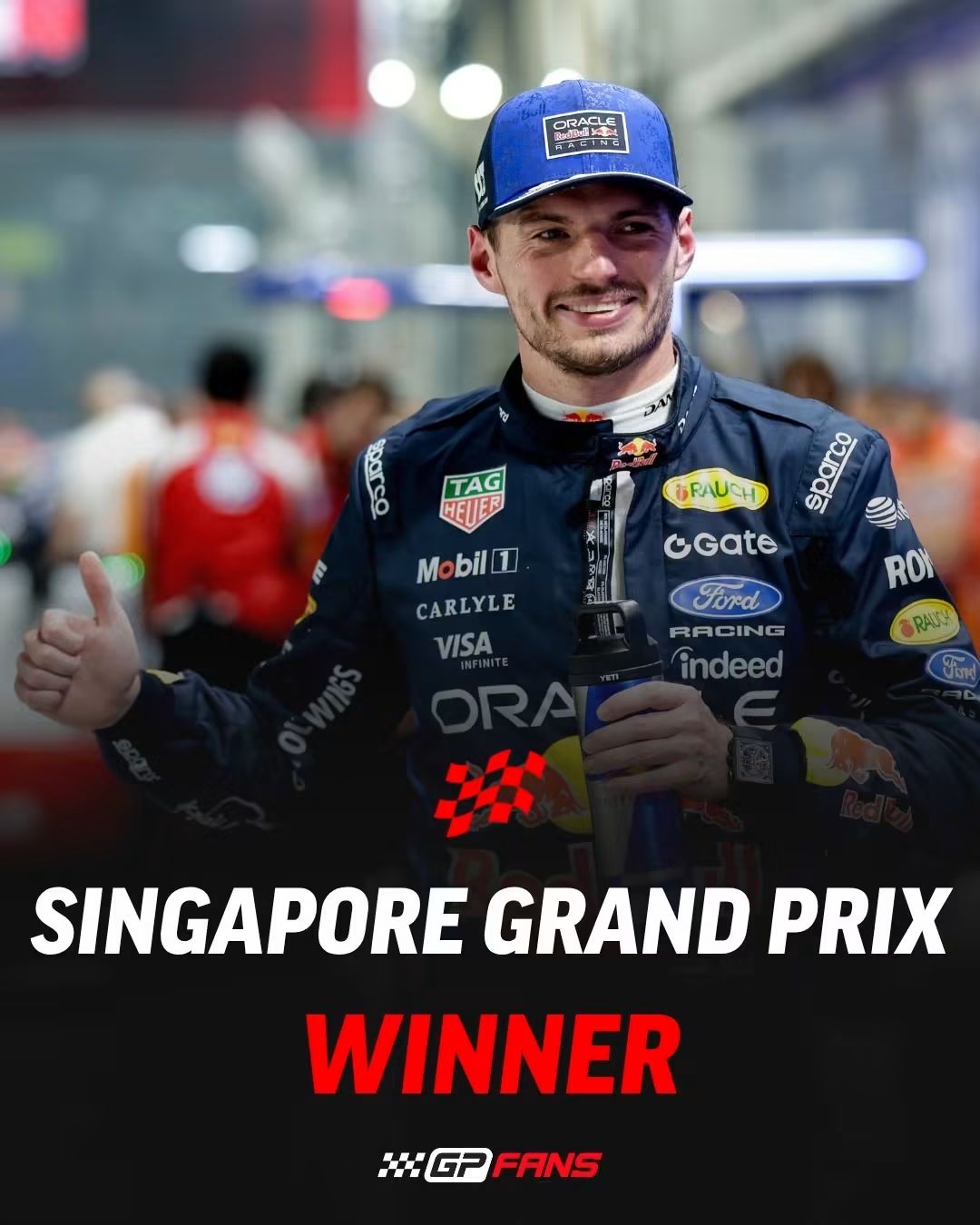
Max Verstappen has closed one of the last remaining gaps on his Formula 1 résumé. On Sunday under the lights of the Marina Bay Street Circuit, the four-time world champion claimed his first-ever Singapore Grand Prix victory, converting pole position into a dominant lights-to-flag win and completing a perfect weekend that also included sprint success the day before.
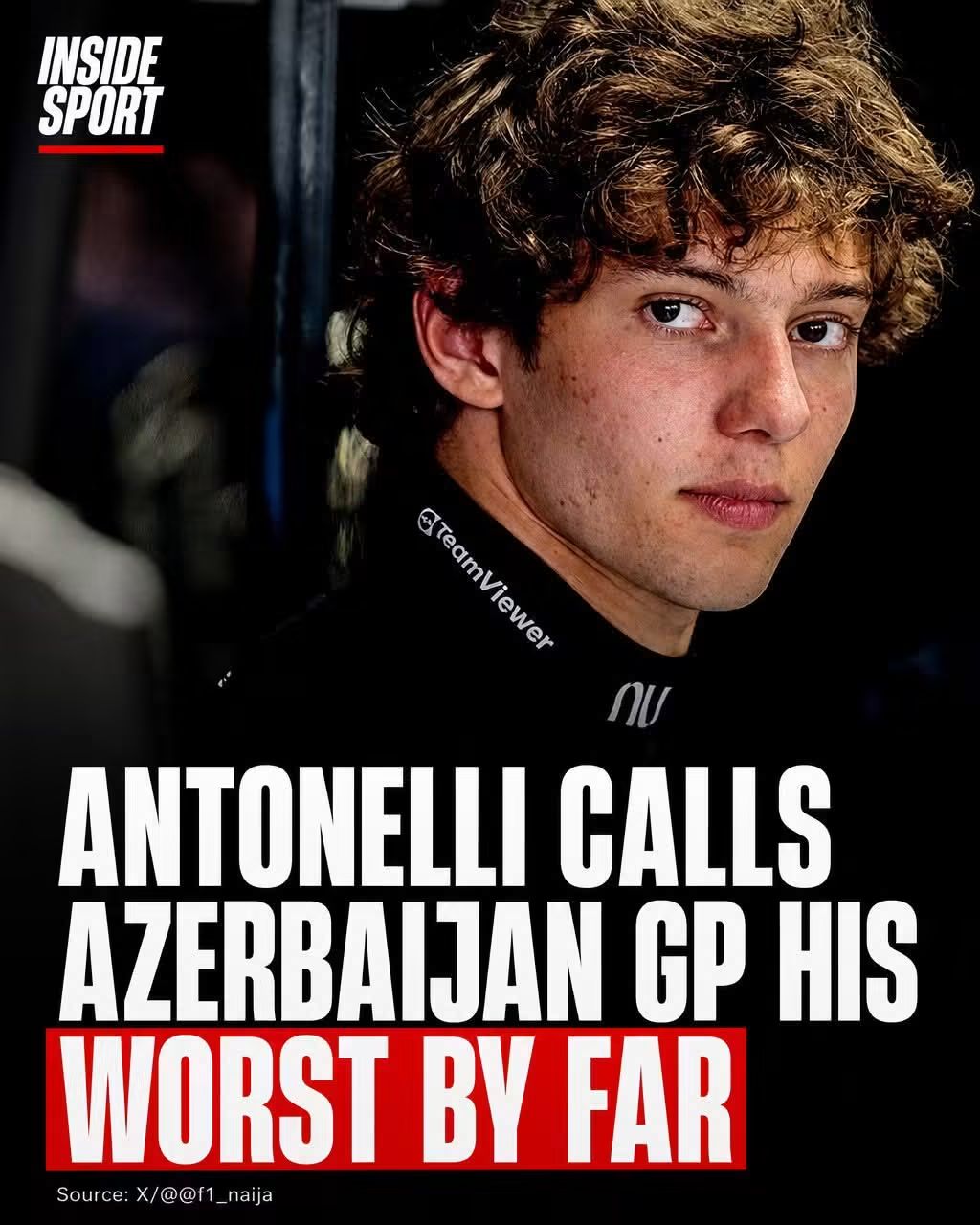
The Dutchman finished 7.3 seconds clear of Ferrari’s Charles Leclerc, with championship leader Kimi Antonelli completing the podium for Mercedes. It was Verstappen’s second consecutive race win after his breakthrough success in Malaysia the previous weekend, and it lifted him to fourth in the drivers’ standings on 221 points.
For a driver who has won almost everywhere else on the calendar, Singapore had long been the stubborn outlier. That chapter is now closed.
WHY SINGAPORE HAD ALWAYS BEEN DIFFERENT FOR VERSTAPPEN
Marina Bay has never been kind to Verstappen. The tight, bumpy street circuit with its high humidity, heavy braking zones, and limited overtaking opportunities has historically favored other machinery and other driving styles. While he had podium finishes and strong qualifying results in previous years, the full Grand Prix victory always remained elusive.
That changed in 2026. Red Bull’s recent upgrades finally unlocked the kind of consistent performance needed around this demanding layout. Verstappen’s qualifying lap of 1:31.373 was enough to edge Leclerc by just five hundredths of a second and secure his first Singapore pole — also the 50th of his career. From there, the race unfolded with the kind of control that has defined his best seasons.
He managed the start, built a gap when instructed, and controlled the only pit stop of his race. Even radio communication issues failed to disrupt his rhythm. By the time the chequered flag fell, the result felt inevitable.
THE SPRINT CHAOS THAT SET THE TONE
Saturday’s sprint had already delivered drama. Heavy rain delayed the start by more than half an hour. When the race eventually got underway, George Russell seized the lead only to spin into the barriers at the end of the opening lap after touching a damp white line. Nine cars retired in total — a record for a sprint race.
Verstappen inherited the lead and controlled the remainder of the 20-lap contest, finishing ahead of Lewis Hamilton and Leclerc. Behind them, the two McLarens collided on the final lap, handing Antonelli a free fourth place and extending his championship lead over teammate Russell.
Verstappen himself was measured afterward. “I want to win tomorrow,” he said. “I don’t see this as a win in terms of actually winning a Grand Prix.” He delivered exactly that 24 hours later.
WHAT THIS MEANS FOR THE CHAMPIONSHIP AND THE TEAMS
The result carries weight beyond personal milestones. Antonelli’s third place keeps the Mercedes rookie firmly in control of the title race and puts him in a position where he could mathematically seal the championship as early as Austin if results go his way. Russell’s difficult weekend — crashing out of the sprint and recovering only to ninth in the Grand Prix — has widened the gap between the two Mercedes drivers.
For Red Bull, the weekend marks a clear resurgence. Back-to-back wins and a first Singapore success signal that the team has regained competitive form at a critical stage of the season. Ferrari showed strong pace with both cars near the front, yet strategy decisions left Hamilton sixth and left Leclerc unable to challenge for the win once Verstappen settled into his rhythm.
McLaren’s ongoing internal friction was again on display. Another collision between Lando Norris and Oscar Piastri, this time in the sprint, continues a pattern that has cost the team points and raised questions about race craft under pressure.
THE BIGGER PICTURE FOR FORMULA 1
Singapore remains one of the most unique events on the calendar — a night race through the heart of a city, physically draining for drivers and demanding on cars. Verstappen’s first victory there removes one of the last statistical anomalies from his career and reinforces his status as one of the most complete drivers of the modern era.
It also arrives at a moment when the 2026 season is taking clearer shape. A young championship leader in Antonelli, a resurgent Verstappen, Ferrari still capable of challenging, and midfield teams such as Racing Bulls and Haas collecting solid results all point to a competitive late-season run.
For Verstappen, the win is both a personal landmark and a statement. The circuit that had resisted him for more than a decade finally yielded. The remaining races will show whether this form can translate into a sustained challenge at the front of the championship.
One thing is already certain: the list of tracks Max Verstappen has never won at is now one name shorter.