F1 CAR CRISIS ERUPTS AFTER MALAYSIA CHAOS AS FIA LAUNCHES REVIEW INTO ‘COMPUTER CARS’
Formula 1’s controversial new era has already produced spectacular racing, but the chaos at the rescheduled Bahrain Grand Prix in Malaysia has raised a much bigger question: have modern F1 cars become too dependent on software and electronic systems?
Max Verstappen eventually claimed his first victory of the 2026 season at Sepang, but the result was overshadowed by an extraordinary sequence of technical problems before the race had even started.
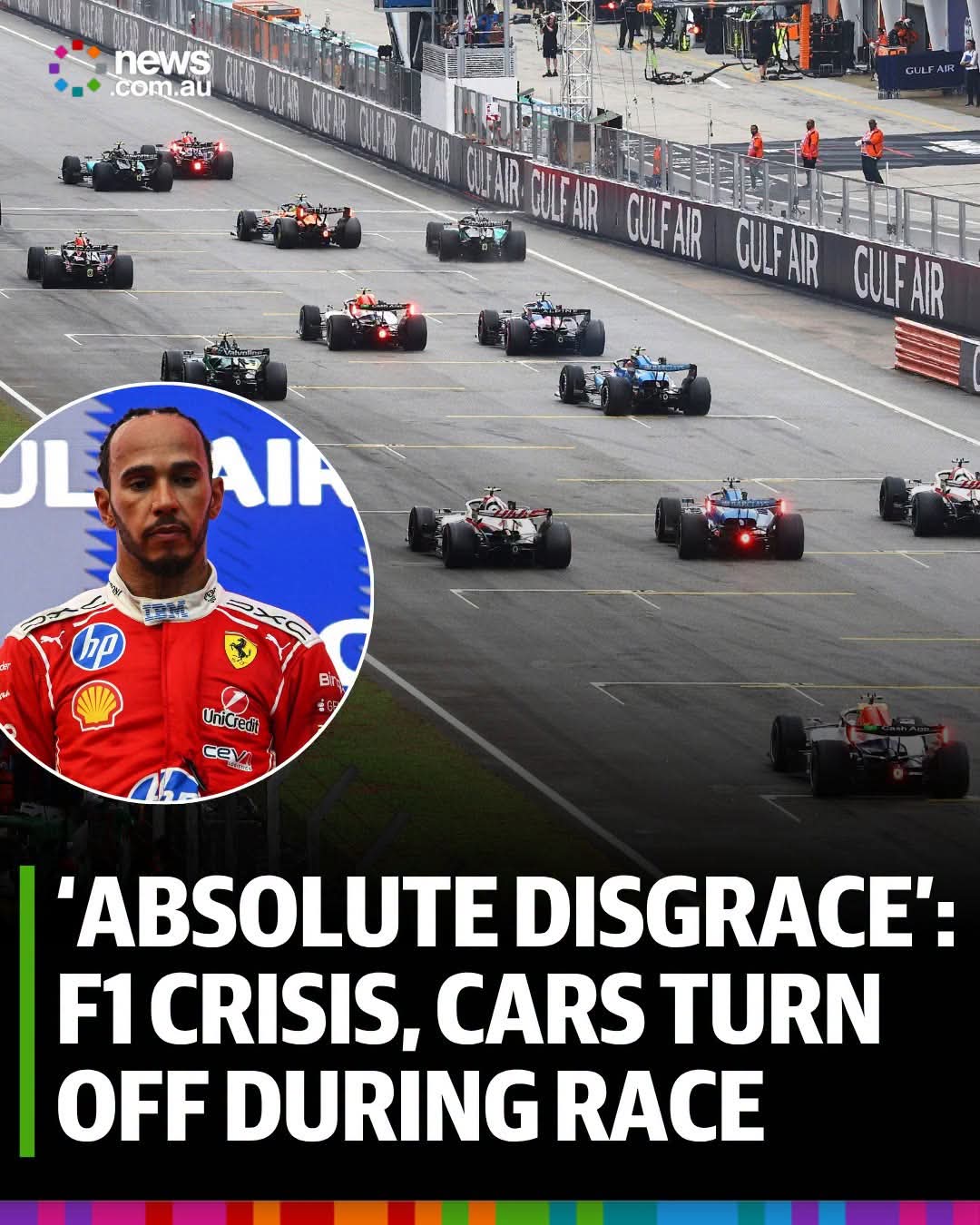
Lewis Hamilton’s Ferrari lost power during the formation lap and effectively switched itself off. Verstappen’s Red Bull also suffered a power-related problem before recovering, while Charles Leclerc and other drivers encountered issues that forced teams and officials into an emergency response.
The FIA has now begun reviewing what happened, adding another layer of scrutiny to Formula 1’s radically revised 2026 regulations.
A FORMATION LAP THAT TURNED INTO CHAOS
The drama began before the lights went out.
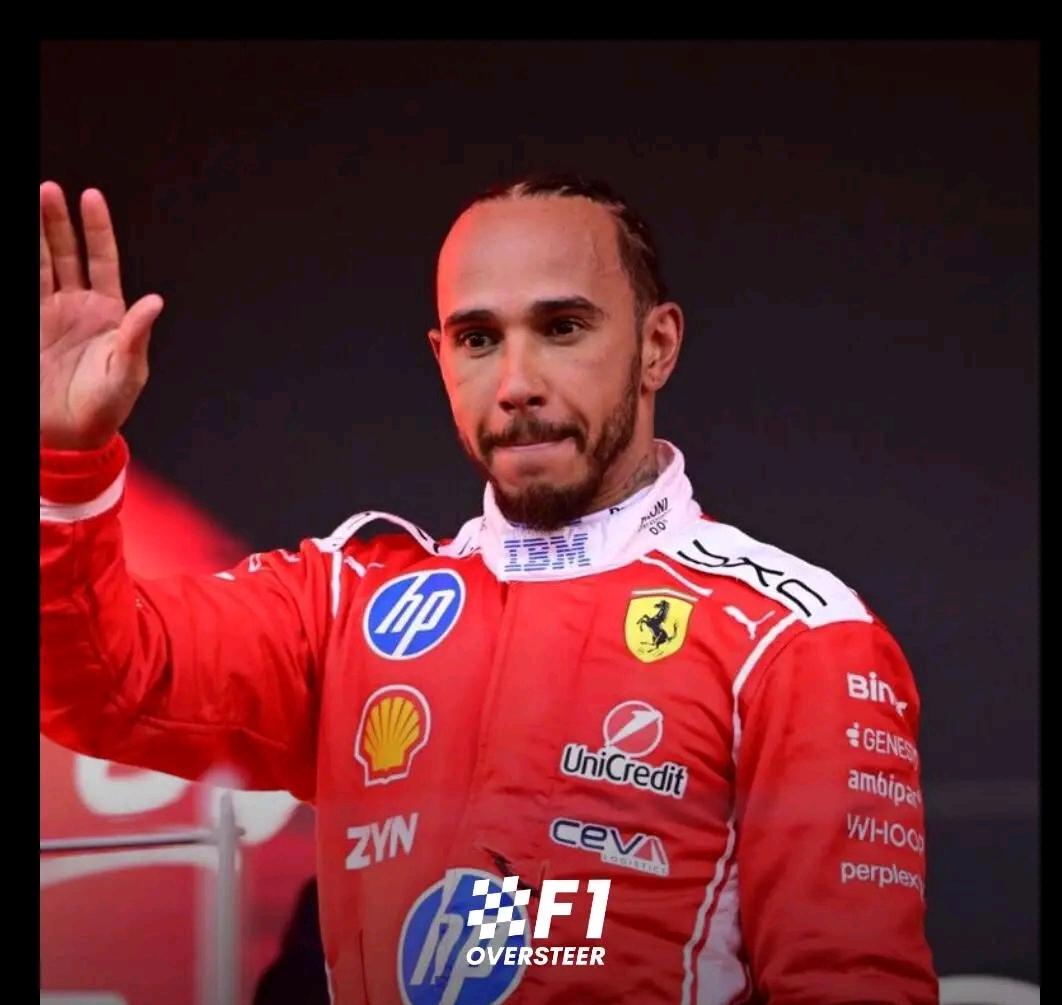
Hamilton was preparing for the race when his Ferrari suddenly lost power during the formation lap. The seven-time world champion was unable to accelerate normally and came to a halt.
It was an alarming sight because Hamilton was starting from the front row after qualifying second.
Verstappen experienced a similar scare in the Red Bull, with the reigning champion reporting a loss of power before his car recovered. Other drivers also encountered problems, creating an unprecedented situation on the grid.
Teams were subsequently instructed to bring their cars into the pits while engineers worked to understand and resolve the issue.
The race start was then delayed as officials dealt with both the technical problems and the wet conditions.
For fans watching around the world, it created a bizarre image of Formula 1: incredibly sophisticated machines capable of extraordinary performance, yet several of them struggling simply to remain operational.
WHY THE 2026 CARS ARE SO DIFFERENT
The controversy cannot be separated from the fundamental changes introduced for the 2026 season.
The new generation of F1 cars places substantially greater emphasis on electrical power, energy management, active aerodynamic systems and sophisticated control software.
That has changed the job of both the driver and the engineer.
Modern F1 drivers are no longer simply managing tyres, brakes and fuel. They are constantly balancing electrical deployment, harvesting, aerodynamic configurations and power-unit modes.
That complexity can produce incredible strategic possibilities.
But it also creates more potential points of failure.
The Malaysia weekend exposed exactly that vulnerability.
When a software-related problem affects a modern F1 car, the driver may have very little ability to fix it from inside the cockpit.
That is why the phrase “computer cars” has begun to resonate among critics and some drivers.
THE BIG QUESTION: ARE F1 CARS TOO COMPLICATED?
Formula 1 has always been a technological competition.
From active suspension experiments to sophisticated hybrid power units, teams have repeatedly pushed the limits of engineering.
But there is an important distinction between technological sophistication and technology becoming a potential weakness.
The 2026 regulations were designed partly to make F1 more efficient and technologically relevant. Increasing the electrical contribution to the power unit was intended to make the sport more closely aligned with the direction of the automotive industry.
However, the more systems that need to communicate perfectly, the greater the possibility that a software or electronic problem can affect the entire car.
That is precisely what made the incidents in Malaysia so uncomfortable.
A mechanical failure is relatively easy for fans to understand.
A software problem that prevents a driver from accelerating is far harder to explain — and potentially much harder for a driver to overcome.
HAMILTON’S PODIUM MADE THE DRAMA EVEN MORE REMARKABLE
Ironically, Hamilton’s weekend eventually became one of the most impressive recovery drives of the season.
After starting second, Ferrari’s early slick-tyre gamble on a damp circuit went badly wrong and dropped Hamilton as low as 18th.
He then fought his way back through the field and ultimately finished third behind Verstappen and Kimi Antonelli.
That meant Hamilton survived both a pre-race technical scare and a disastrous early-race strategy call before recovering to the podium.
It was a remarkable result.
But it also highlighted Ferrari’s broader challenge.
Even when the car is capable of strong pace, reliability, software control, tyre decisions and energy management can completely transform a driver’s race.
VERSTAPPEN ESCAPED THE CHAOS AND TOOK THE WIN
While Hamilton was forced into recovery mode, Verstappen emerged as the biggest beneficiary.
The Red Bull driver eventually took victory at Sepang, securing his first win of the 2026 season.
Kimi Antonelli finished second, while Hamilton completed the podium.
For Verstappen, the victory was particularly important because it demonstrated that Red Bull could still deliver when the new-generation cars and power units were pushed through an unpredictable race.
The win also came after Verstappen himself had experienced a power-related scare before the start.
That makes the result even more striking.
His Red Bull survived an issue that could easily have ended his race before it began.
THE FIA NOW HAS A SERIOUS JOB ON ITS HANDS
The FIA’s review will be closely watched because this is not simply about one unusual race.
The governing body needs to establish exactly why multiple cars experienced problems and whether the incidents were connected.
If the failures were caused by a common software issue, teams and the FIA will need to determine whether similar problems could occur again.
If the problem was linked to the way the new power units and electronic systems interact, the implications could be even larger.
Reliability is not just a technical concern.
It is a sporting concern.
When a championship contender loses a race because of a software malfunction, the competitive outcome can be dramatically affected by something the driver has almost no control over.
‘COMPUTER CARS’ COULD BECOME THE BIGGEST 2026 DEBATE
The Malaysia race could therefore become an important turning point in the conversation surrounding the 2026 regulations.
Supporters of the new rules will argue that advanced technology is part of Formula 1’s identity.
They will also point out that modern road cars are increasingly software-driven, making Formula 1’s technological direction understandable.
Critics, however, will ask whether the driver is becoming less important.
That debate will not disappear after one chaotic race.
If drivers can be left stranded because of software faults, or if performance increasingly depends on electronic systems rather than pure driving ability, F1 could face uncomfortable questions about what its cars are supposed to represent.
The ideal Formula 1 car should be technologically extraordinary while still demanding extraordinary skill from the person driving it.
Finding that balance will be crucial.
WHAT THIS MEANS FOR THE REST OF THE 2026 SEASON
The immediate priority is reliability.
Teams will now be desperate to understand what happened at Sepang before the next race.
Red Bull will want to ensure Verstappen’s power-related scare does not become a recurring problem.
Ferrari will need answers about Hamilton’s failure, particularly because the team is already fighting to close the performance gap to its rivals.
And the FIA will have to determine whether the new regulations require additional safeguards.
The biggest danger would be allowing Malaysia to become a warning that was ignored.
Formula 1 has invested heavily in making its 2026 cars more efficient, more technologically advanced and more relevant to the future of automotive engineering.
But technology must ultimately serve the racing.
If software failures begin deciding races, the sport risks creating exactly the criticism it has spent years trying to avoid.
F1 HAS BEEN GIVEN A WARNING
The Bahrain Grand Prix at Sepang will be remembered for Verstappen’s first victory of the season and Hamilton’s extraordinary recovery to third.
But it may also be remembered as the weekend when Formula 1’s technological ambitions collided with an uncomfortable reality.
The more complicated the cars become, the more important reliability becomes.
F1 cannot eliminate technology from its cars — and nor should it.
But the sport must ensure that its cutting-edge systems do not become the weakest link.
The FIA’s review will therefore be about much more than what went wrong on one formation lap.
It could help determine whether Formula 1’s bold new technological era has found the right balance between engineering brilliance, reliability and the human element of racing.
And after the chaos in Malaysia, that balance is now under a microscope.