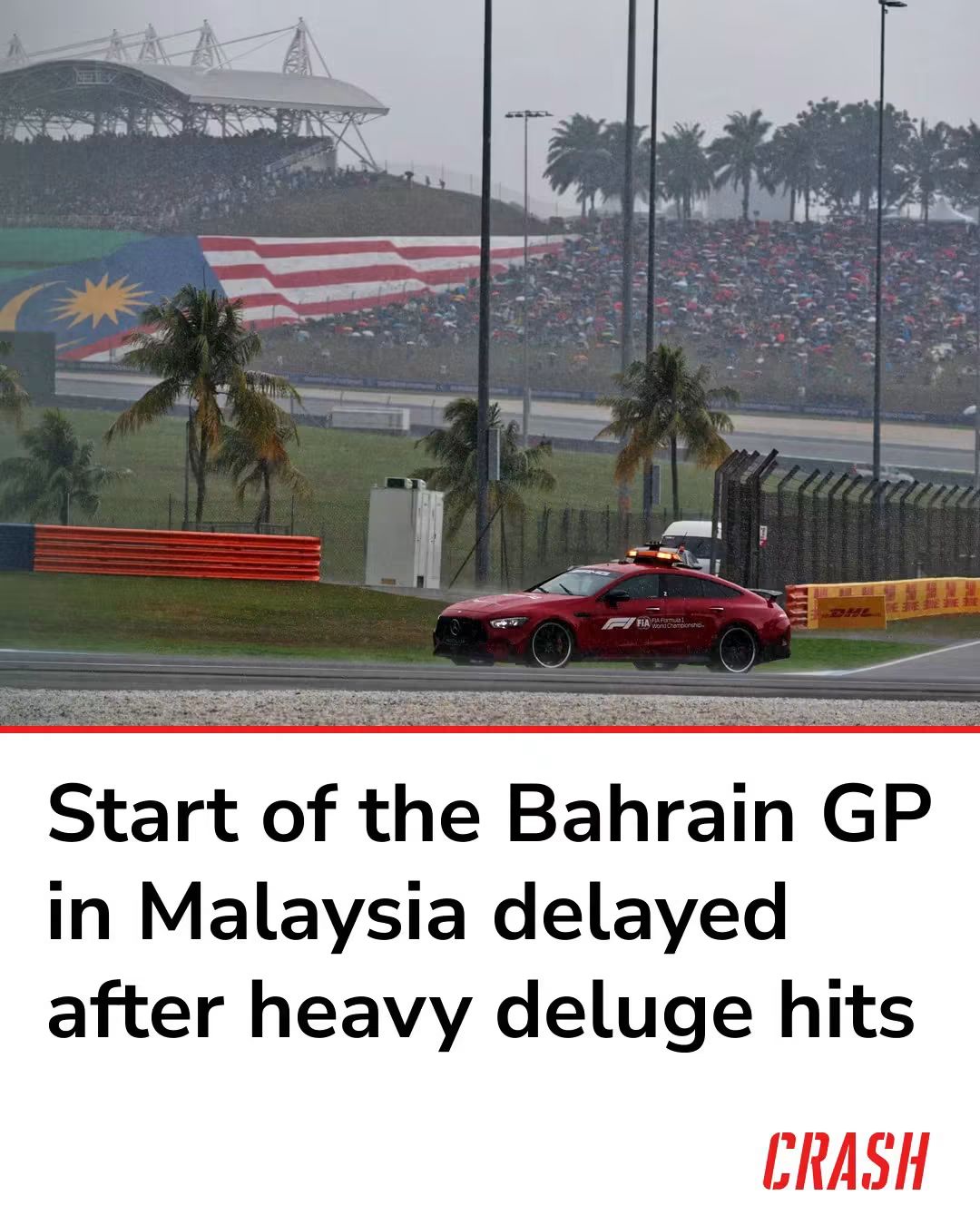
Formula 1’s unusual 2026 Bahrain Grand Prix, staged more than 3,500 miles from its traditional home, has been hit by the one element Malaysian weather is famous for delivering without warning: a sudden, torrential downpour.
Heavy rain and lightning struck the Sepang International Circuit roughly 40 minutes before the scheduled lights-out, forcing the FIA to delay the start of the race. Officials have not yet issued a new start time and have confirmed only that a minimum 10-minute warning will be given once conditions improve.
The delay is more than a simple inconvenience. It marks the first time the entirely new 2026 generation of cars has faced genuine wet-race conditions in a competitive environment, turning what was already a relocated and heat-hazard-designated event into a genuine unknown.
WHY THE BAHRAIN GRAND PRIX IS TAKING PLACE IN MALAYSIA
The Bahrain Grand Prix was originally scheduled for April but was postponed because of the ongoing conflict in the Middle East. After hostilities resumed, Formula 1, the FIA, and the governments of Bahrain and Malaysia reached an agreement to stage the race at Sepang on 4 October 2026.
Bahrain retains the race branding and much of the ceremonial presence, while Malaysia provides the circuit and infrastructure. The arrangement keeps the event on the calendar and preserves Bahrain’s commercial and sporting partnership with the sport. It also returns Formula 1 to a track that last hosted a Grand Prix in 2017.
SEPANG’S WEATHER HISTORY AND THE RISK OF CHAOS
Malaysia’s climate near the equator produces rapid, intense storms. The 2009 Malaysian Grand Prix was abandoned after thunderstorms made the circuit unsafe. In 2012 the race was suspended for a period by heavy rain. Drivers and teams have long known that Sepang can switch from bone-dry to flooded in minutes.
This weekend the forecast had already flagged a high chance of showers. Until race day the rain stayed away. When it finally arrived, it arrived hard. Lightning accompanied the deluge, and standing water quickly formed. The medical car was observed moving cautiously through the conditions, underlining how treacherous the track had become.
FIRST WET RACE FOR THE 2026 CARS CHANGES EVERYTHING
The 2026 technical regulations have produced a new generation of cars. Teams have completed almost no collective wet running with the current package. Limited private testing and a handful of intermediate-tyre runs during the weekend have been the only preparation.
That lack of data raises the stakes for every decision once the race eventually begins. Intermediate tyres clear roughly 31 litres of water per second; full wets clear more than twice that volume. Choosing the wrong compound, or switching too early or too late, could decide positions and championship points.
Max Verstappen, starting from pole, acknowledged the challenge on the grid: new weather cells were still forming and the situation was “a big deal for everyone.” Drivers who have never raced at Sepang—more than half the current grid—face an additional layer of uncertainty.
IMPACT ON DRIVERS, TEAMS AND THE CHAMPIONSHIP
A delayed or shortened race under changing conditions rewards adaptability and punishes those who misread the track. Teams that have historically excelled in wet weather gain a theoretical advantage, yet the new cars may behave differently enough to erase old hierarchies.
The heat-hazard designation already required cooling measures for drivers. Combining high humidity, residual heat, and potential wet running creates a unique physical demand. Strategy calls will be made with incomplete information, and the first teams to gather reliable data once the track begins to dry will hold a significant edge.
For the championship, any result that departs from the dry-weather form book could shift momentum at a critical stage of the season.
WHAT HAPPENS NEXT AND WHY IT MATTERS FOR THE SPORT
Forecasts suggest the rain cell should move through. Sepang’s high ambient temperatures usually help the track dry relatively quickly once precipitation stops. The FIA will monitor conditions continuously and only restart when safety criteria are met.
If the race does run in mixed or wet conditions, it will provide the first public data set on how the 2026 cars handle standing water, aquaplaning risk, and tyre warm-up in the rain. That information will shape setup choices for the remainder of the season and influence future wet-weather development.
The relocation itself already demonstrated Formula 1’s ability to adapt to geopolitical disruption. Successfully managing a weather-affected race under the same constraints will further test the sport’s operational resilience and its relationship with host nations.
LOOKING AHEAD
Once the delay ends, the Bahrain Grand Prix in Malaysia is set to become one of the most memorable events of the 2026 season—not because of the branding, but because of the conditions. Wet-weather racing has always produced drama, unexpected heroes, and lasting images. With brand-new cars and a circuit many drivers barely know, the potential for both chaos and brilliance is unusually high.
Fans, teams, and the sport itself now wait for the rain to ease and for the green light that will finally start the race. Whatever unfolds once the cars leave the grid will shape conversations long after the chequered flag.