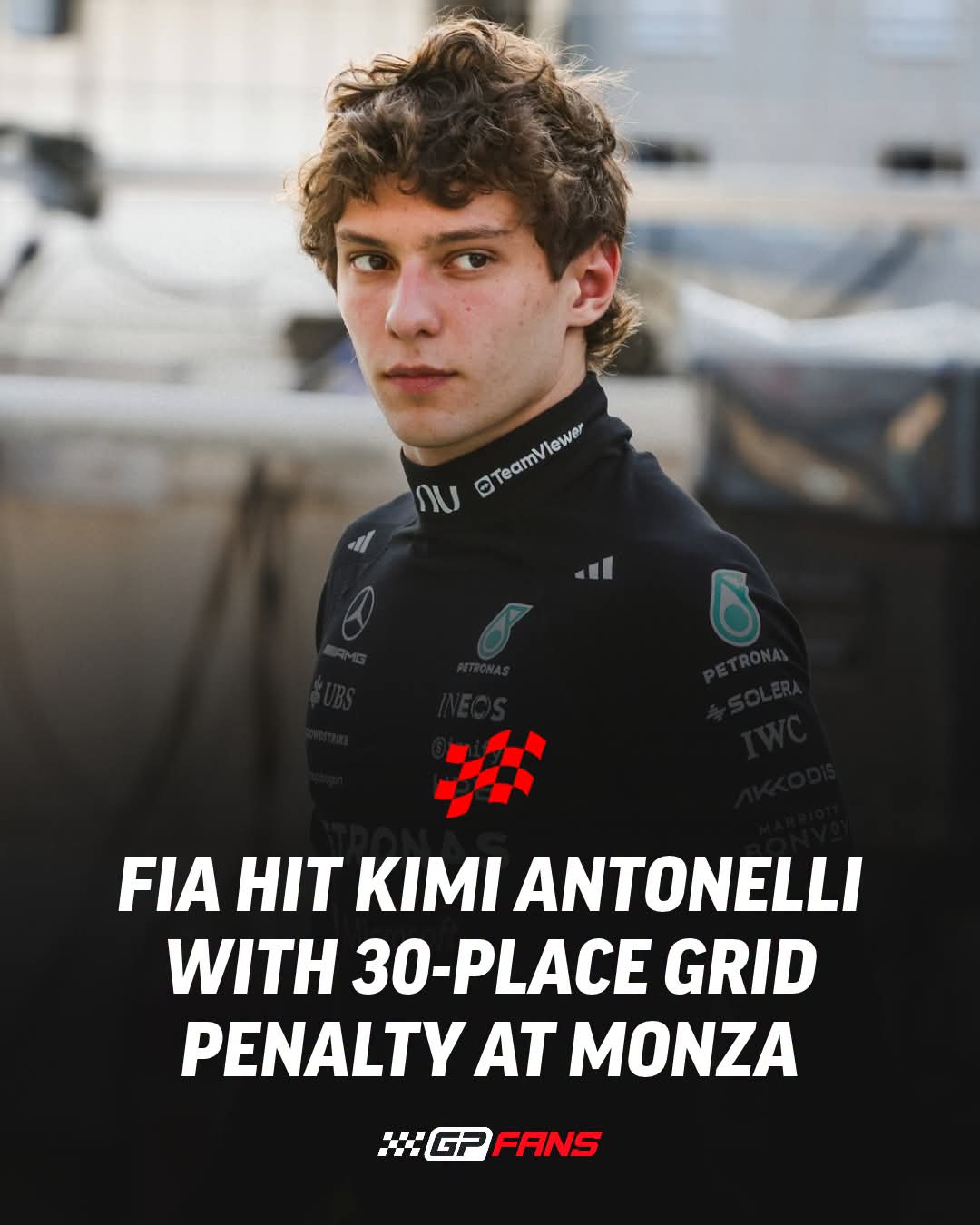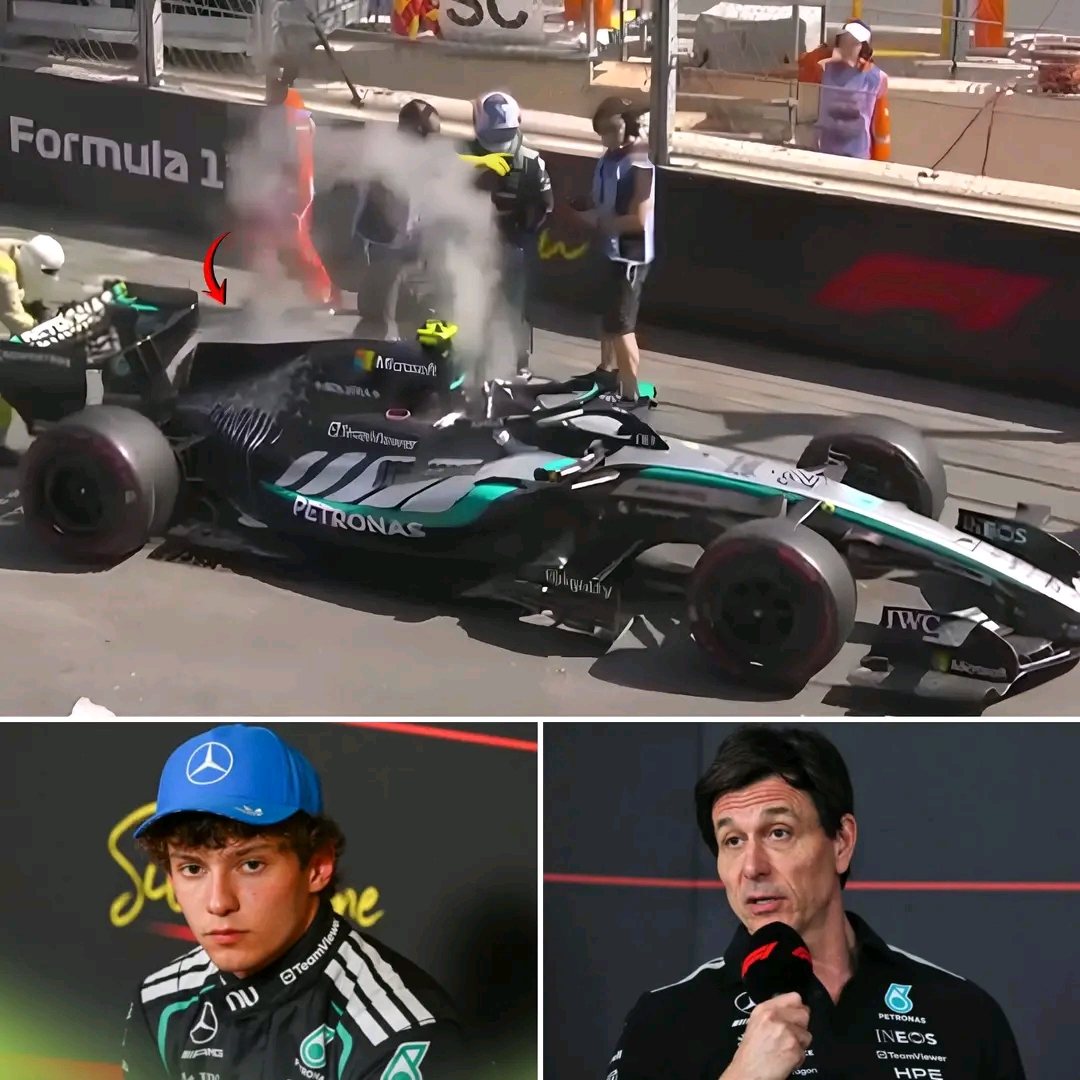
Formula 1’s rising star and current drivers’ championship leader, Kimi Antonelli, suffered an unexpected setback on the opening day of the 2026 Azerbaijan Grand Prix weekend. A hydraulic issue brought his Mercedes W17 to a halt during Free Practice 1 on the streets of Baku, forcing the team into rapid repairs and a precautionary power unit change that cost him significant track time.
The Italian reported the problem himself over the radio, with smoke visible as marshals intervened with fire extinguishers. What should have been a straightforward practice day for the young Mercedes driver turned into a scramble, highlighting ongoing reliability questions that have shadowed parts of his impressive debut title campaign.
WHAT HAPPENED DURING PRACTICE IN BAKU
Antonelli was building momentum early in FP1 when the hydraulic leak struck on his second run. He completed only a handful of push laps before parking the car. The stoppage cost him roughly 35 minutes of the session. Marshals’ use of extinguishers introduced fluid that required cleanup, prompting Mercedes to swap the power unit before FP2 as a safety measure.
Despite missing the first half of FP2, Antonelli recovered well. He posted the fifth-fastest time in the limited FP1 running and climbed to second in FP2, though still more than half a second behind teammate George Russell, who topped both sessions. Mercedes deputy team principal Bradley Lord confirmed the hydraulic problem as the cause, while trackside engineering director Andrew Shovlin noted the disruption but praised the useful mix of low- and high-fuel work Antonelli managed afterward.
Antonelli himself stayed measured: the day was compromised and never ideal on a demanding street circuit, yet he felt reasonably good in the car with work still to do. The team continues investigating the root cause of the unexpected failure. The replacement power unit came from the existing pool, avoiding an immediate grid penalty.
**WHY THIS MATTERS FOR ANTONELLI’S TITLE CHARGE**
Antonelli arrives in Baku with a substantial championship lead—around 81 points after his recent victory—making him the clear favorite to become one of the youngest champions in F1 history. Reliability hiccups carry extra weight under these circumstances. Lost practice time on a low-grip street circuit like Baku, where setup and confidence matter enormously, can cascade into qualifying struggles or race-day compromises.
Mercedes has shown strong pace this weekend, with Russell leading the way. That performance offers reassurance, yet the hydraulic issue joins earlier technical problems Antonelli has faced this season, including power unit concerns and other mechanical setbacks. For a driver still in the early stages of his F1 career, every reliability scare tests both the car and the young pilot’s composure under the pressure of leading the standings.
The broader impact reaches the team and the championship picture. Rivals such as Max Verstappen and the Ferrari pair will watch closely for any signs of vulnerability. A clean weekend for Antonelli reinforces Mercedes’ dominance; further issues could open the door for challengers to close the gap in the final stretch of the season.
THE RELIABILITY SHADOW OVER MERCEDES IN 2026
This is not the first time reliability has interrupted Antonelli’s progress. Earlier incidents forced the team to address power unit durability and other component failures. While Mercedes power units remain competitive on pure performance, the occasional mechanical interruption raises questions about long-term consistency in the first year of the current regulations.
Teams in Formula 1 operate under strict component limits. Any forced change risks future penalties if the pool is exhausted. Mercedes avoided that outcome this time by using a previously allocated unit, but the investigation into whether the original can be salvaged will matter for the remaining races. Street circuits amplify these risks because recovery from limited running is harder when walls are close and grip is scarce.
Bradley Lord’s presence in place of team principal Toto Wolff this weekend added another layer. The team has moved efficiently, praising the mechanics’ rapid power unit swap. Still, any mechanical failure on a championship-leading car invites scrutiny about whether underlying issues are being fully resolved or merely managed race by race.LOOKING AHEAD: PREDICTIONS FOR THE AZERBAIJAN WEEKEND AND BEYOND
Baku rewards precision and confidence. Antonelli’s ability to extract competitive lap times despite truncated sessions suggests the car’s underlying pace remains strong. If the hydraulic problem proves isolated and the replacement power unit performs cleanly, he should challenge strongly in qualifying and the race.
The bigger picture is the championship endgame. With roughly nine rounds remaining after this weekend, Antonelli’s lead provides a buffer, but consistency will decide the title. Mercedes must eliminate these interruptions. A run of clean races would solidify the Italian’s position; repeated dramas could invite pressure from behind and test the young driver’s mental resilience.
For the wider F1 paddock, moments like this underscore the unforgiving nature of modern Formula 1. Even dominant cars and talented drivers remain vulnerable to the smallest system failure. Antonelli’s response—focusing on the positive feeling in the car and looking ahead—shows the maturity that has carried him this far.
The Azerbaijan Grand Prix weekend is still young. Mercedes will spend the remaining sessions refining the setup and confirming the car’s health. Fans and rivals alike will watch closely to see whether Friday’s hydraulic scare was a one-off inconvenience or a warning of deeper challenges still to come in the title fight.
**KIMI ANTONELLI HYDRAULIC FAILURE IN BAKU FORCES MERCEDES INTO DAMAGE CONTROL AS CHAMPIONSHIP LEADER LOSES PRECIOUS PRACTICE TIME
Formula 1’s rising star and current drivers’ championship leader, Kimi Antonelli, suffered an unexpected setback on the opening day of the 2026 Azerbaijan Grand Prix weekend. A hydraulic issue brought his Mercedes W17 to a halt during Free Practice 1 on the streets of Baku, forcing the team into rapid repairs and a precautionary power unit change that cost him significant track time.
The Italian reported the problem himself over the radio, with smoke visible as marshals intervened with fire extinguishers. What should have been a straightforward practice day for the young Mercedes driver turned into a scramble, highlighting ongoing reliability questions that have shadowed parts of his impressive debut title campaign.
WHAT HAPPENED DURING PRACTICE IN BAKU
Antonelli was building momentum early in FP1 when the hydraulic leak struck on his second run. He completed only a handful of push laps before parking the car. The stoppage cost him roughly 35 minutes of the session. Marshals’ use of extinguishers introduced fluid that required cleanup, prompting Mercedes to swap the power unit before FP2 as a safety measure.
Despite missing the first half of FP2, Antonelli recovered well. He posted the fifth-fastest time in the limited FP1 running and climbed to second in FP2, though still more than half a second behind teammate George Russell, who topped both sessions. Mercedes deputy team principal Bradley Lord confirmed the hydraulic problem as the cause, while trackside engineering director Andrew Shovlin noted the disruption but praised the useful mix of low- and high-fuel work Antonelli managed afterward.
Antonelli himself stayed measured: the day was compromised and never ideal on a demanding street circuit, yet he felt reasonably good in the car with work still to do. The team continues investigating the root cause of the unexpected failure. The replacement power unit came from the existing pool, avoiding an immediate grid penalty.
WHY THIS MATTERS FOR ANTONELLI’S TITLE CHARGE
Antonelli arrives in Baku with a substantial championship lead—around 81 points after his recent victory—making him the clear favorite to become one of the youngest champions in F1 history. Reliability hiccups carry extra weight under these circumstances. Lost practice time on a low-grip street circuit like Baku, where setup and confidence matter enormously, can cascade into qualifying struggles or race-day compromises.
Mercedes has shown strong pace this weekend, with Russell leading the way. That performance offers reassurance, yet the hydraulic issue joins earlier technical problems Antonelli has faced this season, including power unit concerns and other mechanical setbacks. For a driver still in the early stages of his F1 career, every reliability scare tests both the car and the young pilot’s composure under the pressure of leading the standings.
The broader impact reaches the team and the championship picture. Rivals such as Max Verstappen and the Ferrari pair will watch closely for any signs of vulnerability. A clean weekend for Antonelli reinforces Mercedes’ dominance; further issues could open the door for challengers to close the gap in the final stretch of the season.
**THE RELIABILITY SHADOW OVER MERCEDES IN 2026**
This is not the first time reliability has interrupted Antonelli’s progress. Earlier incidents forced the team to address power unit durability and other component failures. While Mercedes power units remain competitive on pure performance, the occasional mechanical interruption raises questions about long-term consistency in the first year of the current regulations.
Teams in Formula 1 operate under strict component limits. Any forced change risks future penalties if the pool is exhausted. Mercedes avoided that outcome this time by using a previously allocated unit, but the investigation into whether the original can be salvaged will matter for the remaining races. Street circuits amplify these risks because recovery from limited running is harder when walls are close and grip is scarce.
Bradley Lord’s presence in place of team principal Toto Wolff this weekend added another layer. The team has moved efficiently, praising the mechanics’ rapid power unit swap. Still, any mechanical failure on a championship-leading car invites scrutiny about whether underlying issues are being fully resolved or merely managed race by race.
**LOOKING AHEAD: PREDICTIONS FOR THE AZERBAIJAN WEEKEND AND BEYOND**
Baku rewards precision and confidence. Antonelli’s ability to extract competitive lap times despite truncated sessions suggests the car’s underlying pace remains strong. If the hydraulic problem proves isolated and the replacement power unit performs cleanly, he should challenge strongly in qualifying and the race.
The bigger picture is the championship endgame. With roughly nine rounds remaining after this weekend, Antonelli’s lead provides a buffer, but consistency will decide the title. Mercedes must eliminate these interruptions. A run of clean races would solidify the Italian’s position; repeated dramas could invite pressure from behind and test the young driver’s mental resilience.
For the wider F1 paddock, moments like this underscore the unforgiving nature of modern Formula 1. Even dominant cars and talented drivers remain vulnerable to the smallest system failure. Antonelli’s response—focusing on the positive feeling in the car and looking ahead—shows the maturity that has carried him this far.
The Azerbaijan Grand Prix weekend is still young. Mercedes will spend the remaining sessions refining the setup and confirming the car’s health. Fans and rivals alike will watch closely to see whether Friday’s hydraulic scare was a one-off inconvenience or a warning of deeper challenges still to come in the title fight.