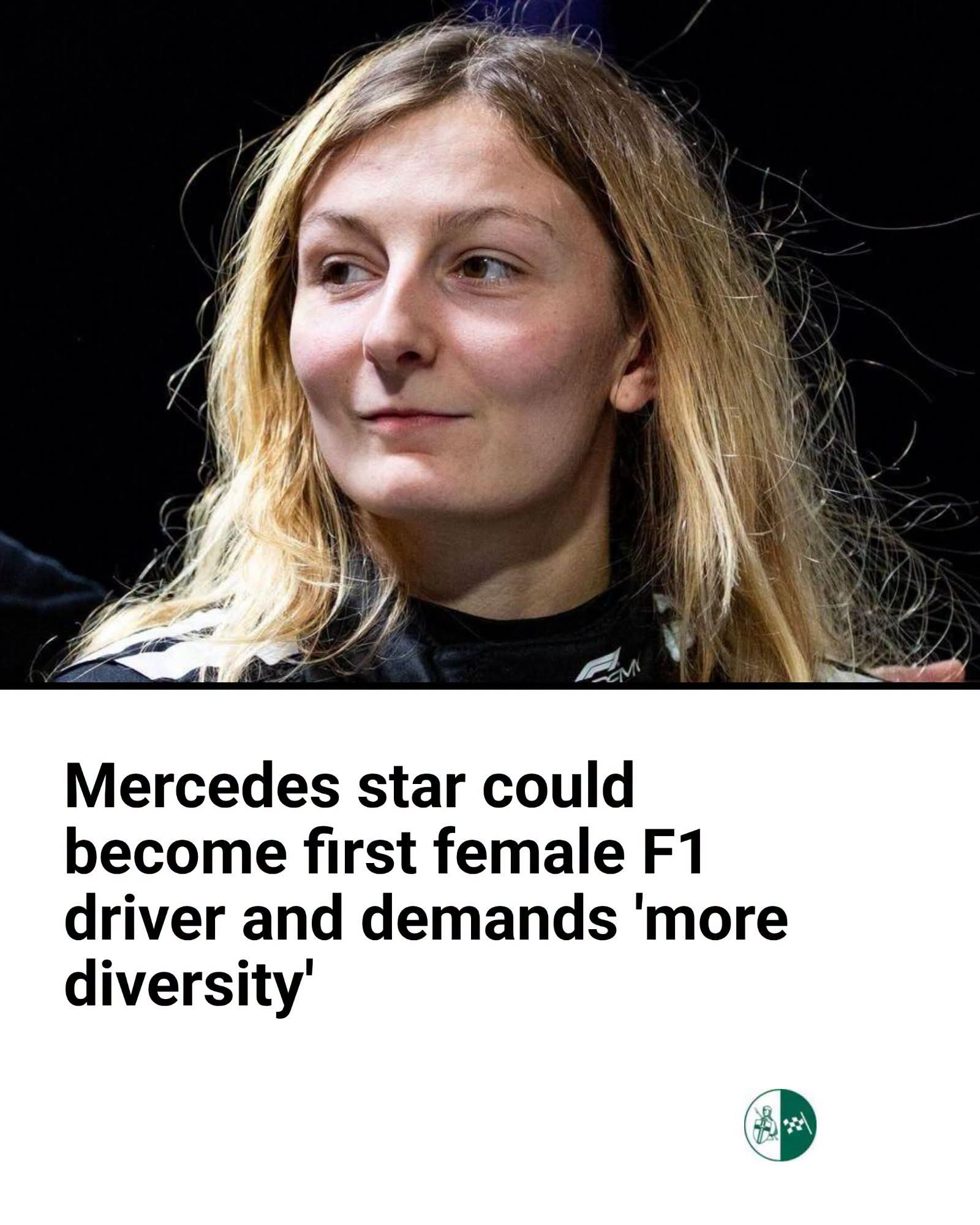
A Mercedes rising star could be on course to make Formula 1 history as the sport continues its efforts to create a more diverse and accessible pathway into elite motorsport. With women still yet to compete in a modern F1 race, the prospect of a female driver eventually reaching the grid remains one of the sport’s most significant milestones. Her progress through the Mercedes system has therefore attracted attention well beyond the team, particularly as F1 continues to expand initiatives designed to bring new talent into the championship.
The driver’s ambitions extend beyond simply becoming the first woman to race in F1. She has also spoken about the importance of greater diversity throughout motorsport, highlighting the need for young drivers from different backgrounds to see a realistic route towards the top level. Reaching Formula 1 requires substantial financial backing, competitive opportunities and access to professional networks, factors that can make the journey particularly difficult for aspiring drivers who lack traditional motorsport connections.
Mercedes has invested heavily in developing young talent through its junior programme, giving promising drivers opportunities to gain experience and demonstrate their potential. For a female driver attempting to climb the single-seater ladder, support from an established F1 organisation can be particularly significant. A successful progression through the junior categories would not only strengthen her own prospects but could also provide a powerful example for other girls considering careers in motorsport.
However, reaching the Formula 1 grid remains an extremely demanding challenge regardless of gender. Drivers must consistently perform at every stage of the junior ladder while adapting to increasingly competitive machinery and intense pressure. The limited number of available F1 seats means that even highly rated prospects can spend years waiting for an opportunity. That makes the Mercedes star’s development one to watch closely as she attempts to turn an ambitious goal into a genuine opportunity to compete at the highest level.
If she ultimately reaches the F1 grid, the significance would extend far beyond a historic statistic. She would become the first woman to compete in a Formula 1 Grand Prix since the championship era began, while potentially inspiring a new generation of female racers to pursue the same path. Her call for greater diversity also reflects a wider conversation about the future of motorsport, where increasing participation from underrepresented groups could help broaden the talent pool and reshape who sees Formula 1 as a realistic destination.