BREAKING: England Shut Out of Attack in Star-Studded Home Nations XI..BREAKING: England Shut Out of Attack in Star-Studded Home Nations XI 👀
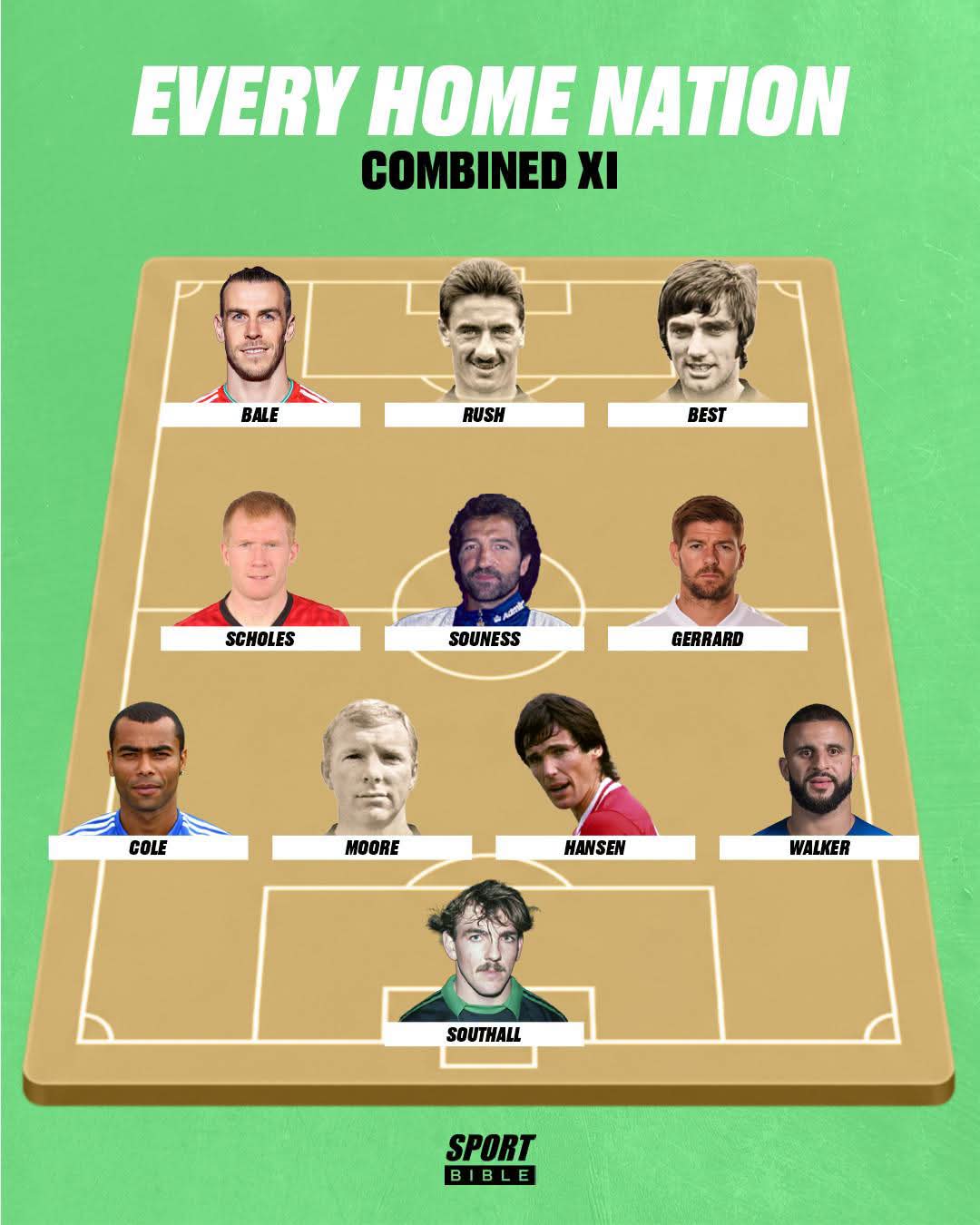
England have been left without a single representative in the attacking positions of a star-studded Home Nations XI, sparking plenty of discussion among football fans.
The hypothetical line-up, featuring players from England, Scotland, Wales and Northern Ireland, has attracted attention because of the strength of the attacking options across the four nations. Despite England’s reputation for producing elite forwards and attacking midfielders, the XI’s front line contains no players from the Three Lions.
The selection has inevitably raised eyebrows, particularly given the depth of attacking talent available to England. The country has regularly produced high-profile forwards capable of competing at the highest level, making their absence from the attacking department one of the most notable aspects of the team.
England’s attacking depth overlooked
England’s modern football landscape is filled with attacking players who have established themselves at major clubs domestically and abroad. From central strikers to wide forwards and creative midfielders, the national team has a wide pool of options to choose from.
That makes the decision to leave England out of the attack particularly striking.
However, a Home Nations XI is not necessarily a reflection of international rankings or a definitive assessment of individual ability. Such selections are inherently subjective and can depend on factors including current form, tactical balance, preferred positions and the system used by the person making the team.
The debate has therefore centred not only on who made the XI, but also on which England players could have been considered.
Wales, Scotland and Northern Ireland provide competition
The inclusion of attacking players from Wales, Scotland or Northern Ireland highlights the considerable talent that exists beyond England within the British Isles.
Wales have a long history of producing influential attacking players, with their best forwards and wingers often playing important roles for both club and country.
Scotland, meanwhile, have developed a number of technically gifted attacking players who have made an impact in domestic leagues and European competition. Their progress has helped strengthen the perception that Scotland can provide quality options across the pitch.
Northern Ireland have traditionally had a smaller player pool than England, Scotland and Wales, but the nation has also produced memorable attacking talents throughout its football history.
Combining players from the four nations creates a team that offers plenty of room for debate, particularly when it comes to selecting the front three or attacking midfielders.
Why the attack has become the talking point
The absence of England players in attack is likely to generate the most discussion because attacking positions tend to produce the strongest disagreements when fantasy or combined XIs are created.
Defenders and midfielders can often be selected based on tactical roles and balance, while attacking players are frequently judged on goals, assists, creativity, individual performances and their ability to influence major matches.
That makes any omission particularly noticeable.
For England supporters, the question will naturally be whether one of their country’s attacking stars deserved a place. Fans from the other Home Nations, however, may point to the quality and consistency of the players selected for the hypothetical line-up.
Social media has also transformed these debates into major talking points. A single selection can quickly lead to thousands of reactions, with supporters creating alternative XIs and arguing for their favourite players.
A selection guaranteed to divide opinion
Combined teams involving England, Scotland, Wales and Northern Ireland are almost always guaranteed to create debate.
Football supporters rarely agree on a definitive XI, particularly when players from different generations, leagues and tactical systems are being compared.
The criteria behind the selection also matter. Is the XI based on current form? Career achievements? International performances? Club football? Or simply the players who would fit together best tactically?
Different answers can produce completely different teams.
That is why England’s absence from the attacking positions should be viewed as a talking point rather than a definitive statement about the quality of the country’s forwards.
The debate continues
The headline-grabbing omission has nevertheless given supporters plenty to discuss.
England’s attacking depth means there are several candidates who could be argued into a combined Home Nations team depending on the criteria being used. At the same time, Scotland, Wales and Northern Ireland can point to their own attacking talents and international contributions.
Ultimately, the appeal of a Home Nations XI lies in the debate itself.
There is no single universally accepted selection, and every formation brings its own tactical considerations. One manager might prioritise pace and width, while another could favour creativity, goalscoring ability or a particular style of play.
For now, though, the most striking detail remains clear: England have been shut out of the attack in this particular Home Nations XI.
And judging by the reaction, that decision is unlikely to go unnoticed anytime soon. 👀