Jeremy Clarkson’s Health Challenges Put the True Priorities of Motorsport Into Perspective…Jeremy Clarkson’s Health Challenges Put the True Priorities of Motorsport Into Perspective
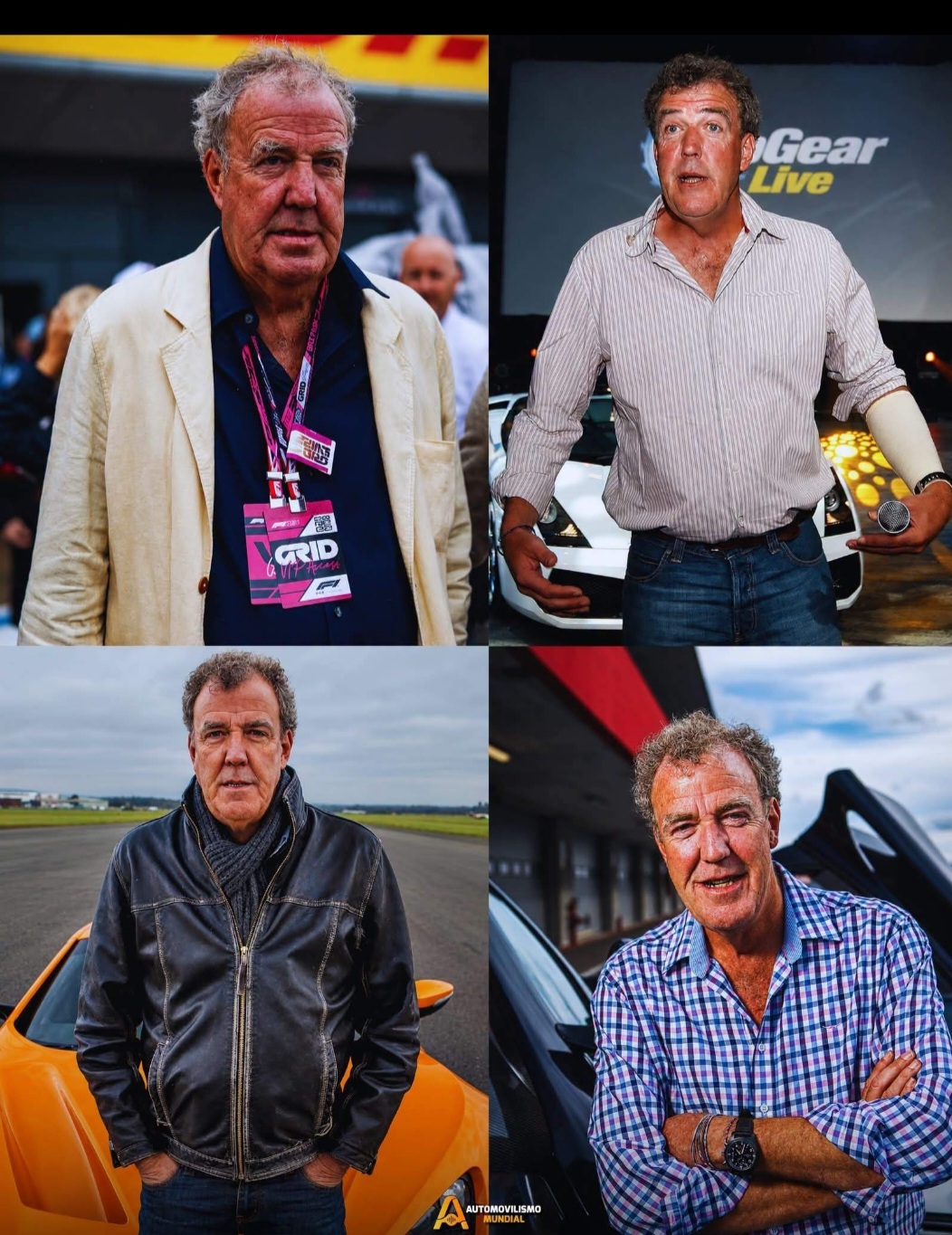
Jeremy Clarkson’s latest health battle has brought a more serious dimension to the world of motorsport and motoring entertainment, reminding fans that behind the television personality, fast cars and familiar humour is a man who has faced significant medical challenges.
The former Top Gear presenter revealed in June 2026 that he had been diagnosed with an aggressive form of prostate cancer. The announcement came during the final episodes of the fifth season of Clarkson’s Farm, where Clarkson openly discussed the diagnosis with his farm colleagues Kaleb Cooper and Charlie Ireland. Although the news was serious, Clarkson explained that the disease had been detected at an early stage.
The revelation was particularly striking because Clarkson’s Farm is normally associated with humour, farming mishaps and Clarkson’s attempts to manage life at Diddly Squat Farm. Instead, the final episodes offered viewers a much more personal look at the challenges facing the 66-year-old broadcaster.
Clarkson explained that he had undergone medical checks and a biopsy before receiving the diagnosis. He later revealed that doctors had treated the affected portion of his prostate. The series also showed him recovering in hospital, adding an unusually emotional element to a programme that has traditionally focused on farming, machinery and Clarkson’s comic misadventures.
The timing of the revelation was significant. Clarkson had already experienced a serious health scare involving his heart. In 2024, doctors discovered severe blockages in his coronary arteries, leading to urgent treatment. Clarkson subsequently described the experience as a major warning about his health and lifestyle.
For someone whose public career has been built around speed, cars and a sometimes deliberately reckless image, the contrast was difficult to ignore. For decades, Clarkson has been associated with powerful engines, high-speed driving and the excitement of motorsport. His health experiences have instead highlighted something much more fundamental: none of those things matter if a person does not have their health.
His career has made him one of the most recognisable figures in the international motoring world. His years on Top Gear, followed by The Grand Tour and Clarkson’s Farm, established a television style built around humour, adventure and an enthusiasm for machinery. Yet his recent experiences have placed greater emphasis on the person behind that public image.
The cancer diagnosis also brought attention to the importance of medical screening. Clarkson has previously spoken publicly about having regular medical examinations, and reports following his diagnosis highlighted his encouragement for people to get checked. Early detection can be particularly important with prostate cancer, which may not produce obvious symptoms during its early stages.
Clarkson’s story therefore became about more than television or cars. It also became a reminder that health problems can affect people regardless of their public profile, wealth or career. The response from viewers and colleagues demonstrated the personal connection many fans have developed with him over several decades.
Kaleb Cooper, one of Clarkson’s closest colleagues on Clarkson’s Farm, also spoke about the impact of the diagnosis. The programme showed the genuine shock of those around Clarkson when he disclosed the news, providing viewers with a glimpse of a more vulnerable side of their relationship.
The final episodes also demonstrated how quickly priorities can change. Farming schedules, television production and business concerns continued to exist, but Clarkson’s health inevitably became more important. The situation showed that even the most demanding professional commitments can take a back seat when serious medical issues arise.
For the wider motorsport community, Clarkson’s experience carries a broader message. Motorsport is built around competition, performance and technical excellence. Drivers push themselves and their machinery to the limits, while engineers constantly search for improvements in speed, reliability and efficiency. Fans celebrate victories, lap times and technological breakthroughs.
But outside the racetrack, life operates according to different priorities.
Health, family, friendship and time are things that cannot be measured by horsepower or lap records. Clarkson’s experience has provided a reminder that achievements in motoring ultimately exist within the much larger context of ordinary human life.
There has also been a more positive development since the original diagnosis became public. In June 2026, Clarkson said he was officially in remission after treatment. He reported that a subsequent PSA test showed no sign of the disease and spoke publicly about the importance of early detection.
That update changed the tone surrounding his health story. What initially appeared as a deeply worrying revelation became, at least for the moment, a story about treatment, recovery and the value of paying attention to one’s health.
Clarkson’s journey also demonstrates the unpredictable nature of life. A man best known for discussing cars, farming and adventure suddenly found himself discussing hospitals, medical tests and recovery. It is a reminder that public figures are not immune from the same vulnerabilities faced by everyone else.
For motorsport fans, the lesson is not that passion for cars or competition is unimportant. Rather, Clarkson’s experience places those passions in perspective. Cars can provide excitement, careers can create success and television can make someone famous, but health remains the foundation that allows people to enjoy those experiences in the first place.
Jeremy Clarkson’s career has always been about pushing boundaries. His recent health challenges have presented a very different kind of challenge — one that cannot be solved with a faster car, a bigger engine or a clever television stunt.
As Clarkson moves forward following his treatment and remission, his story is likely to remain significant to audiences far beyond the world of motoring. It is a reminder to take health seriously, to pay attention to medical advice and not to postpone important checks.
For a personality who has spent much of his career celebrating speed, Clarkson’s health journey offers a surprisingly simple message: sometimes the most important thing is not how fast you can go, but making sure you are healthy enough to keep moving forward.