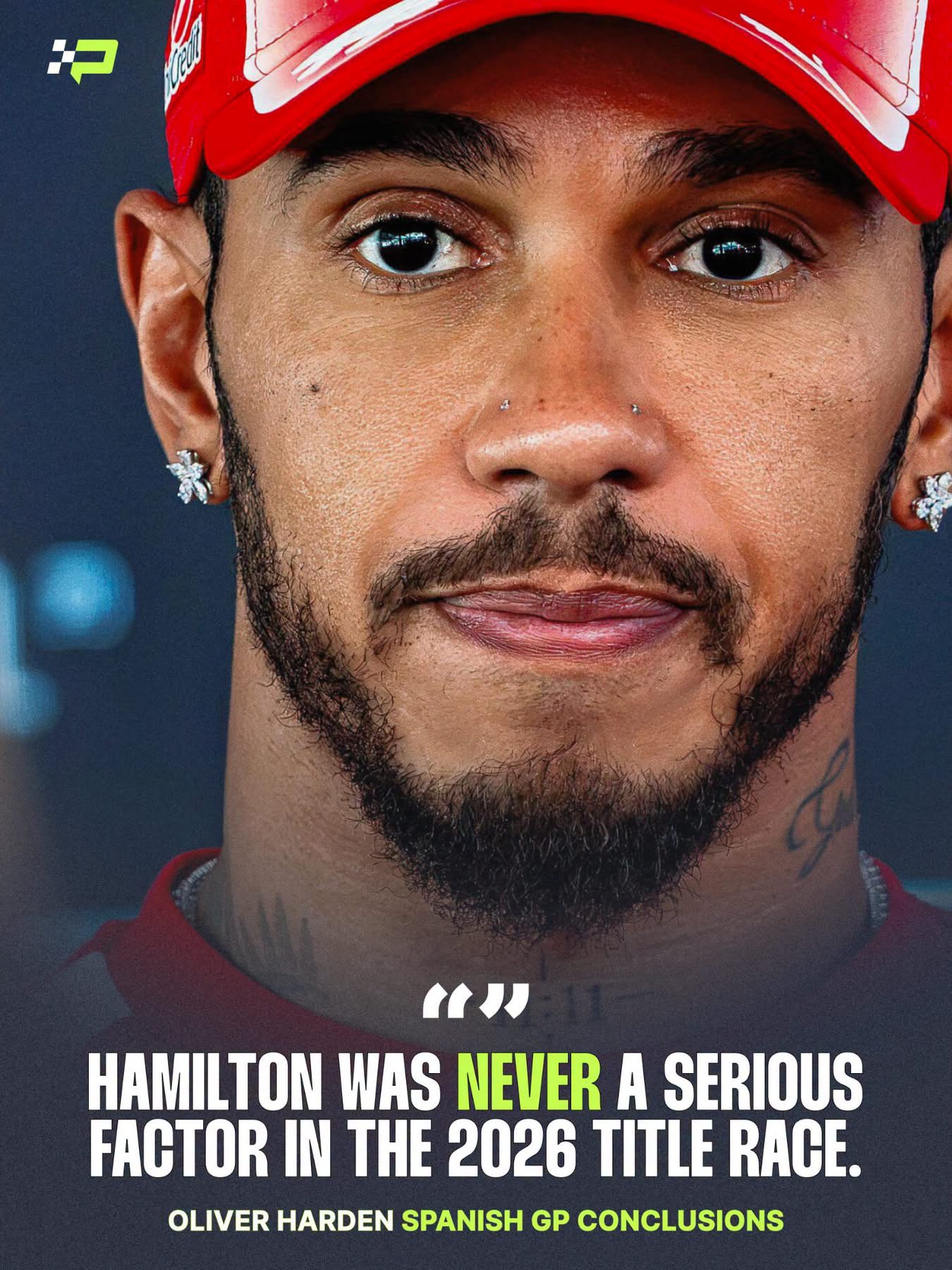
Lewis Hamilton believed a genuine window had opened for an eighth world championship after a strong performance in Spain earlier this season. What followed, according to growing reports, was the realisation that Ferrari were not equipped to capitalise on that opportunity — and that mismatch now sits at the heart of renewed tensions between the seven-time champion and the Scuderia.
The gap between Hamilton’s expectations and the team’s ability to deliver has become increasingly difficult to ignore.
THE BRIEF BELIEF THAT AN EIGHTH TITLE WAS POSSIBLE
For a short period after his Barcelona result, Hamilton appeared to sense a shift. The car showed competitive pace, the championship picture remained fluid, and the possibility of a late surge toward a historic eighth crown did not seem entirely unrealistic. At that moment, the narrative around his Ferrari chapter briefly turned optimistic.
That optimism, however, proved short-lived. Subsequent races exposed familiar weaknesses in reliability, operational consistency and strategic execution. What Hamilton interpreted as a potential turning point instead became another false dawn.
A TEAM UNABLE TO MATCH THE MOMENT
The core of the current friction lies in a fundamental misalignment. Hamilton arrived at Ferrari expecting a organisation capable of converting strong individual performances into sustained championship contention. Instead, he has encountered a team still grappling with the same structural and execution issues that have hindered them in previous seasons.
When a driver of Hamilton’s calibre identifies a narrow window of opportunity, he expects the entire organisation to align behind it. The perception that Ferrari failed to do so has fuelled private and public expressions of frustration.
RENEWED TENSIONS INSIDE THE GARAGE
Reports of strained relations between Hamilton and Ferrari have circulated for much of the season. Disagreements over strategy, internal racing protocols and the team’s overall direction have repeatedly surfaced. The sense that a genuine title chance was allowed to slip away has only intensified those underlying issues.
Hamilton’s recent comments about leadership, rules of engagement and accountability reflect a driver who feels the responsibility for progress sits higher up the organisation than the cockpit.
THE WIDER CONTEXT OF HAMILTON’S FERRARI PROJECT
Moving to Maranello was always a high-stakes decision. Hamilton left a Mercedes team he knew intimately in search of a new challenge and the chance to rewrite the final chapter of his career. Early promise has been undermined by a lack of consistency, costly retirements and the rapid rise of younger rivals such as Kimi Antonelli.
The Barcelona result briefly suggested the story could still change. The subsequent failure to build on it has reinforced the view that Ferrari remain a work in progress rather than a finished championship contender.
WHAT THIS MEANS FOR THE REST OF THE SEASON
With the championship gap now substantial, Hamilton’s focus is expected to shift toward individual race performances and influencing the team’s longer-term direction. Whether Ferrari can close the operational gap and restore his confidence will determine the tone of the relationship over the remaining races.
For now, the central tension remains unresolved. Hamilton saw a window. He believes Ferrari were not ready to walk through it. That difference in perspective continues to define one of the most closely watched driver-team dynamics in Formula 1.