## WHY THE SPORT’S MOST DOMINANT DRIVER OF THE LAST DECADE SUDDENLY SOUNDS LIKE THE REGULATIONS’ BIGGEST CRITIC
When the driver who has spent the better part of four consecutive championship campaigns making Formula 1 look easy starts publicly questioning whether the sport’s current rulebook has broken something fundamental, it’s worth paying close attention. That’s exactly the situation Formula 1 finds itself in after Max Verstappen’s remarkably candid comments to BBC Sport, in which the Red Bull driver argued that today’s hybrid power unit regulations have stripped away the very skills that used to separate elite drivers from the rest of the grid.
This isn’t just a disgruntled athlete venting after a rough patch, though the timing is impossible to ignore. Verstappen, sitting a distant sixth in the drivers’ championship with only five podiums to show for an entire season, is clearly frustrated. But strip away the context of his personal struggles and what remains is a substantive critique of Formula 1’s technical direction that deserves to be taken seriously by fans, engineers, and governing bodies alike.
## THE CORE OF VERSTAPPEN’S ARGUMENT: HAVE THE CARS BECOME “NUMB”?
At the heart of Verstappen’s complaint is Formula 1’s current generation of hybrid power units, which demand constant energy management from drivers throughout a race distance. Rather than simply attacking every corner at the absolute limit, drivers are now required to calculate when to lift off the throttle early, brake sooner than the car is physically capable of, or sacrifice outright pace in one section to preserve battery deployment for another.
Verstappen’s description of this reality is unusually vivid for a driver typically known for measured, technical explanations. He described constantly having to think about holding back, going later on throttle, braking earlier, or lifting off entirely — a mental checklist that, in his words, feels “so unnatural” and fundamentally at odds with how racing has traditionally rewarded commitment and bravery.
This is a genuinely interesting engineering and philosophical debate, not just driver griping. Historically, Formula 1’s competitive hierarchy has been shaped by which drivers could carry the most speed through a corner, brake latest into an apex, and get back on the throttle earliest without losing control. Verstappen’s argument is that the current power unit formula has diluted that equation by introducing an entirely separate skill — energy management — that can mask or even override raw driving talent. Whether or not you agree with his conclusion, it’s hard to deny that hybrid-era Formula 1 has always involved trade-offs between outright speed and energy conservation in ways that previous naturally-aspirated eras did not.
## THE TSUNODA AND LAWSON COMMENTS: BOLD, RISKY, AND CERTAIN TO STIR CONTROVERSY
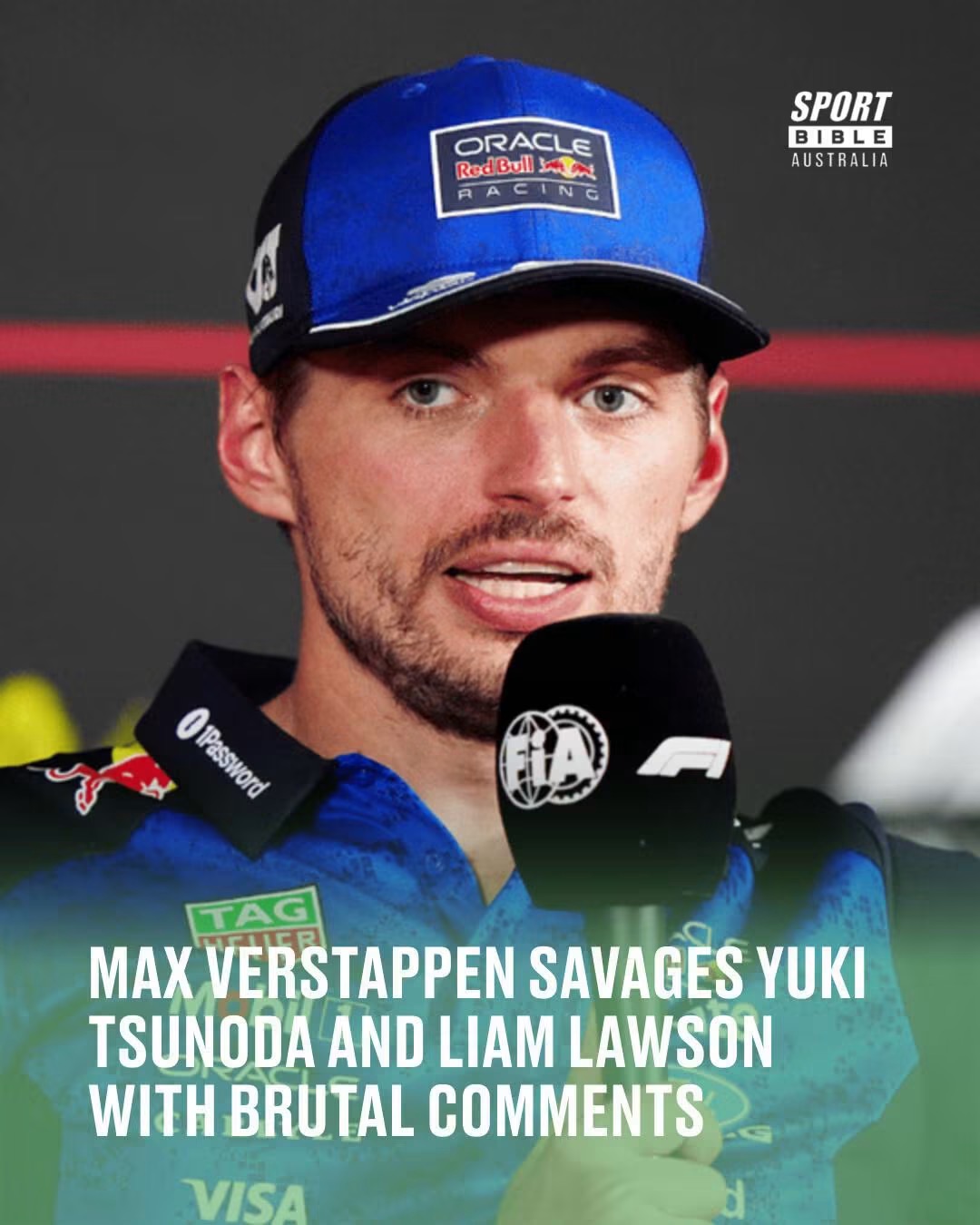
Where Verstappen’s comments moved from technical critique into genuinely spicy territory was his decision to name names. Citing Yuki Tsunoda’s immediate competitiveness after jumping into the Racing Bulls car with no prior experience in it, and Liam Lawson’s rapid adaptation after being promoted from Racing Bulls to the senior Red Bull seat, Verstappen suggested both drivers were able to be “immediately competitive” specifically because the current cars are, in his words, numb to driver inputs.
It’s worth noting that Verstappen prefaced these remarks by insisting he intended no disrespect and hoped the comments wouldn’t be picked up in isolation — a clear sign that even as he said them, he understood how they might land. That’s an important nuance often lost in headline treatments of this story. Verstappen isn’t necessarily attacking Tsunoda or Lawson’s talent as drivers; he’s using their rapid adaptation as evidence for a broader point about how forgiving the current generation of cars is toward drivers who haven’t logged extensive mileage in a specific chassis.
That said, intent and impact are two different things, and it would be naive to think Tsunoda and Lawson won’t feel the sting of being singled out by the reigning multiple world champion as examples of drivers benefiting from watered-down machinery rather than pure skill. Both drivers have fought hard throughout their careers for respect and opportunity within the Red Bull ecosystem, particularly given the ruthless reputation Red Bull has built for cycling through junior drivers who don’t perform immediately. Being cited, even with a disclaimer, as evidence that today’s cars mask driving deficiencies is not a compliment either driver likely wanted attached to their name.
## WHY VERSTAPPEN’S FRUSTRATION MATTERS BEYOND HIS OWN SEASON
It’s tempting to read this story purely through the lens of a champion struggling to adapt and looking for external explanations. Sitting sixth in the standings with 10 races remaining is a genuinely unusual position for a driver who has dominated the sport since 2021, and it would be understandable, if slightly cynical, to dismiss his regulatory complaints as sour grapes.
But there’s a more constructive way to interpret this moment. Verstappen has consistently been regarded as one of the most technically gifted and demanding drivers of his generation, someone who thrives specifically in cars that reward late braking, aggressive commitment, and precise throttle application. If a driver of his caliber is finding it harder to convert raw skill into results under the current regulations, that’s a meaningful data point for the FIA and Formula 1’s technical working groups as they continue shaping the sport’s next major regulatory cycle.
His call for a potential return to V8 engines is significant here, even if unlikely to be realized given the sport’s broader commitments to hybrid and sustainability-focused technology. It reflects a growing tension within Formula 1 between two competing priorities: the push toward more sustainable, technologically relevant power units that manufacturers can market as road-car relevant, and the traditionalist desire among purists and some drivers for a return to simpler, louder, and arguably more emotionally satisfying racing.
## THE BROADER REGULATORY DEBATE: IS F1 TOO EASY TO JUMP INTO NOW?
Verstappen’s comments tap into a debate that has simmered in the paddock for several seasons: are modern Formula 1 cars, for all their technological sophistication, actually easier to drive competitively than their predecessors? This question has real implications beyond bragging rights.
– **Driver development pathways could be affected.** If cars are genuinely more forgiving to inexperienced drivers, junior driver programs and team principals may need to rethink how much on-track experience is truly necessary before promoting a driver to a race seat.
– **The value of raw talent versus setup and strategy could shift.** If energy management and car setup increasingly determine outcomes over pure driving ability, teams with superior engineering and strategy departments could gain outsized advantages regardless of who’s in the cockpit.
– **Fan perception of competitive hierarchy may change.** Part of Formula 1’s appeal has always been mythologizing certain drivers as simply “faster” than others in a way statistics can measure. If Verstappen is right that the cars mute those differences, it could reshape how fans and pundits evaluate greatness in the current era.
Whether governing bodies act on these concerns will likely depend on how many other senior drivers echo similar sentiments in the coming weeks. A single outspoken champion is a story; a chorus of agreement from multiple grid veterans would be a genuine regulatory pressure point heading into future rule negotiations.
## WHAT COMES NEXT FOR VERSTAPPEN AND RED BULL
With 10 races remaining and Red Bull clearly not the dominant force it was during Verstappen’s title-winning seasons, expect this storyline to keep developing on two fronts. First, watch for reaction from Tsunoda and Lawson themselves, as well as from Red Bull’s senior management, who will want to avoid any perception of internal discord given how tightly the junior and senior Red Bull programs are intertwined. Second, keep an eye on whether other veteran drivers — particularly those who, like Verstappen, built their reputations in earlier eras of more analog, driver-dependent machinery — begin voicing similar frustrations publicly.
For Verstappen personally, the challenge is more immediate: converting frustration with the regulatory landscape into results on track. Four world championships have proven he’s capable of adapting to whatever regulatory framework Formula 1 puts in front of him. The real test over these final 10 races will be whether he can find a way to bend the current hybrid-era rulebook to his will one more time, or whether this season becomes remembered as the year even Formula 1’s most dominant recent champion admitted the sport had, at least temporarily, gotten the better of him.
*One thing is clear: when the driver with four world titles says the sport feels like it’s holding him back, Formula 1’s regulation-makers would be wise to listen, even if they don’t ultimately agree.*