LEWIS HAMILTON FANS DEMAND CHARLES LECLERC EXIT FERRARI AFTER DUTCH GP STRATEGY DRAMA
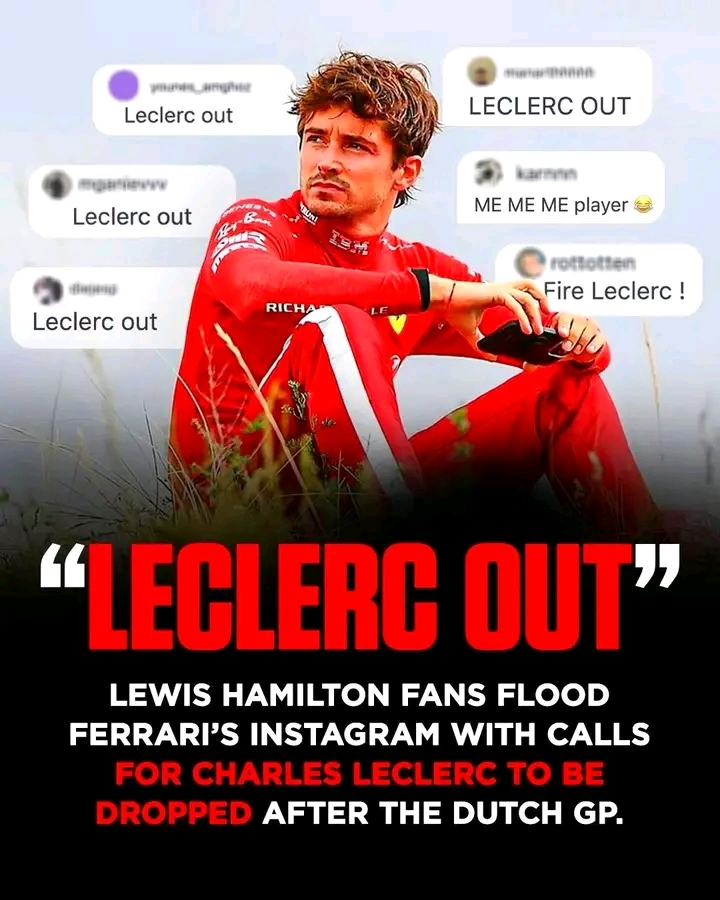
The fallout from the 2026 Dutch Grand Prix has given Ferrari another uncomfortable headline, but this time the controversy is not simply about the team’s race strategy. A section of Lewis Hamilton’s fanbase has turned its frustration toward Charles Leclerc, with some fans calling for the Monegasque driver to leave Ferrari following a tense afternoon at Zandvoort.
The reality, however, is considerably more complicated than social-media reactions suggest.
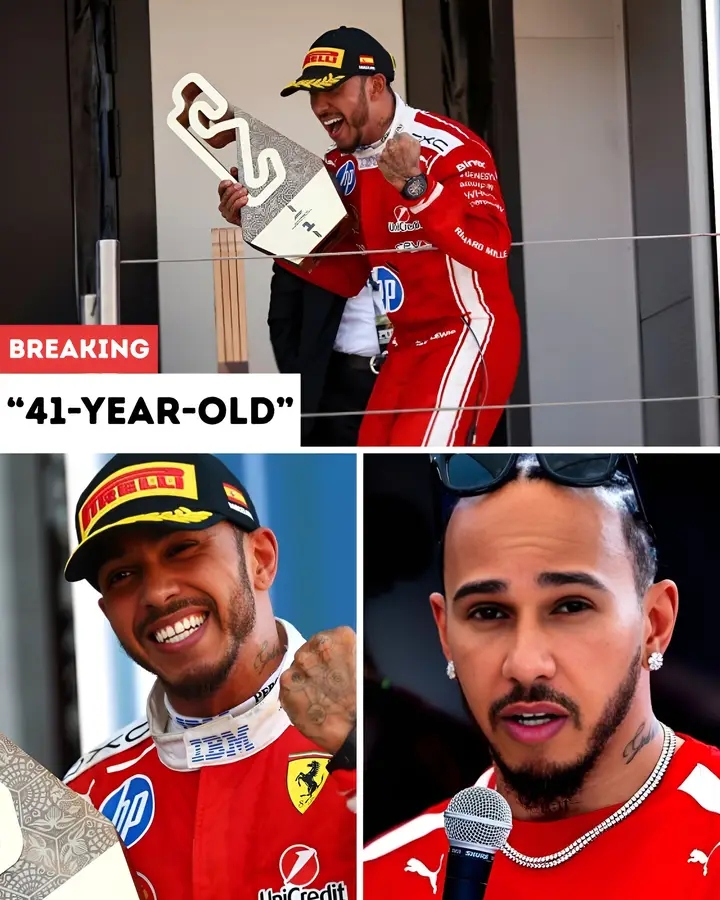
Hamilton finished fourth at the final Dutch Grand Prix, while Leclerc came home fifth, just 1.3 seconds away from the podium. Ferrari had enough race pace to put pressure on George Russell for third, but its execution during the middle phase of the race became a major talking point.
Hamilton himself was openly frustrated after spending several laps behind his teammate. Ferrari eventually instructed Leclerc to pit, but the delay meant Hamilton lost valuable time. He later admitted that his sarcastic radio messages did not show him at his best and accepted responsibility for his reaction.
That admission is important because it changes the narrative. The Dutch GP controversy was not simply “Leclerc versus Hamilton.” It exposed a much larger problem inside Ferrari: how the team manages two highly competitive drivers when every second can determine whether the team finishes on the podium.
THE STRATEGY DECISION THAT TRIGGERED THE CONTROVERSY
Ferrari entered the Dutch Grand Prix with genuine optimism.
Leclerc had already demonstrated strong pace during the Sprint weekend, finishing second in the Saturday Sprint after starting third. Hamilton, meanwhile, had struggled more during the Sprint but qualified fifth for Sunday’s main event, one place ahead of Leclerc.
During the Grand Prix, the strategic picture changed.
Hamilton was running a different tyre strategy and eventually caught Leclerc. By around Lap 43 of the 72-lap race, Hamilton believed he had superior pace and wanted Ferrari to make a decision that would allow him to attack the cars ahead.
Instead, Leclerc remained in front for another period before eventually making his stop.
Hamilton’s frustration was obvious over team radio, with the Ferrari driver sarcastically complaining about the time being lost.
From Hamilton’s perspective, the frustration was understandable. A podium was within reach, and Ferrari had a realistic opportunity to challenge Russell.
From Leclerc’s perspective, however, the situation was not as simple as deliberately blocking his teammate.
WHY BLAMING LECLERC MISSES THE BIGGER PROBLEM
This is where the online debate needs some perspective.
Leclerc did not finish ahead of Hamilton because he enjoyed a dramatically better race. Hamilton ultimately overtook him and finished fourth, while Leclerc finished fifth. The Ferrari pair were both affected by the same strategic complications and the late-race Virtual Safety Car.
More importantly, Ferrari’s own race report acknowledged that its strategy left Hamilton chasing Russell for the final podium position while Leclerc became involved in the late fight with his teammate.
That suggests the core issue was team coordination rather than one driver simply refusing to help the other.
Ferrari needs clear rules for situations like this.
If one driver is on a significantly stronger strategy, the team has to communicate that information quickly. If the faster driver is approaching a teammate, Ferrari must decide whether to swap positions, pit the leading car, or allow the drivers to race.
Leaving both drivers uncertain is the worst possible option.
HAMILTON’S FRUSTRATION WAS ABOUT MORE THAN LECLERC
Hamilton’s comments after the race revealed just how much he expected from Ferrari.
The seven-time world champion believes the team has the potential to fight for victories, but he also wants Ferrari to execute at the level required to turn performance into results. He ultimately finished fourth, less than a second behind Russell, while Lando Norris won and Kimi Antonelli finished second.
Hamilton later acknowledged that his radio comments were not representative of his best self.
That is significant.
Rather than escalating the dispute, Hamilton accepted responsibility while maintaining that Ferrari needs to learn from what happened.
For Ferrari, that is arguably more useful than the social-media calls for Leclerc to leave.
The team cannot afford to turn every strategic disagreement into a driver-versus-driver conflict.
WHY SOME HAMILTON FANS ARE TARGETING LECLERC
Hamilton’s arrival at Ferrari created enormous expectations.
The seven-time world champion joined one of the most famous teams in Formula 1 with the obvious ambition of competing for victories and, eventually, another championship. That means every lost podium opportunity is likely to generate intense scrutiny.
Leclerc, meanwhile, is Ferrari’s long-established star and has spent years building his relationship with the team.
That creates a natural tension.
When Hamilton fans see their driver lose time behind Leclerc, some will inevitably interpret the incident through the lens of competition. Social media can then turn a complicated strategic decision into a much simpler narrative: Hamilton was faster, Leclerc was in the way, therefore Leclerc was the problem.
But Formula 1 is rarely that straightforward.
A driver defending his position within the rules is not automatically sabotaging his teammate.
The responsibility ultimately belongs to the team to establish what should happen.
LECLERC ALSO HAS REASONS TO BE FRUSTRATED
It would be easy to portray Leclerc as the driver who benefited from Ferrari’s decisions.
The final result tells a different story.
Leclerc finished fifth despite Ferrari possessing enough pace to challenge for the podium. He also had to deal with a late Virtual Safety Car that neutralised the race at a particularly unfortunate moment. Leclerc himself described the timing as essentially the worst possible outcome for Ferrari’s hopes of overtaking Russell.
That means Leclerc lost out as well.
His frustration is therefore understandable.
The bigger lesson is that Ferrari cannot allow its drivers to become competitors for scraps while Mercedes and McLaren consistently maximise opportunities.
FERRARI’S BIGGEST WEAKNESS MAY BE COMMUNICATION
The Dutch GP should serve as a warning to Ferrari’s management.
Mercedes demonstrated how valuable clear communication can be when its drivers were involved in strategic decisions. Ferrari, by comparison, ended up with Hamilton frustrated behind Leclerc and both cars losing valuable time while the situation developed.
In a championship fight, those moments matter.
One missed podium can mean several points.
Several missed podiums can become dozens of points.
And dozens of points can ultimately decide a championship.
Ferrari does not necessarily need a new driver lineup. It may need a better decision-making structure.
WHAT THIS MEANS FOR LEWIS HAMILTON
Hamilton’s fourth-place finish was disappointing, but it also contained encouraging signs.
Ferrari demonstrated strong race pace, and Hamilton was able to recover from fifth on the grid to finish fourth. He also came within striking distance of Russell for the final podium position.
That suggests the car is moving in the right direction.
Hamilton’s bigger challenge is converting that pace into victories.
The Italian Grand Prix at Monza now becomes especially important. Ferrari’s home race provides another opportunity to demonstrate whether the team can execute under enormous pressure.
Hamilton has already made it clear that he believes Ferrari can win.
Now the team has to prove it.
WHAT THIS MEANS FOR CHARLES LECLERC
Leclerc should not suddenly be considered a liability because of one controversial race.
In fact, his Sprint performance showed that Ferrari’s package can suit him extremely well. He finished second in the Sprint after starting third and had strong race pace during Sunday’s Grand Prix.
The bigger question is whether Ferrari can create an environment where both drivers are given a clear and consistent opportunity to compete.
Leclerc has enormous value to Ferrari because he understands the team, knows its internal systems and remains capable of producing elite qualifying and race performances.
Replacing him would be a massive decision.
And doing so because of one strategic controversy would make little sense.
THE CHAMPIONSHIP IMPLICATIONS ARE MORE IMPORTANT
The Dutch GP was not just another race.
Hamilton and Russell are now tied on championship points, with Russell ahead on countback, while Mercedes’ Kimi Antonelli extended his championship advantage.
That makes every Ferrari point increasingly important.
If Hamilton believes he can challenge for the championship, Ferrari must ensure its two cars are working toward the same objective.
The same applies to Leclerc.
If both drivers are capable of scoring podiums and victories, Ferrari should be maximising the combined points rather than allowing internal uncertainty to cost them opportunities.
SHOULD CHARLES LECLERC REALLY LEAVE FERRARI?
At this stage, the answer is no.
There is no compelling sporting argument for Ferrari to remove Leclerc simply because of the Dutch GP controversy.
The more logical response would be to improve communication between the pit wall and the drivers.
Ferrari needs clearly defined procedures for situations involving tyre advantages, undercuts, team orders and one driver catching another.
If Hamilton has significantly better race pace because of tyre condition, the team should be able to recognise that immediately.
If Leclerc is required to pit or allow Hamilton through, he should receive a direct explanation.
And if Ferrari decides the drivers are free to race, both drivers need to know that too.
MONZA COULD CHANGE THE NARRATIVE
The next race offers Ferrari the perfect opportunity to reset.
Monza is Ferrari territory, and the pressure surrounding the team will be enormous.
A strong qualifying performance followed by clean strategic execution could quickly make the Dutch GP controversy yesterday’s news.
But another questionable strategy call could make the criticism considerably louder.
For Hamilton, Monza represents another chance to demonstrate that his Ferrari project can produce victories.
For Leclerc, it is an opportunity to answer his critics on track.
And for Ferrari, it is a test of whether the team has learned from Zandvoort.
FINAL VERDICT
The calls from some Lewis Hamilton fans for Charles Leclerc to leave Ferrari make for a dramatic headline, but the evidence from the Dutch Grand Prix points toward a more complicated conclusion.
Hamilton was understandably frustrated after losing time behind his teammate, while Leclerc also had legitimate reasons to be disappointed with how the race unfolded. The final result — Hamilton fourth and Leclerc fifth — shows that neither driver walked away with the result Ferrari’s race pace appeared capable of producing.
Hamilton has since accepted responsibility for his radio outburst, which should help prevent the disagreement from becoming a deeper personal feud.
The real question is not whether Ferrari should choose Hamilton over Leclerc.
It is whether Ferrari can give both drivers a strategy system capable of turning competitive cars into championship-winning results.
If Ferrari gets that right, Hamilton and Leclerc could become one of the strongest driver combinations on the grid.
If it gets it wrong, the arguments will continue — and the biggest winner could be Ferrari’s rivals.