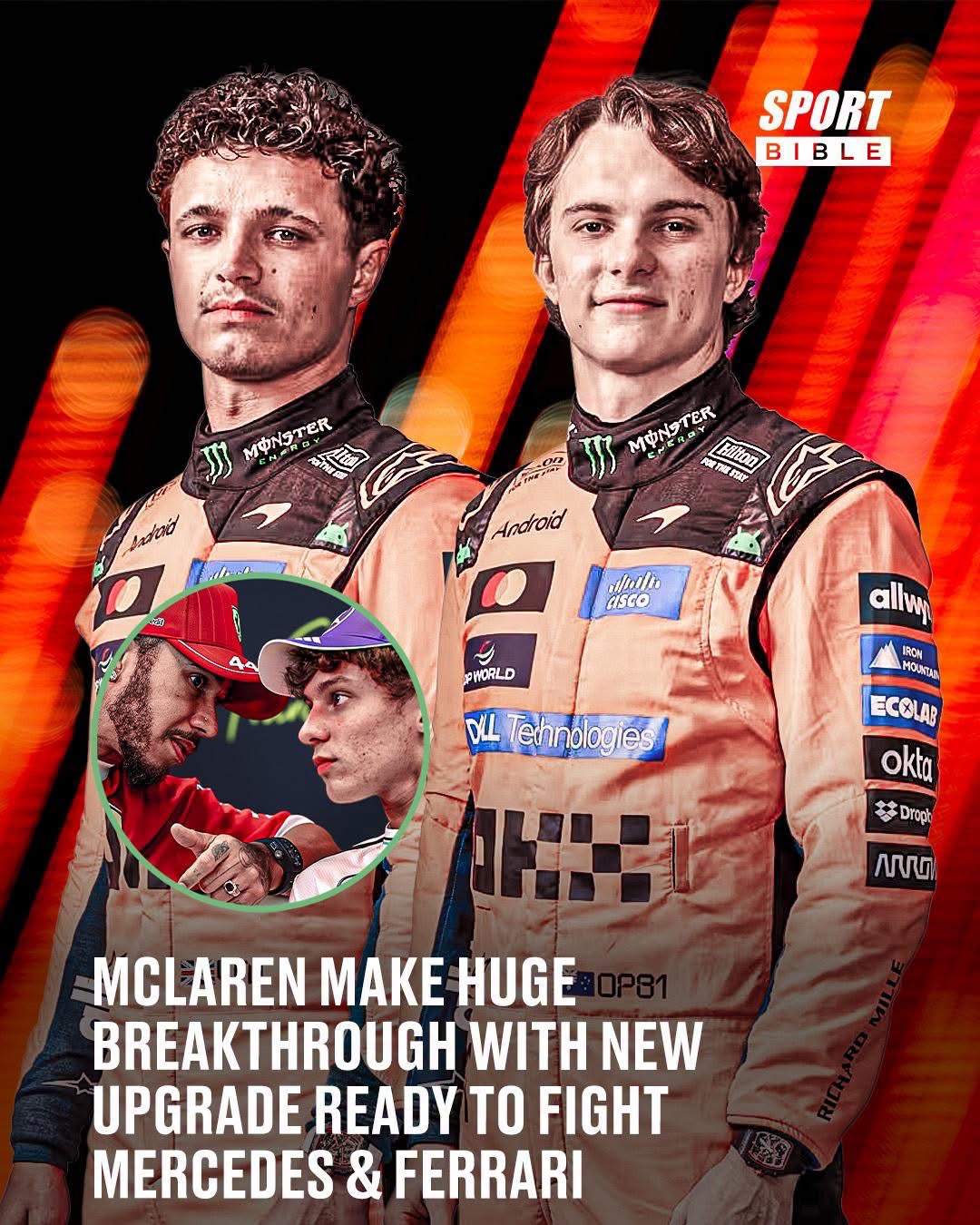
McLaren’s pursuit of Formula 1 glory could receive a significant boost after the team successfully completed testing of an innovative aerodynamic upgrade during the Hungarian Grand Prix weekend. Although the new component did not make its race debut, Team Principal Andrea Stella confirmed that the concept has passed its initial evaluations and is now being prepared for introduction later this season.
The development comes at a crucial point in the championship. While Lando Norris celebrated his first victory of the 2026 campaign in Hungary, teammate Oscar Piastri endured a frustrating afternoon that ended in retirement following gearbox failure. Despite the contrasting fortunes, the weekend offered encouraging signs that McLaren may have discovered another weapon capable of closing the gap to championship rivals Mercedes and Ferrari.
MCLAREN CONFIDENT AFTER SUCCESSFUL TRACK TEST
Rather than introducing the new package immediately into race conditions, McLaren chose a cautious approach by gathering valuable data during Friday practice at the Hungaroring. The team’s experimental rotating rear wing underwent extensive mechanical and aerodynamic testing before engineers decided to postpone its competitive debut.
Andrea Stella described the project as technically challenging but ultimately successful, explaining that the team now has confidence in the concept after collecting real-world performance data.
That measured strategy reflects McLaren’s growing maturity. Instead of rushing an upgrade into competition, the engineers prioritized understanding how the new design behaves under varying track conditions before committing to race weekends where every point could prove decisive.
WHY THIS UPGRADE MATTERS
Formula 1 has become increasingly defined by marginal gains. A few hundredths of a second per lap can determine whether a driver fights for victory or struggles to reach the podium.
McLaren’s new rear-wing concept is designed to improve aerodynamic efficiency, particularly on long straights where drag reduction plays a crucial role. If the system performs as expected, it could deliver higher top speeds without sacrificing cornering performance—a balance every team is desperately trying to achieve under the current regulations.
Ferrari has already experimented with a similar aerodynamic concept earlier in the season, while Red Bull also developed its own version before temporarily shelving the design following reliability concerns.
McLaren now hopes its version will combine performance with stability, giving the team another advantage during the second half of the championship.
THE HUNGARIAN GRAND PRIX SHOWED BOTH PROMISE AND FRUSTRATION
Hungary perfectly illustrated McLaren’s current position.
Lando Norris converted pole position into an impressive victory, demonstrating that the MCL38 already possesses race-winning pace when everything comes together. His confidence throughout the weekend highlighted just how competitive the car has become.
Oscar Piastri’s race, however, told a different story. After battling near the front, the Australian’s afternoon unraveled following contact with a backmarker before gearbox problems forced his retirement.
The mixed result underlined an important lesson for McLaren. Pure speed alone is no longer enough. Reliability, strategy, and flawless execution will ultimately determine whether the team can sustain a championship challenge over the remaining races.
THE CONSTRUCTORS’ TITLE RACE IS FAR FROM OVER
McLaren still faces a considerable challenge in the Constructors’ Championship, trailing Mercedes by a substantial margin. Closing that gap will require more than occasional victories.
Every upgrade introduced from this point forward must deliver immediate performance improvements while maintaining reliability. Consistent podium finishes from both Norris and Piastri will be essential if McLaren hopes to pressure Mercedes and Ferrari during the closing stages of the season.
Upcoming high-speed circuits such as Monza and Baku could provide the ideal environment for the rotating rear wing to make its competitive debut. Those tracks place enormous emphasis on aerodynamic efficiency, making them perfect testing grounds for McLaren’s latest innovation.
If the upgrade performs as simulations suggest, McLaren could gain valuable time on the straights while preserving the cornering strength that has become one of the car’s biggest assets.
TECHNICAL DEVELOPMENT REMAINS THE SPORT’S BIGGEST BATTLE
One of the most fascinating aspects of modern Formula 1 is that championships are often won as much in the factory as on the racetrack.
Stella emphasized that wind tunnel simulations alone cannot fully predict how advanced aerodynamic concepts behave in real racing conditions. That is why McLaren invested heavily in gathering trackside data before approving the design for future races.
This approach demonstrates how sophisticated Formula 1 development has become. Engineers now rely on enormous amounts of real-world telemetry to validate ideas before risking valuable championship points.
As rivals continue introducing their own upgrades throughout the season, McLaren knows standing still is not an option.
WHAT HAPPENS NEXT?
McLaren enters the second half of the season with renewed optimism. Norris’ breakthrough victory has boosted confidence across the entire organization, while the successful validation of the rotating rear wing provides another reason to believe the team can continue climbing.
The real test, however, will come once the upgrade is deployed under race conditions. If it delivers the expected aerodynamic gains, McLaren could emerge as an even stronger challenger to Mercedes and Ferrari in both championships.
With every race carrying greater significance as the title battle intensifies, even the smallest technical breakthrough can reshape the competitive order. McLaren is betting that its newest innovation will be one of those defining developments that changes the course of the 2026 Formula 1 season.