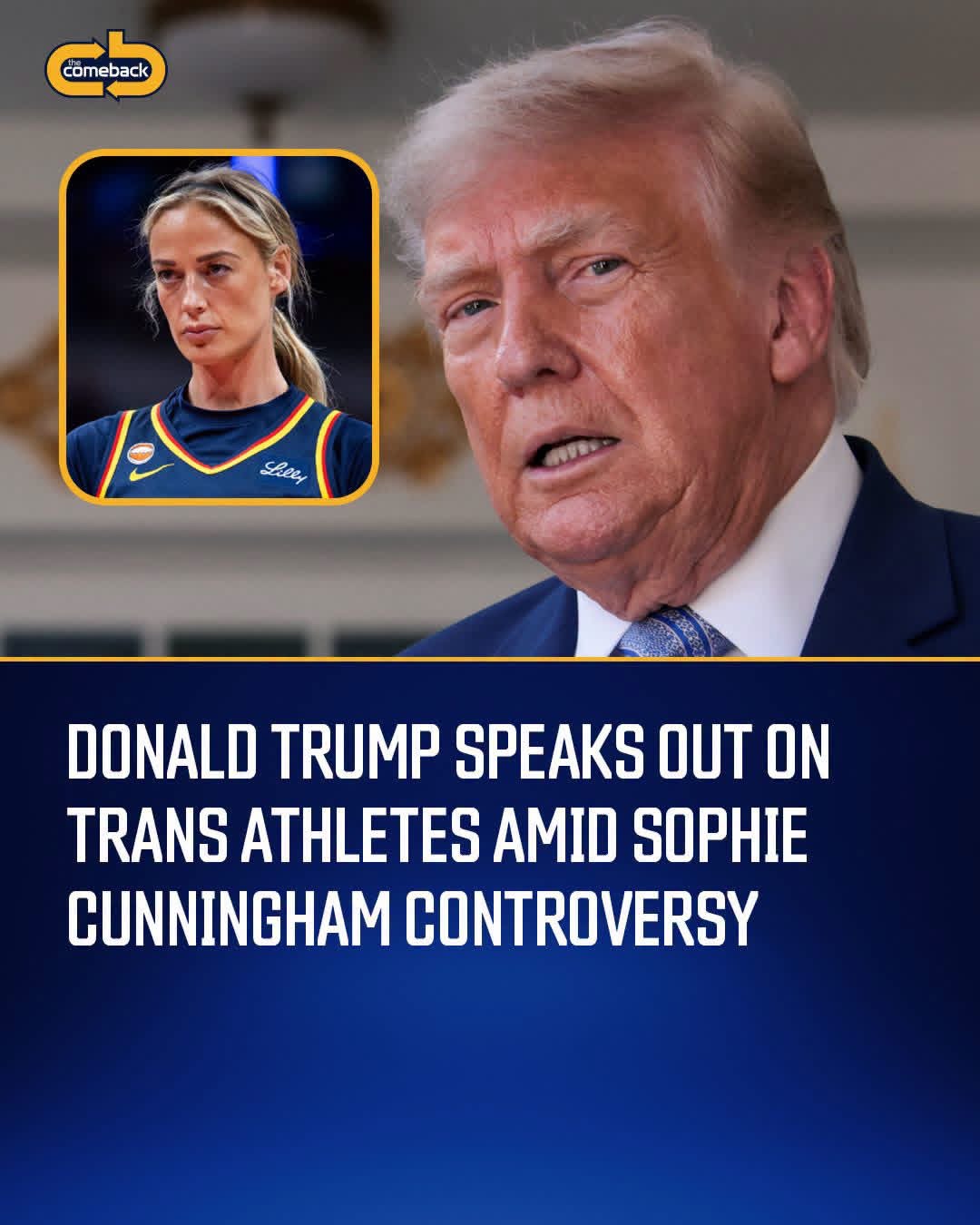
Indiana Fever guard Sophie Cunningham has become one of the most talked-about figures in the WNBA—not only because of her physical style of play and leadership off the bench, but also because of her willingness to speak openly on controversial topics. Her recent comments about transgender athletes competing in women’s sports have sparked widespread debate across the sports world, drawing responses from media personalities, political figures, and fans on both sides of the issue.
The conversation has expanded far beyond basketball, highlighting how today’s professional athletes increasingly find themselves at the center of national discussions that extend well beyond the court. Whether praised or criticized, Cunningham has made it clear she is not backing away from her position.
CUNNINGHAM EXPLAINS HER POSITION AMID BACKLASH
During a recent interview, Cunningham addressed criticism she received after expressing concerns about transgender participation in women’s sports. She rejected accusations that her comments reflected hatred toward transgender people, emphasizing that her position is rooted in what she believes is fairness and safety in female athletics.
According to Cunningham, her focus is on protecting opportunities for girls and women in competitive sports, particularly regarding locker rooms and athletic competition involving biological males.
Following the publication of her remarks, Cunningham reiterated her stance when questioned by reporters, simply stating, “I said what I said.”
Her refusal to soften or retract her comments immediately reignited discussion across social media and sports television, making the Indiana Fever veteran one of the week’s biggest talking points.
THE ISSUE HAS DIVIDED THE SPORTS WORLD
Debates surrounding transgender participation in sports have become increasingly prominent over the past several years, with athletes, governing bodies, lawmakers, and advocacy groups offering sharply different viewpoints.
Supporters of restrictions argue that biological differences can create competitive advantages in certain sports, particularly at elite levels of competition. Others maintain that transgender athletes deserve opportunities to participate in sports consistent with their gender identity, emphasizing inclusion and equal access.
The issue has prompted governing organizations across multiple sports to introduce new eligibility policies, although those rules vary significantly depending on the sport and competition level.
The ongoing discussion illustrates how difficult it has become to balance competitive fairness, athlete inclusion, and evolving scientific and legal considerations.
MEDIA PERSONALITIES OFFER SHARPLY DIFFERENT OPINIONS
Cunningham’s comments quickly generated contrasting reactions from prominent voices in sports media.
ESPN commentator Stephen A. Smith publicly supported Cunningham’s position, saying he believed she was correct in raising concerns about competitive fairness in women’s sports.
Meanwhile, television personality West Wilson, who is also a longtime friend and podcast co-host of Cunningham, offered a different perspective. Wilson questioned the scale of the issue, suggesting that transgender participation in sports represents a relatively small number of athletes compared to the overall population of competitors.
That view aligns with previous public comments from NCAA president Charlie Baker, who said in 2024 that he was aware of fewer than ten transgender athletes competing among more than 500,000 NCAA student-athletes at the time.
Although opinions differ on how significant the issue is, the debate continues to generate widespread attention whenever high-profile athletes speak publicly.
POLITICAL LEADERS HAVE ALSO ENTERED THE CONVERSATION
The discussion surrounding transgender participation in sports has increasingly become part of broader political debates in the United States.
President Donald Trump recently addressed the issue during a public appearance, arguing that allowing biological males to compete in women’s sports is unfair. His remarks reflected positions he has expressed on multiple occasions regarding athletic competition and eligibility rules.
Political involvement has further intensified public interest, making the conversation about far more than sports alone. As legislative proposals and governing-body policies continue evolving, athletes often find themselves commenting on issues that carry significant legal, social, and political implications.
WHAT THIS MEANS FOR THE WNBA AND THE INDIANA FEVER
Although Cunningham’s comments were made in a personal capacity, the attention surrounding them inevitably places additional focus on both the Indiana Fever and the WNBA.
The league has experienced unprecedented growth over the past two seasons, with record television ratings, increased attendance, and heightened media exposure driven by stars such as Caitlin Clark, A’ja Wilson, Breanna Stewart, and others.
With that increased visibility comes greater scrutiny of everything players say on and off the court. Topics that might once have remained relatively niche now become national headlines within hours.
For the Fever, maintaining focus on basketball while navigating off-court discussions will remain an important challenge as the team continues its pursuit of playoff success.
WHY ATHLETE VOICES CARRY MORE WEIGHT THAN EVER
Professional athletes have long used their platforms to discuss issues they believe matter, and modern social media has amplified those voices significantly.
Whether addressing social justice, mental health, equality, player safety, or public policy, athletes increasingly influence conversations that extend beyond their respective sports.
Cunningham’s comments demonstrate both the opportunities and responsibilities that come with that visibility. While many supporters applaud athletes for expressing their personal beliefs, others argue that public figures should be prepared for criticism when discussing divisive issues.
Ultimately, there is no universal consensus on the subject itself, but one reality is clear: discussions surrounding fairness, inclusion, and competitive integrity in sports are unlikely to disappear anytime soon.
As governing bodies continue reviewing policies and public opinion remains divided, athletes like Sophie Cunningham will likely remain influential voices in one of the most complex conversations facing modern sports. Regardless of where individuals stand on the issue, the debate underscores how the intersection of sports, society, and public policy has become an increasingly significant part of the professional athletic landscape.