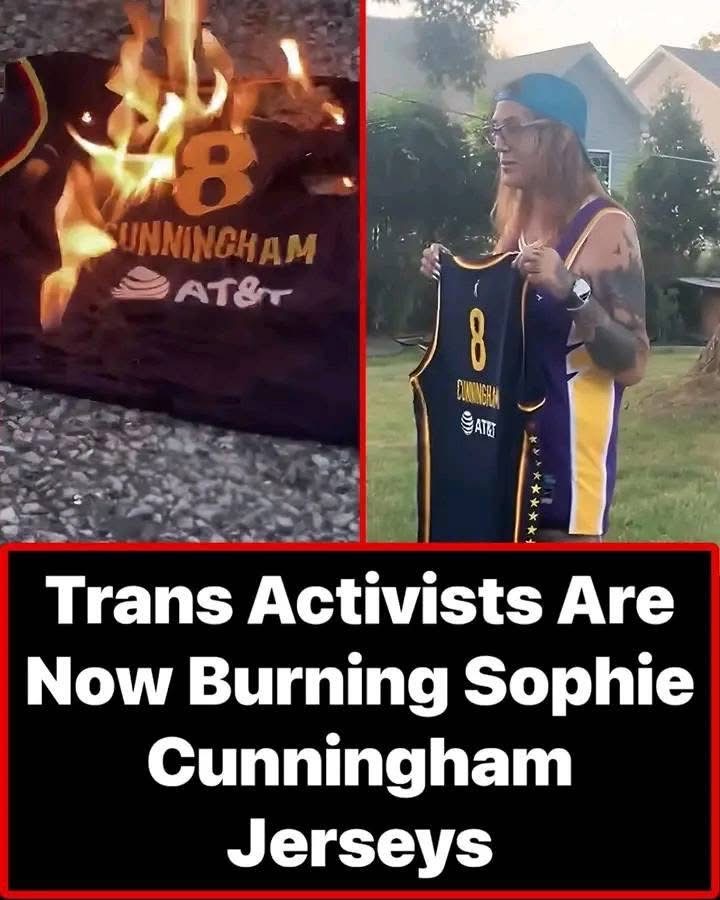
Indiana Fever guard Sophie Cunningham has become the center of one of the WNBA’s most heated off-court controversies this season, after doubling down on remarks she made about transgender athletes in women’s sports. The backlash began following a wide-ranging ESPN profile in which Cunningham was asked about her political image, including the “MAGA Barbie” label that has followed her online, and used the opportunity to lay out her views on a subject the league has largely avoided addressing head-on.
In that interview, Cunningham said she wanted to “protect young girls in the locker room” and argued they “shouldn’t have to go against biological men” in competition. She was careful to frame the comments as coming from a place of care rather than hostility, saying she extends “love” to everyone but believes that love has to include honesty about what she sees as unfair competitive dynamics. It’s a distinction she has leaned on repeatedly since the story broke — insisting she doesn’t “dislike” transgender people even as critics say her language singles them out.
The real test came days later, when reporters caught up with her ahead of Indiana’s matchup against the Connecticut Sun and gave her a chance to walk the comments back. She didn’t take it. “I said what I said. I think it’s kind of common sense,” Cunningham told the assembled media, adding that she considers protecting “little girls” in that category a priority she isn’t willing to abandon. It was a notably unapologetic follow-up in an era when athletes caught in similar controversies typically issue carefully worded statements softening their original remarks.
The response online was immediate and split sharply along ideological lines. Critics accused her of using rhetoric that stigmatizes transgender athletes as inherently threatening, with some pointing to the WNBA’s own “No Space for Hate” initiative and arguing the league’s inclusivity messaging should apply to a player’s comments just as much as to fan conduct. Supporters — including high-profile figures in the broader debate over sex-based sports categories — framed her as refreshingly candid, someone willing to state a position other athletes may hold privately but avoid voicing publicly for fear of backlash.
Cunningham has resisted being pigeonholed by either camp, describing her own politics as “very much in the middle” rather than aligned with any movement. That positioning matters, because it complicates the easy narrative either side wants to tell — she isn’t running from the controversy as a chastened public figure, but she’s also not embracing a partisan label, which makes her a harder target to neatly categorize than most athletes who wade into similar territory.
The broader context is impossible to separate from Cunningham’s comments: they land amid a national legal and political fight over transgender participation in women’s sports, one that has already produced state-level bans and recent Supreme Court attention. That’s part of why a single ESPN quote from a WNBA guard escalated so quickly into national conversation — she isn’t just weighing in on a locker-room issue, she’s stepping into a live legal and legislative battle that extends well beyond basketball.
For now, the Indiana Fever organization has avoided directly addressing Cunningham’s specific comments, instead reaffirming a general commitment to an inclusive fanbase — a carefully hedged position that neither endorses nor repudiates what one of its most popular players has said. Whether that studied silence holds as the story continues to generate national attention, or whether pressure eventually forces the team or league to take a clearer position, remains one of the more interesting threads to watch as the WNBA’s 2026 season continues.