Formula 1 has been filled with fierce debates throughout the 2026 season, but one of the latest disagreements has come from two former world champions with very different perspectives. Damon Hill has openly rejected Fernando Alonso’s claim that Formula 1 is “a bit unfair” to Max Verstappen, arguing that the Dutchman’s current struggles at Red Bull should not be viewed through a sympathetic lens.
The exchange has reignited discussions about whether even the sport’s greatest drivers are ultimately limited by the machinery beneath them. While Verstappen remains widely regarded as one of Formula 1’s elite talents, Red Bull’s difficult campaign has left him battling outside the championship fight, creating one of the biggest talking points of the season.
ALONSO BELIEVES VERSTAPPEN DESERVES BETTER
Fernando Alonso believes Verstappen’s performances continue to prove he is the strongest driver on the current Formula 1 grid, regardless of the championship standings. The Aston Martin veteran argued that it feels unjust to see a driver of Verstappen’s caliber finishing outside the title battle because of his car’s limitations.
According to Alonso, the four-time world champion has consistently extracted more from the RB22 than many believed possible. He suggested that Formula 1 can appear unfair when the best-performing driver is unable to compete for victories simply because rival teams have developed stronger packages.
Alonso’s comments also reflected a long-standing truth about Formula 1: success depends on the combination of driver talent, engineering excellence, strategy, and reliability. Even legendary drivers have endured seasons where exceptional performances were overshadowed by inferior machinery.
DAMON HILL DISMISSES THE ARGUMENT
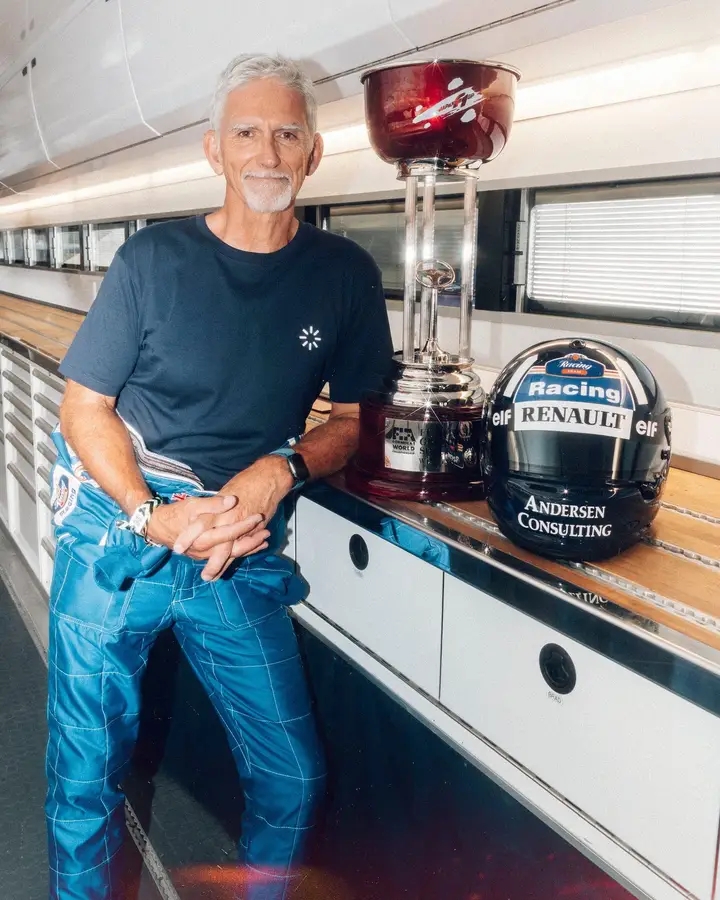
Damon Hill, however, wasted little time responding. Writing on social media, the 1996 world champion bluntly dismissed Alonso’s opinion, saying he “strongly disagrees” with the suggestion that Verstappen’s situation represents an unfair aspect of Formula 1.
Hill has never hidden his views on Verstappen’s racing style. Throughout recent years, he has regularly criticized the Dutchman for what he considers overly aggressive driving, often arguing that Verstappen crosses competitive boundaries that other drivers respect.
Although Hill acknowledges Verstappen’s extraordinary speed and consistency, he continues to believe there is an important distinction between raw talent and racecraft. Previously responding to comparisons between Verstappen and Niki Lauda, Hill argued that while both drivers possess exceptional intelligence behind the wheel, Lauda relied more on calculated precision than aggressive confrontation.
WHY THIS DEBATE MATTERS
The disagreement highlights one of Formula 1’s oldest questions: how much credit belongs to the driver, and how much belongs to the car?
History shows that even the greatest champions have experienced seasons where they could do little more than maximize difficult equipment. Drivers such as Fernando Alonso, Lewis Hamilton, Sebastian Vettel, and Ayrton Senna all endured periods where their talent exceeded the competitiveness of their cars.
Verstappen’s 2026 campaign has become another example. Despite delivering several standout performances, Red Bull’s inconsistent pace, reliability concerns, and operational setbacks have prevented him from regularly challenging McLaren, Ferrari, and Mercedes.
For many fans, Alonso’s comments simply acknowledge the reality that Formula 1 has always been a constructor-driven championship. Hill, meanwhile, appears to view the situation differently, believing difficult seasons are simply part of elite motorsport rather than evidence of unfairness.
HILL’S PERSONAL EXPERIENCES SHAPE HIS VIEW
Hill’s opinions are also influenced by his own racing career. Before reaching Formula 1, he competed in motorcycle racing, where physical contact often carries much greater risks. That background has helped shape his belief that drivers should avoid unnecessary aggression whenever possible.
His famous rivalry with Michael Schumacher also left a lasting impression. Their controversial collision during the 1994 championship battle denied Hill a chance to win the world title that season, making him particularly sensitive to discussions surrounding aggressive racing tactics.
Those experiences explain why Hill has remained one of Verstappen’s most outspoken critics, even after stepping away from his role as a Sky Sports F1 analyst and joining BBC Radio 5 Live.
WHAT THIS MEANS FOR VERSTAPPEN AND RED BULL
Regardless of the debate, Verstappen’s immediate priority remains helping Red Bull recover its competitiveness. The team has endured an unusually difficult season, with technical problems, inconsistent upgrades, and increasing pressure from rival manufacturers.
Speculation surrounding Verstappen’s long-term future has only intensified as Red Bull struggles to match the pace of its closest competitors. Every disappointing result inevitably fuels rumors linking him with potential opportunities elsewhere, particularly if another leading team can offer a more competitive package under Formula 1’s evolving regulations.
If Red Bull cannot reverse its decline before the end of the season, questions surrounding Verstappen’s future are likely to become one of the biggest stories heading into the next championship.
CHAMPIONSHIP IMPLICATIONS
From a championship perspective, Verstappen’s reduced involvement has dramatically changed the competitive landscape. Instead of another season dominated by Red Bull, Formula 1 has enjoyed a much more unpredictable battle among several front-running teams.
While this has created exciting racing for fans, it has also reinforced how quickly fortunes can change in Formula 1. Dominant teams can lose their advantage within a single development cycle, while drivers once considered unbeatable suddenly find themselves fighting simply to remain near the front.
Whether fans agree with Alonso or Hill, their debate underscores a fundamental reality of Formula 1: greatness alone is rarely enough. Championships are won when exceptional drivers are matched with exceptional cars, and when either element falls short, even the sport’s biggest stars can find themselves watching the title fight from the sidelines.
As the 2026 season continues, Verstappen’s performances will remain under intense scrutiny. If Red Bull can unlock meaningful improvements, the Dutchman could still remind the paddock why many consider him the benchmark of modern Formula 1. If not, the conversation about whether Formula 1 is truly fair—and whether Verstappen should seek a new challenge—will only grow louder.