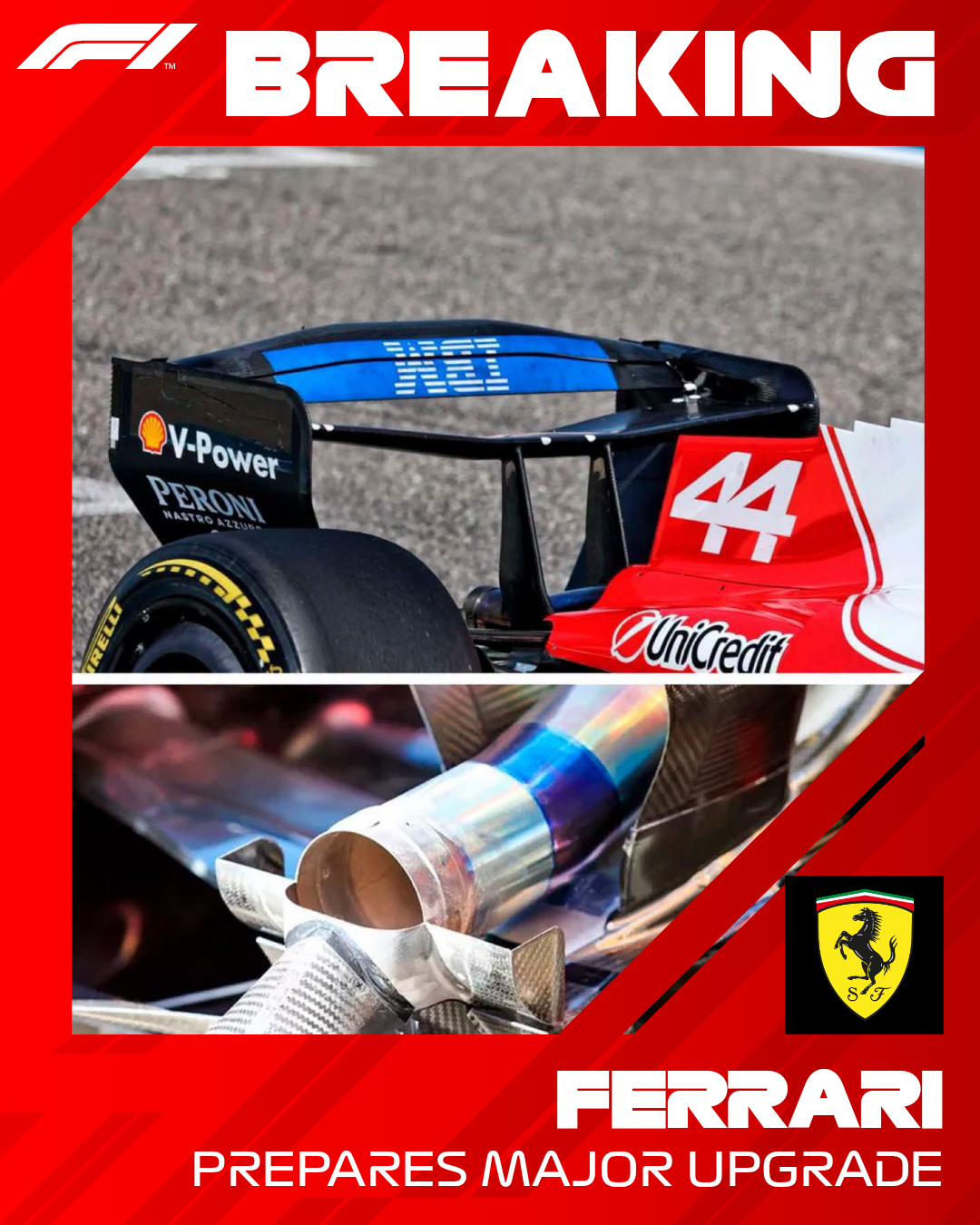
Ferrari is reportedly preparing one of its most significant technical upgrades of the 2026 Formula 1 season, with the Italian team expected to introduce a new rear wing package at the Belgian Grand Prix in Spa-Francorchamps. According to reports from Motorsport IT, the Scuderia believes its latest aerodynamic concept—nicknamed the “Macarena” evolution wing—could deliver a substantial increase in straight-line speed while remaining compliant with Formula 1’s evolving technical regulations.
If the reported figures prove accurate, Ferrari could gain approximately 11 km/h on Spa’s long straights, a remarkable improvement at a circuit where top speed often plays a decisive role. Such an upgrade would not only strengthen Ferrari’s qualifying pace but could also dramatically improve overtaking opportunities during one of the fastest races on the Formula 1 calendar.
FERRARI APPEARS CONFIDENT DESPITE TECHNICAL SCRUTINY
One of the most intriguing aspects of the reported development is Ferrari’s confidence regarding ongoing scrutiny of flexible rear-wing concepts. While several teams have faced questions over similar aerodynamic solutions, Ferrari reportedly believes its design is fully compliant and engineered to meet every FIA requirement.
That confidence suggests the Maranello-based outfit has invested heavily in developing an alternative solution that delivers comparable performance gains without relying on concepts that could become restricted through future technical directives. If successful, Ferrari may gain an advantage while rivals are forced to redesign their own packages.
WHY SPA-FRANCORCHAMPS IS THE PERFECT TESTING GROUND
The Belgian Grand Prix provides one of the best opportunities to evaluate high-speed aerodynamic efficiency. Spa-Francorchamps combines iconic flat-out sections such as the Kemmel Straight with demanding high-speed corners like Eau Rouge, Raidillon, and Blanchimont, forcing engineers to strike the perfect balance between maximum speed and sufficient downforce.
An extra 11 km/h may appear modest on paper, but in modern Formula 1, where margins are measured in thousandths of a second, such an improvement could translate into several tenths per lap. Those gains can often determine whether a team is fighting for victory or settling for the lower positions on the podium.
FERRARI MAY ALSO REWORK ITS AERODYNAMIC PACKAGE
Reports also suggest Ferrari could move away from its current blown diffuser configuration. While abandoning that setup may reduce overall aerodynamic downforce, engineers reportedly expect to recover approximately seven horsepower from the power unit package.
This highlights one of Formula 1’s most fascinating engineering challenges: every performance gain usually requires a compromise elsewhere. Sacrificing some cornering grip in exchange for additional horsepower and higher straight-line speed could prove highly effective at Spa, where overtaking opportunities reward cars with superior acceleration and terminal velocity.
THE UPGRADE COULD HAVE CHAMPIONSHIP-WIDE CONSEQUENCES
Should Ferrari’s latest package perform as expected, it may force rival teams such as McLaren, Red Bull, and Mercedes to accelerate their own development programs. Formula 1 championships are often decided by incremental improvements, and a successful aerodynamic innovation can quickly reshape the competitive order.
Every upgrade introduced at this stage of the season carries greater significance because development windows become increasingly limited. Teams must carefully decide whether to continue investing in the current car or shift resources toward future regulations, making every successful update even more valuable.
WHAT THIS COULD MEAN FOR THE REST OF THE SEASON
If Ferrari successfully combines greater straight-line speed with acceptable aerodynamic stability, Spa could become the turning point of its 2026 campaign. Improved qualifying performance, stronger race pace, and enhanced overtaking capability would significantly boost the team’s chances of challenging consistently at the front.
However, Formula 1 development is rarely straightforward. Performance observed in simulations and wind tunnels does not always translate perfectly to race weekends, particularly at a demanding circuit like Spa-Francorchamps, where changing weather conditions frequently complicate car setup.
For now, all eyes will be on Ferrari when the Belgian Grand Prix begins. If the reported “Macarena” evolution wing delivers the expected gains while remaining fully compliant with FIA regulations, the Scuderia could arrive in Belgium with one of the most influential technical upgrades of the season—one capable of reshaping not only its own championship ambitions but also the competitive landscape across the Formula 1 grid.