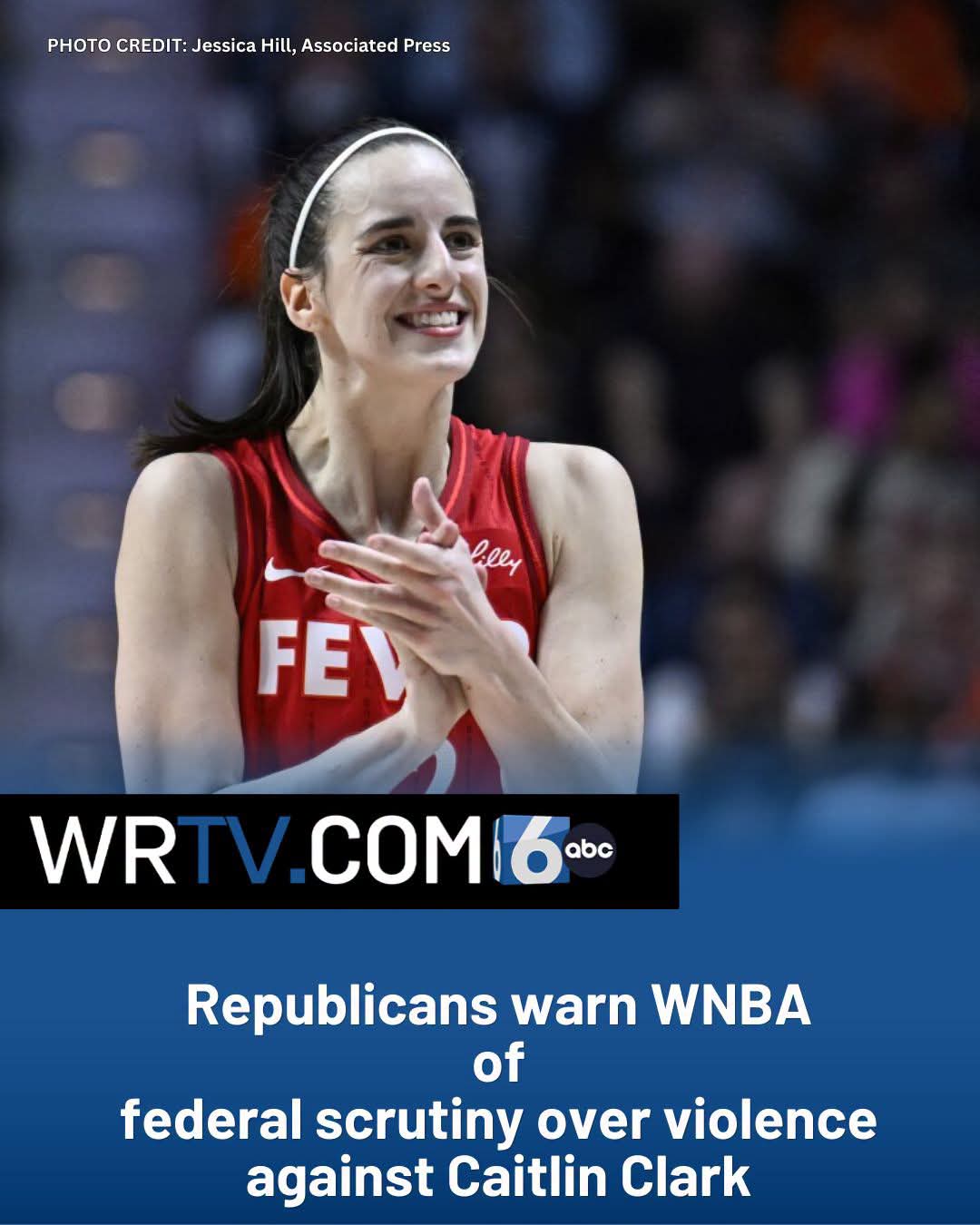
The debate surrounding player safety in the WNBA has reached a new level after a coalition of Republican lawmakers formally called on league commissioner Cathy Engelbert to explain how the league plans to protect Indiana Fever superstar Caitlin Clark. The letter, signed by lawmakers from several states—including three representatives from Indiana—argues that repeated physical incidents involving Clark deserve greater scrutiny and stronger disciplinary action from the league.
The development adds a political dimension to what has already been one of the most discussed topics in professional basketball. While Clark’s rise has helped elevate the WNBA’s popularity to unprecedented heights, concerns over physical play, officiating standards, and player protection continue to generate intense debate among fans, analysts, and now federal lawmakers.
LAWMAKERS QUESTION THE WNBA’S RESPONSE TO PHYSICAL PLAY
The lawmakers, led by Texas Representative August Pfluger, sent a letter requesting detailed information about the league’s handling of incidents involving Clark. They pointed to several highly publicized moments in which the Fever guard absorbed hard contact during games, arguing that the league has not consistently demonstrated that player safety is its highest priority.
The group is asking the WNBA to explain:
How the league reviews incidents involving excessive physical play.
What disciplinary measures exist for players who cross the line.
What protections are available for athletes facing harassment or threats outside the arena.
Commissioner Cathy Engelbert has been asked to respond by July 24.
WHY THIS STORY MATTERS BEYOND ONE PLAYER
Although the focus is currently on Caitlin Clark, the larger issue extends to every player in the league. Professional basketball has always balanced physical competition with player safety, and finding that balance becomes even more important as the WNBA attracts larger television audiences, increased sponsorship investment, and growing international attention.
Clark has become one of the league’s biggest attractions, drawing record television ratings, sold-out arenas, and increased merchandise sales since entering the WNBA. Because of her enormous commercial impact, every controversial hit or officiating decision involving her receives national attention.
The conversation is no longer simply about whether a particular foul deserved a harsher penalty. It has evolved into a broader discussion about how the league should protect all of its athletes while preserving the physical style of play that many fans appreciate.
THE POSSIBILITY OF FEDERAL SCRUTINY RAISES THE STAKES
Perhaps the most significant aspect of the lawmakers’ letter is the suggestion that federal agencies could become involved if evidence were found that discrimination or retaliation created a hostile work environment.
The lawmakers referenced the possibility of investigations by agencies such as the Department of Justice, Department of Labor, or Equal Employment Opportunity Commission if serious concerns emerge. At this stage, no such investigation has been announced, but the warning alone increases pressure on league officials to clearly explain their policies.
Whether or not federal involvement ever materializes, the public attention surrounding the issue ensures that the WNBA’s response will be closely examined.
INDIANA FEVER MAINTAIN THEIR POSITION
The Indiana Fever have consistently emphasized that player safety remains one of their top priorities. Team officials indicated that neither Caitlin Clark nor the organization had been contacted before the lawmakers’ letter was released.
The franchise reiterated that it has maintained ongoing communication with league officials regarding player protection and intends to continue advocating for both its athletes and league-wide standards.
That response reflects a measured approach, allowing the organization to support its players while avoiding further escalation of an already sensitive issue.
THE WNBA NOW FACES A CRUCIAL TEST
The league finds itself navigating one of the most challenging periods in its modern history. On one hand, increased physical intensity has become part of the competitive identity of today’s WNBA. On the other, protecting star players and maintaining public confidence in officiating has become increasingly important as the sport continues its rapid growth.
How the WNBA responds over the coming weeks could shape public perception for the remainder of the season. Clear communication, consistent officiating, and transparent disciplinary standards may prove just as important as the games themselves.
Regardless of political opinions or team loyalties, one reality is difficult to ignore: player safety has become one of the defining conversations surrounding the league. As the WNBA continues its remarkable rise in popularity, every decision regarding athlete protection will carry greater significance—not only for Caitlin Clark, but for every player competing on the court.