MERCEDES FACES INTENSIFIED FIA INSPECTION AFTER RIVAL CONCERNS EMERGE
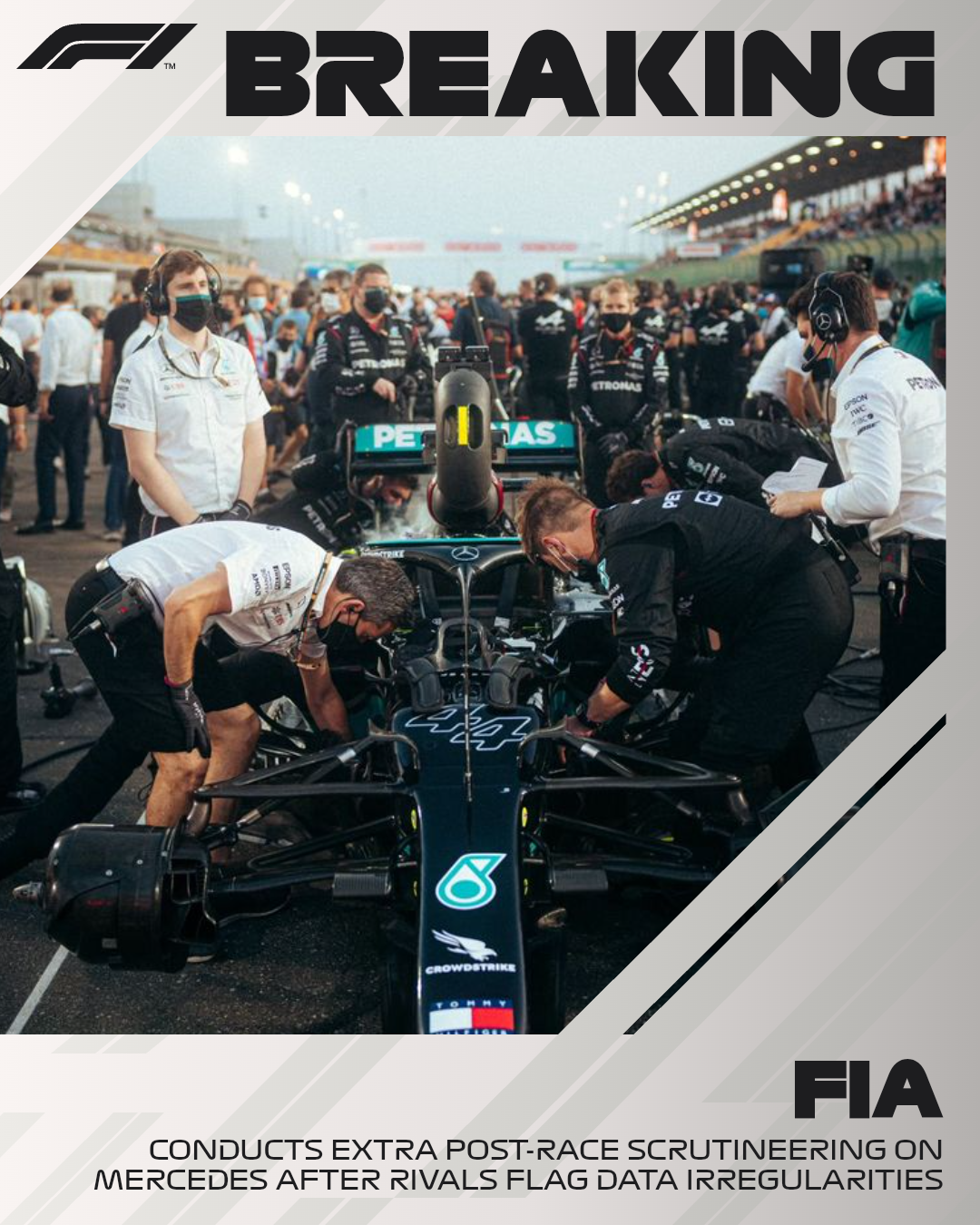
Fresh speculation has swept through the Formula 1 paddock following claims that the FIA has carried out additional post-race scrutineering on Mercedes after rival teams reportedly questioned irregularities in the team’s performance data.
At this stage, there has been no official confirmation from the FIA that Mercedes has breached any Formula 1 regulations. Likewise, there has been no evidence that any technical infringement has been discovered. However, reports of enhanced inspections have reignited debate over the increasingly sophisticated technology used under Formula 1’s current regulations.
Formula 1 teams routinely examine competitors’ data, onboard footage, telemetry, and race performance in an effort to identify possible innovations or areas that deserve closer scrutiny. Whenever one car demonstrates an unexpected performance advantage, questions naturally begin circulating throughout the paddock.
POST-RACE SCRUTINEERING IS A NORMAL PART OF FORMULA 1
Although headlines mentioning extra FIA inspections often create dramatic reactions among fans, post-race scrutineering is an established part of every Grand Prix weekend.
The FIA regularly performs detailed technical examinations on selected cars after races. These inspections may include checks on aerodynamic components, suspension systems, electronic controls, brake assemblies, power unit operation, weight distribution, fuel samples, and numerous other areas covered by the sport’s technical regulations.
Sometimes teams are selected randomly. In other situations, unusual performance trends or questions raised by competitors may lead officials to perform additional examinations. Conducting these inspections should not automatically be interpreted as evidence that a team has broken the rules.
WHY MERCEDES HAS ATTRACTED ATTENTION
Mercedes has shown encouraging pace in recent races, with improvements in race management, tyre performance, and overall consistency drawing attention from both fans and rival engineers.
Whenever a leading team uncovers significant performance gains, competitors inevitably begin searching for explanations. Formula 1’s history is filled with examples of legal innovations initially viewed with suspicion before ultimately being declared compliant.
The modern technical regulations are extraordinarily complex, leaving little room for interpretation. Even small engineering discoveries can produce meaningful advantages over a race distance, making every technical development subject to intense scrutiny.
If rivals genuinely believe a loophole exists, they are entitled to bring their concerns to the FIA for clarification or further investigation.
WHAT HAPPENS IF THE FIA FINDS NOTHING?
Should the FIA complete its inspections without identifying any rule violations, Mercedes would effectively receive confirmation that its design complies with Formula 1 regulations.
In many previous cases, teams have emerged stronger after passing extensive inspections because the process validates their engineering solutions. Rival teams are then forced to either develop similar concepts within the regulations or search for alternative performance gains.
On the other hand, if the FIA determines that a regulation requires clarification, it may issue a Technical Directive to ensure all competitors interpret the rules consistently going forward. Such directives are relatively common throughout an F1 season and do not necessarily imply wrongdoing.
THE CHAMPIONSHIP IMPLICATIONS COULD BE SIGNIFICANT
With championship battles often decided by only a handful of points, every technical question carries enormous importance.
If Mercedes continues to improve while remaining fully compliant with FIA regulations, it could strengthen its position against Ferrari, Red Bull, McLaren, and the rest of the field as the season progresses.
However, until the governing body releases any official findings, the discussion remains speculative. Fans should distinguish between paddock rumours, competitor concerns, and confirmed regulatory decisions.
Formula 1 has always been a sport where innovation pushes the boundaries of engineering. Whether this latest scrutiny becomes another example of legal technical brilliance or simply routine regulatory oversight will depend entirely on what the FIA concludes—not on speculation circulating throughout the paddock.