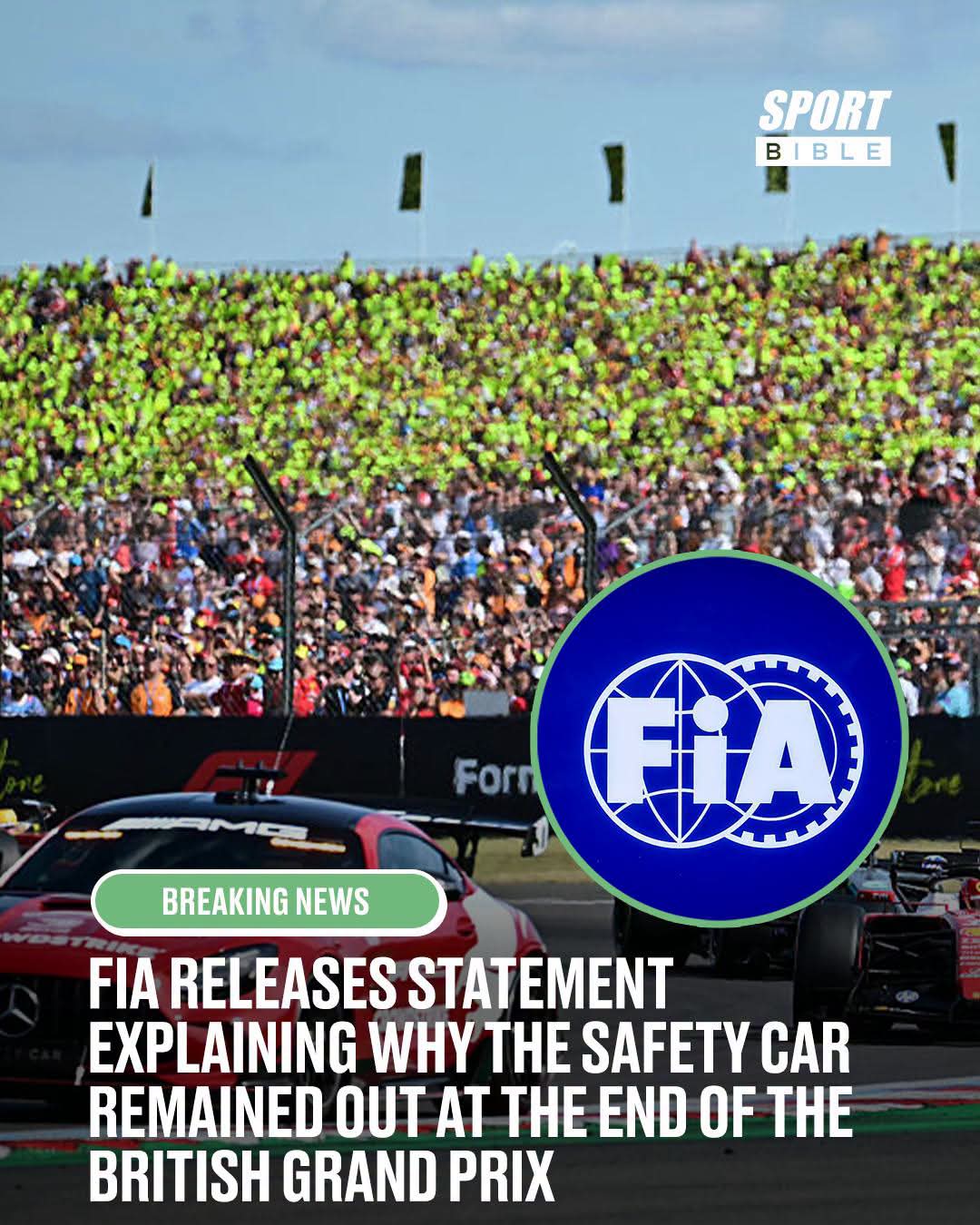
The FIA has officially explained the controversial ending to the 2026 British Grand Prix after widespread confusion left fans, drivers, and Formula 1 commentators questioning why the race finished behind the Safety Car despite an apparent announcement that racing would resume for one final lap.
Following a dramatic afternoon at Silverstone, Formula 1’s governing body confirmed that a software error mistakenly displayed the message indicating the Safety Car would come in, even though race control was always required to complete another lap under Safety Car regulations. The explanation has provided clarity, but it has also reignited debate about Formula 1’s operational systems and whether avoidable technical errors are damaging the sport’s credibility.
A DRAMATIC RACE ENDED IN CONTROVERSY
The British Grand Prix delivered everything Formula 1 fans could have hoped for—until its final moments.
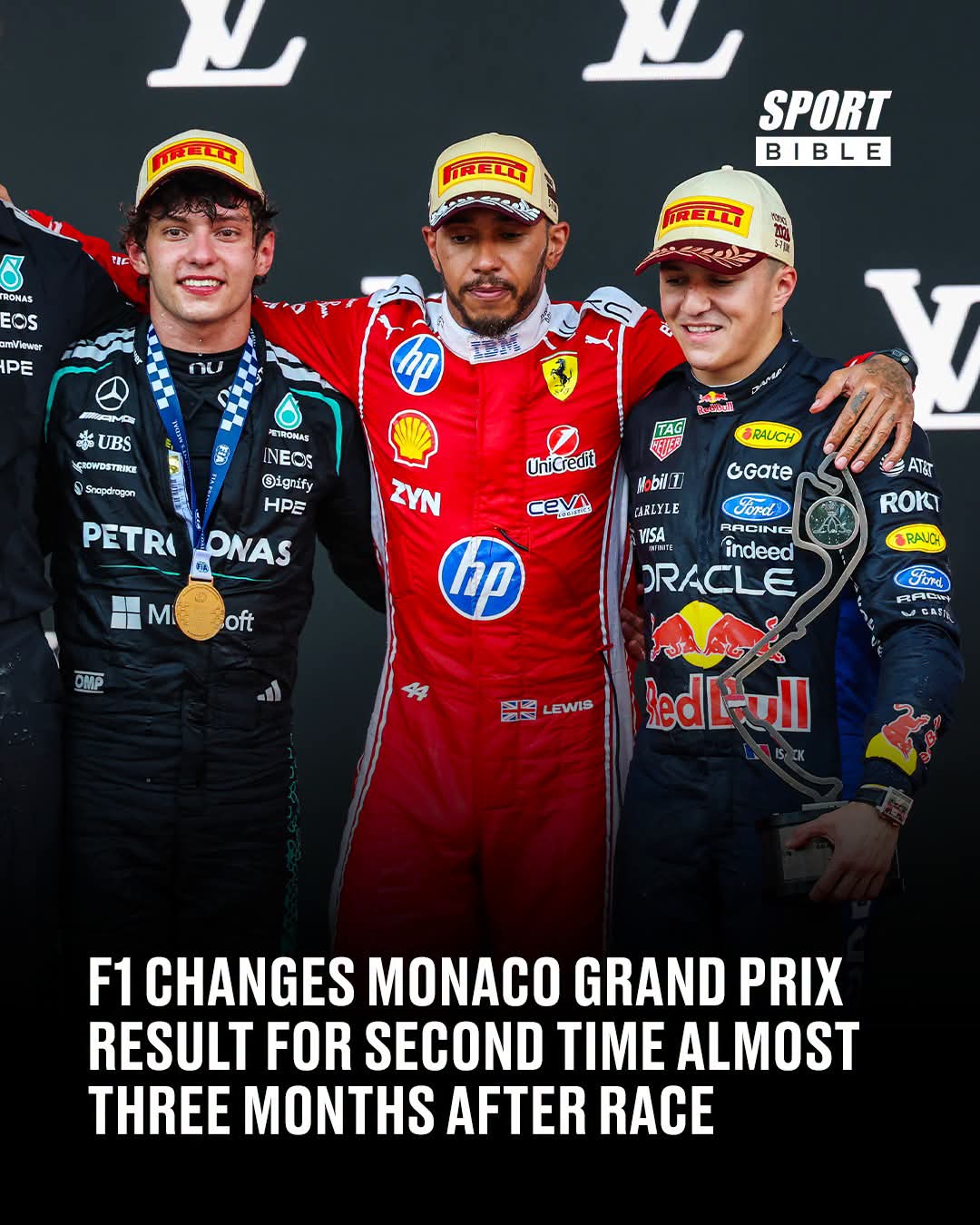
Ferrari’s Charles Leclerc secured his first victory of the 2026 season, continuing the Scuderia’s recent resurgence with its second win in three races. George Russell finished second for Mercedes after making the strategic decision to remain on older tyres during the late Safety Car period, while Lewis Hamilton recovered from an early five-second false-start penalty to complete the podium in third.
Elsewhere, Max Verstappen suffered another disappointing afternoon after crashing out late in the race, while Lando Norris crossed the finish line fourth ahead of Racing Bulls driver Isack Hadjar.
However, the race’s defining talking point had little to do with the winner.
THE SAFETY CAR CONFUSION LEFT EVERYONE BAFFLED
After Verstappen’s accident triggered the Safety Car, teams immediately began calculating their strategy for what appeared likely to become a dramatic one-lap sprint to the finish.
Race control even displayed the familiar “Safety Car In This Lap” message, leading drivers, teams, broadcasters, and millions of viewers to expect green-flag racing for the final lap.
Instead, the Safety Car unexpectedly remained on track until the chequered flag, ending the race under neutralized conditions.
The reaction inside Silverstone was immediate, with loud boos echoing around the circuit as disappointed fans realized there would be no final showdown for victory or podium positions.
FIA REVEALS SOFTWARE ERROR CAUSED THE MIX-UP
Shortly after the race concluded, the FIA issued an official explanation to clarify what had happened.
According to the governing body, Formula 1 regulations require one full lap to be completed after the unlapping process before the Safety Car can return to the pits.
The FIA stated that race operations correctly followed this procedure.
However, the message informing teams that the Safety Car would come in was displayed accidentally because of a software malfunction rather than an intentional race control decision.
In other words, the race always had to finish behind the Safety Car once the unlapping sequence unfolded as it did.
The communication error—not the sporting decision—created the confusion.
WHY THE DECISION CHANGED THE RACE
Although the FIA insists the correct procedure was followed, the mistaken message significantly altered expectations during the closing moments.
Drivers who had preserved their tyres believed they would soon defend their positions under green-flag conditions, while those on fresher rubber anticipated one last opportunity to attack.
George Russell ultimately benefited the most from the neutralized finish.
The Mercedes driver had chosen not to pit for fresh tyres during the Safety Car period, leaving him vulnerable if racing resumed. Had there been a final lap, Russell would likely have faced intense pressure from Lewis Hamilton, Lando Norris, and several other drivers equipped with significantly newer tyres.
Instead, the Safety Car finish locked in the running order.
LEWIS HAMILTON’S COMPLICATED AFTERNOON CONTINUES
Hamilton’s podium remains one of the biggest stories from the British Grand Prix.
The Ferrari veteran fought back strongly despite serving a five-second penalty for a false start earlier in the race.
Following the race, however, Hamilton admitted he expected additional trouble after being investigated for a possible yellow-flag infringement during the Safety Car period.
Although his drive showcased Ferrari’s improving competitiveness, uncertainty over the investigation left his third-place finish hanging in the balance immediately after the race.
The weekend perfectly illustrated both Ferrari’s growing pace and Hamilton’s increasingly eventful 2026 campaign.
FERRARI’S MOMENTUM IS BECOMING IMPOSSIBLE TO IGNORE
Lost amid the Safety Car controversy was another outstanding performance from Ferrari.
Leclerc’s victory reinforces the belief that the Italian team has finally unlocked a more competitive package after an inconsistent opening phase of the season.
With Hamilton also regularly challenging for podiums, Ferrari suddenly looks capable of applying sustained pressure to Mercedes in both championships.
If this upward trend continues through upcoming races, the title fight could become significantly more competitive during the second half of the year.
FORMULA 1 MUST PROTECT ITS CREDIBILITY
The FIA’s explanation may resolve the technical mystery, but it also raises uncomfortable questions.
Formula 1 is one of the world’s most technologically advanced sporting competitions, where races are decided by thousandths of a second and billions are invested in precision engineering.
Against that backdrop, a software error affecting one of the most important communications of a Grand Prix inevitably attracts criticism.
Even if the sporting outcome would not have changed, incorrect messaging creates confusion for teams, broadcasters, fans, and drivers alike.
The governing body will likely face renewed pressure to review its communication systems to ensure similar mistakes cannot occur again.
WHAT THIS MEANS FOR THE CHAMPIONSHIP
While Ferrari celebrated another important victory, Mercedes remains firmly in command of the championship standings.
George Russell’s second-place finish strengthened his title challenge, while championship leader Kimi Antonelli continues to maintain a healthy advantage despite a difficult afternoon at Silverstone.
For Red Bull, Verstappen’s retirement further complicates its championship ambitions, leaving the team with significant work ahead before Formula 1 heads to Belgium.
With every race becoming increasingly valuable, operational errors—whether on the track or within race control—carry even greater significance.
ALL EYES NOW TURN TO SPA
Formula 1 now heads toward the iconic Spa-Francorchamps circuit for the Belgian Grand Prix later this month.
Attention will naturally focus on whether Ferrari can extend its recent momentum, whether Mercedes can tighten its grip on both championships, and whether Red Bull can recover from another frustrating weekend.
Just as importantly, many fans will hope the next race is remembered purely for the on-track action rather than technical confusion from race control.
Silverstone delivered outstanding racing, but the Safety Car controversy became the headline.
For Formula 1, ensuring that future finales are decided by competition rather than communication errors will be essential as the championship battle continues to intensify.