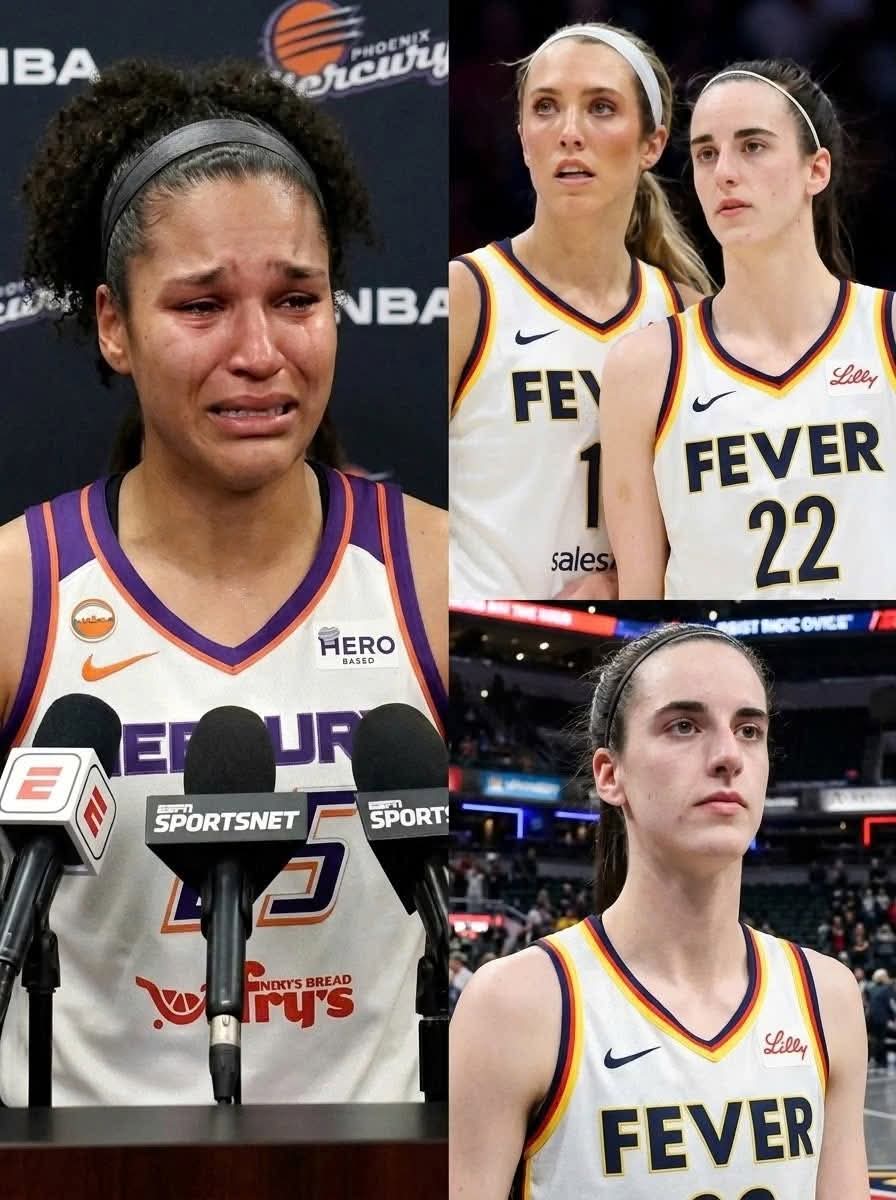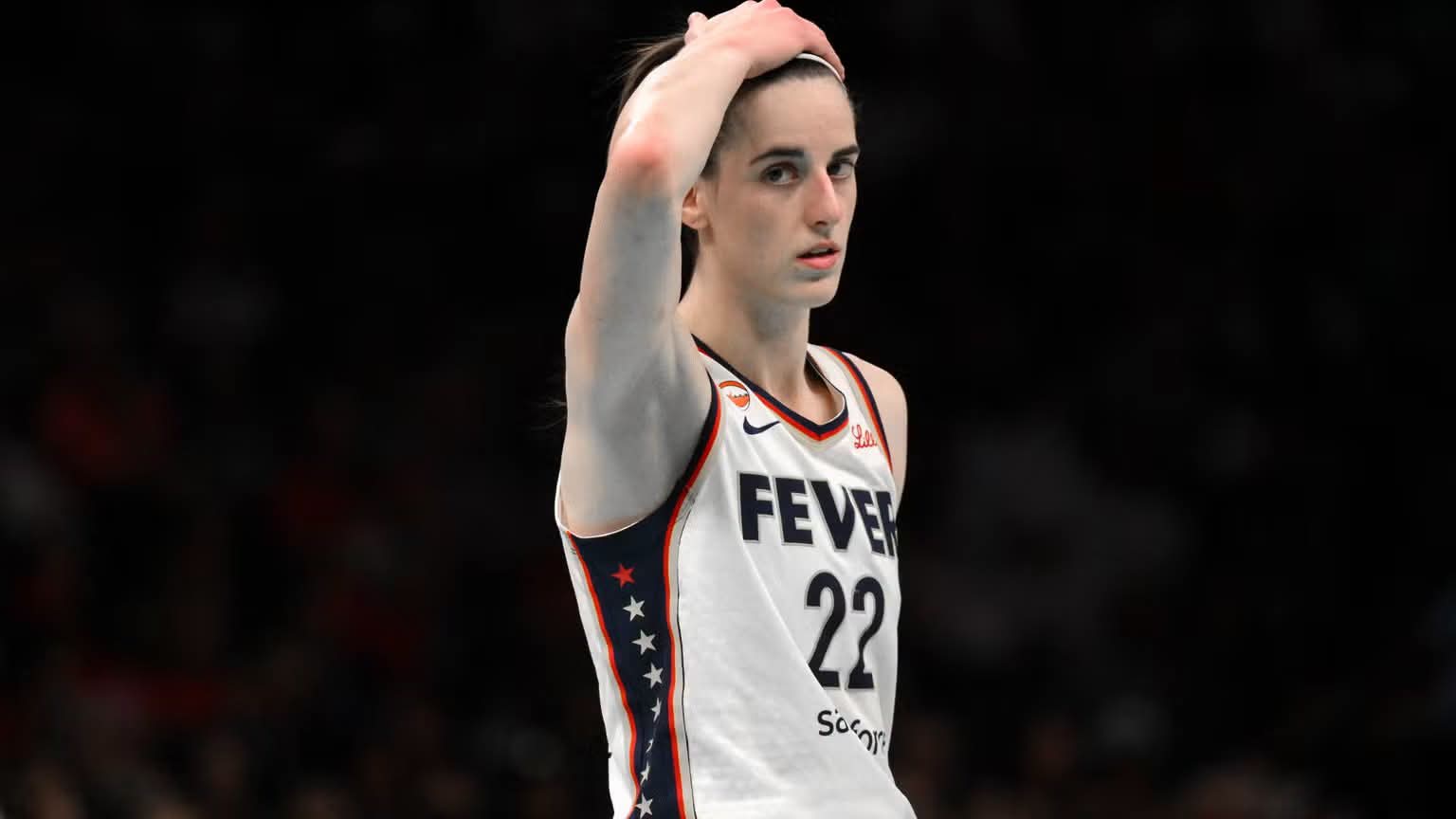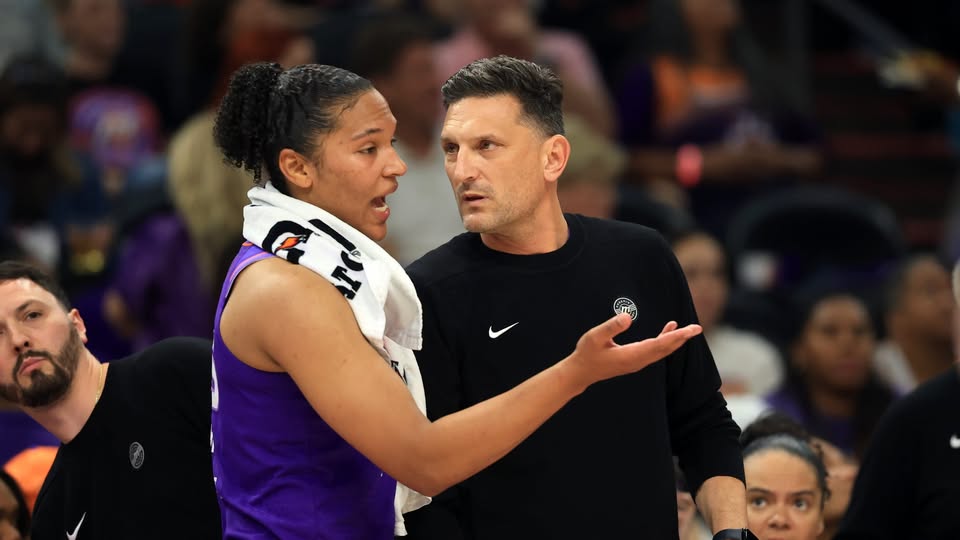
The WNBA’s handling of disciplinary decisions is under the spotlight once again after Phoenix Mercury head coach Nate Tibbetts publicly challenged the league’s investigation that resulted in Alyssa Thomas receiving a one-game suspension following a controversial incident involving Indiana Fever star Caitlin Clark.
While the collision itself generated widespread debate across the basketball world, Tibbetts shifted the conversation toward a different issue: whether the league’s disciplinary process is thorough, transparent, and consistent for every player, regardless of status or popularity.
As the WNBA continues to enjoy unprecedented growth, the way it handles controversial plays may prove just as important as the games themselves.
WHY THE INCIDENT CONTINUES TO DRAW ATTENTION
The controversy began during a physical game between the Phoenix Mercury and the Indiana Fever.
After a loose-ball scramble involving Thomas and Clark, league officials later reviewed the play and upgraded the incident to a Flagrant 2 foul, resulting in a one-game suspension for Thomas. The WNBA stated that Thomas had recklessly made contact with Clark’s throat during the play.
Clark later exited the game with a back injury and subsequently missed Indiana’s following contest while continuing her recovery.
Although the league’s review focused specifically on the contact during the play, the decision immediately sparked intense debate among fans, analysts, former players, and coaches.
NATE TIBBETTS DEFENDS ALYSSA THOMAS
Before the Mercury took the court without Thomas, Tibbetts delivered a prepared statement defending one of his team’s veteran leaders.
He described Thomas as one of the league’s fiercest competitors but rejected the suggestion that she is a dirty player.
According to Tibbetts, Thomas has built her reputation through toughness, effort, and winning basketball rather than cheap tactics. He also expressed respect for Indiana Fever head coach Stephanie White, acknowledging that every coach naturally wants to defend their franchise player.
However, Tibbetts disagreed with suggestions that the Mercury intentionally crossed the line during the game.
His defense of Thomas reflects the confidence organizations often place in veteran players whose reputations have been built over years of competing at the highest level.
THE BIGGER ISSUE: WAS THE LEAGUE’S INVESTIGATION THOROUGH ENOUGH?
Tibbetts reserved his strongest criticism for the WNBA’s disciplinary process.
He argued that neither Thomas, the Mercury coaching staff, nor the team’s security personnel were contacted before the league announced its decision. Drawing on his years of experience coaching in the NBA, Tibbetts suggested that league investigations should include conversations with everyone directly involved before discipline is issued.
His comments raise an important question that extends beyond this specific incident.
Professional sports leagues rely on trust in their disciplinary systems. Coaches, players, and fans are more likely to accept controversial decisions when they believe the review process is transparent, balanced, and consistent.
Whether or not the WNBA followed its internal procedures, Tibbetts’ criticism highlights the importance of clear communication whenever discipline affects competitive balance.
STEPHANIE WHITE EMPHASIZES OFFICIATING
Indiana Fever head coach Stephanie White has approached the situation from a different perspective.
While expressing appreciation that the league reviewed the play and issued discipline afterward, White also questioned why officials failed to identify the contact during live action.
Her comments underscore a challenge facing officials throughout professional basketball.
Instant replay allows leagues to correct mistakes after games, but coaches understandably prefer dangerous or excessive contact to be identified immediately rather than after the final buzzer.
Improving consistency during games remains one of the league’s ongoing priorities.
CONSISTENCY HAS BECOME THE CENTRAL ISSUE
One of Tibbetts’ strongest arguments centered on competitive consistency.
He urged the league to apply the same disciplinary standards regardless of whether a play involves a superstar, a role player, a veteran, a rookie, or differences in race or nationality.
That principle is fundamental to maintaining credibility.
As the WNBA attracts larger audiences, every disciplinary ruling receives greater scrutiny than ever before. Fans expect similar plays to receive similar outcomes, regardless of who is involved.
Maintaining that consistency will become increasingly important as the league continues expanding its national profile.
CAITLIN CLARK’S IMPACT CHANGES EVERY CONVERSY
There is no denying Caitlin Clark’s influence on the WNBA.
Her arrival has produced record television audiences, increased attendance across the league, expanded sponsorship opportunities, and brought millions of new viewers to women’s basketball.
That popularity has transformed routine basketball controversies into national talking points.
Every hard foul, officiating decision, or postgame comment involving Clark now generates extensive media coverage and passionate discussion online.
While that attention benefits the league commercially, it also places greater pressure on officials and league executives to ensure their decisions withstand public scrutiny.
WHAT THIS MEANS FOR THE WNBA GOING FORWARD
The league now finds itself balancing multiple priorities.
Protecting players remains essential. So does preserving the physical, competitive style of basketball that defines the WNBA. At the same time, maintaining confidence in disciplinary reviews is equally important.
The league may eventually consider providing more detailed explanations of disciplinary decisions or refining its review process to increase transparency and reduce questions from teams and fans.
As interest in the WNBA continues to climb, every controversial ruling has the potential to shape public perception of the league’s governance.
THE BIGGER PICTURE
The disagreement between the Mercury and the Fever extends beyond one play involving Alyssa Thomas and Caitlin Clark.
It reflects the challenges of managing a rapidly growing professional league where every decision is analyzed in real time by millions of fans.
Whether supporters agree with the suspension or side with Tibbetts’ criticism of the investigation, one point is becoming increasingly clear: consistency, transparency, and effective communication are now just as important to the WNBA’s continued success as the action taking place on the court.
As the league moves deeper into the season and the playoff race intensifies, how it handles future disciplinary cases may become one of the defining stories of the year.