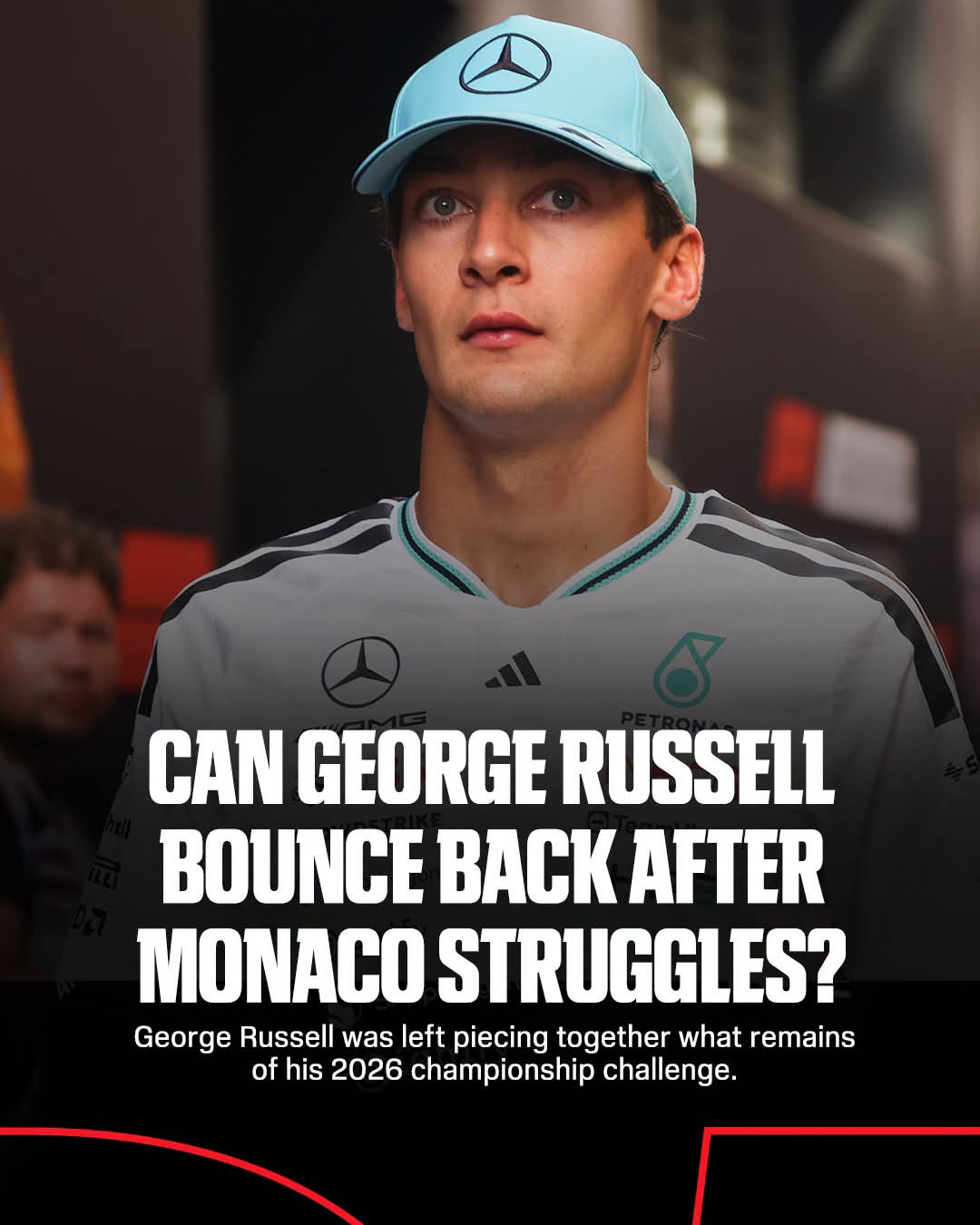
George Russell may have celebrated one of the most dramatic pole positions of the 2026 Formula 1 season, but the controversy surrounding his final qualifying lap at the Austrian Grand Prix refused to disappear long after the chequered flag fell. While the FIA ultimately cleared the Mercedes driver of any wrongdoing, Lewis Hamilton’s understated reaction hinted that not everyone in the paddock was convinced by how events unfolded.
Russell produced a sensational final lap around the Red Bull Ring just moments after Max Verstappen crashed heavily at the penultimate corner of the circuit. With yellow flags waving, many expected Ferrari’s Charles Leclerc to remain on provisional pole, especially after both Ferrari drivers had completed clean laps before the incident. Instead, Russell improved dramatically despite lifting through the yellow-flag zone, securing pole position by more than two-tenths of a second.
HAMILTON’S SUBTLE RESPONSE ADDS TO THE CONTROVERSY
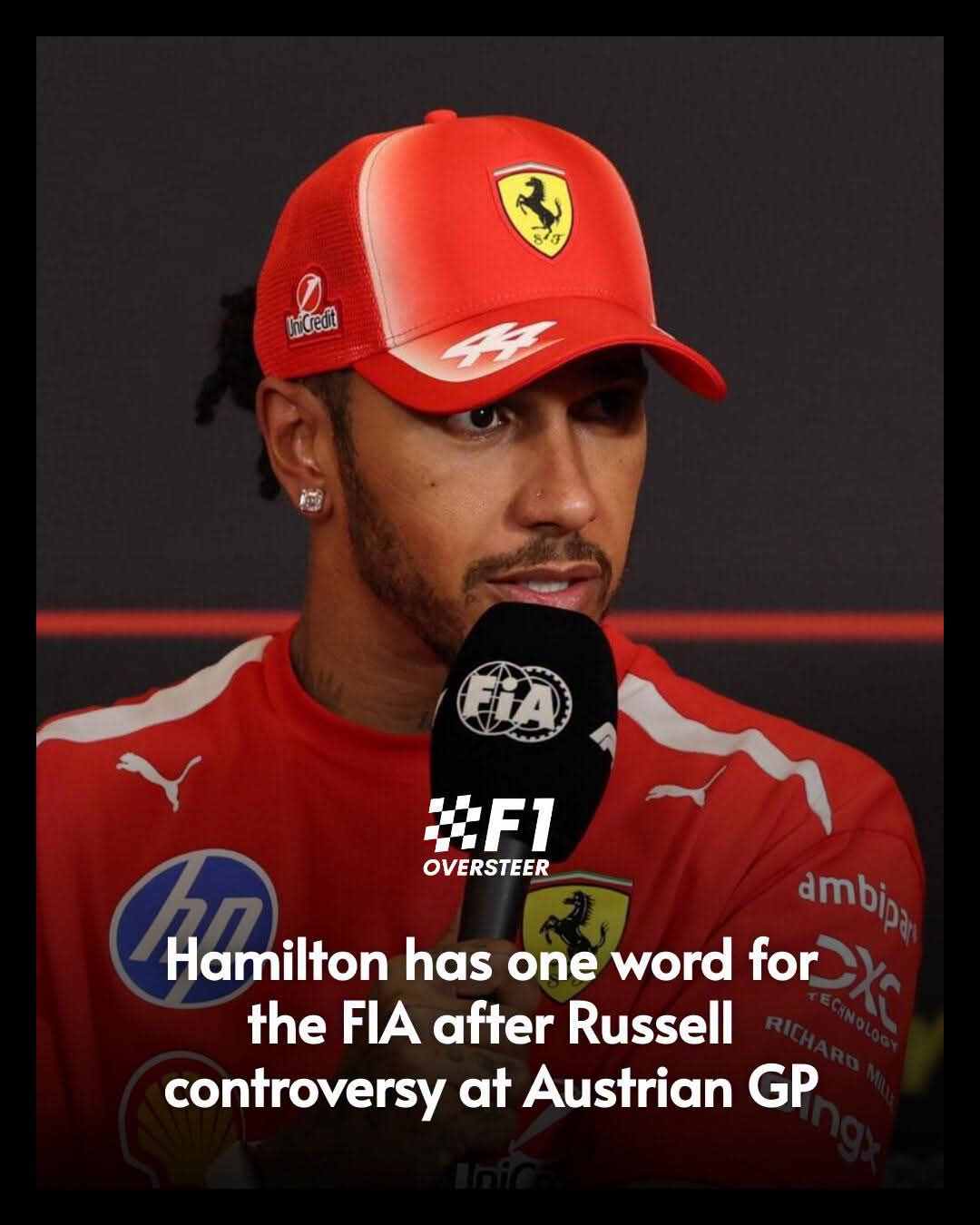
Although Hamilton avoided openly criticizing either Russell or the FIA, his response during post-qualifying interviews suggested he was surprised by the outcome. Upon learning that Russell had actually produced the quickest final sector despite driving through the yellow-flag area, Hamilton simply replied, “Yeesh,” before smiling, hesitating, and ending the interview without expanding further.
His brief reaction quickly became one of the biggest talking points after qualifying. Rather than launching into criticism, Hamilton appeared careful with his words, knowing any direct comments about FIA decisions often attract unwanted scrutiny. Still, his expression and reluctance to continue speaking left many interpreting his silence as skepticism over how Russell’s lap remained valid.
The statistics only fueled the debate. Russell’s final sector was marginally slower than his own previous attempt, showing he had indeed lifted for the single yellow flag. However, he was still significantly faster through that section than both Leclerc and Hamilton, whose laps had been completed before Verstappen’s accident. That unusual comparison led many fans to question whether enough caution had actually been exercised.
WHY THE FIA ALLOWED RUSSELL TO KEEP POLE
Despite public debate, the FIA maintained that Russell had complied fully with the regulations. The key factor was that race control initially displayed only a single yellow flag rather than a double yellow.
Under Formula 1 sporting regulations, a single yellow requires drivers to slow sufficiently and remain prepared for potential danger while continuing the lap. A double yellow, however, demands a much greater reduction in speed and effectively forces drivers to abandon any competitive lap.
Russell insisted he reacted exactly as required.
The Mercedes driver explained that he lifted well before entering the corner where Verstappen had crashed, sacrificing valuable lap time while remaining in complete control of the car. He also argued that the location of Verstappen’s stranded Red Bull did not immediately create an “immediate danger” scenario that would justify an instant double yellow.
After reviewing telemetry and onboard footage, FIA officials agreed that Russell’s throttle lift satisfied the rules. As a result, they decided there was no need for a formal investigation, confirming his pole position within minutes of qualifying ending.
FERRARI’S IMPROVEMENT SETS UP A FASCINATING RACE
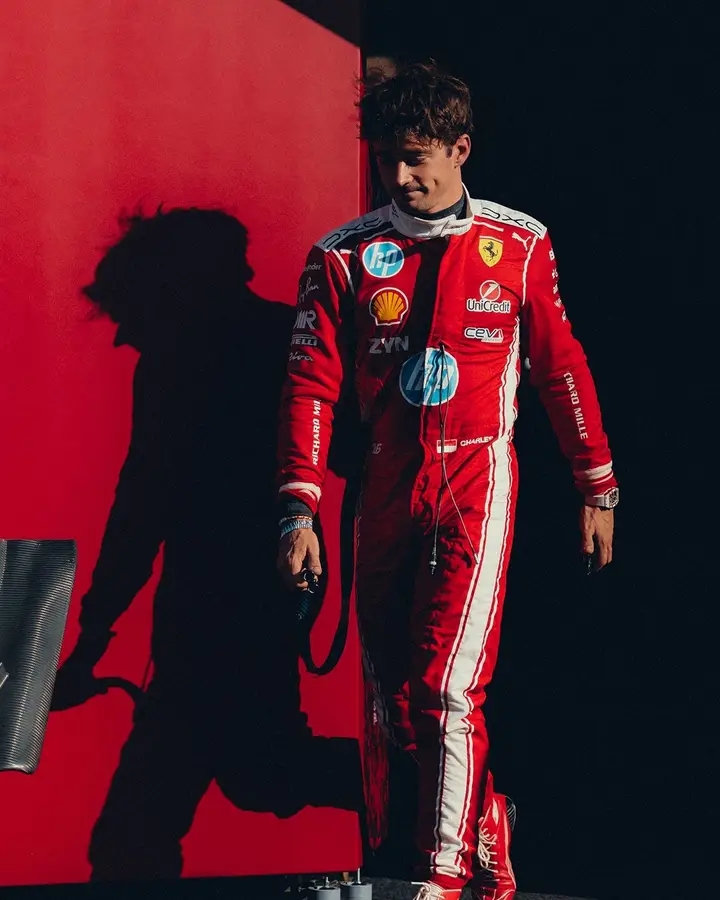
While qualifying controversy dominated headlines, Ferrari quietly delivered one of its strongest Saturdays of the season. After struggling throughout Friday practice, the Scuderia found significant performance overnight, allowing Leclerc and Hamilton to lock out second and third on the starting grid.
Their turnaround highlighted the effectiveness of Ferrari’s setup changes and recent power unit developments. More importantly, having two cars directly behind Russell creates strategic opportunities during Sunday’s race.
Unlike Mercedes, Ferrari can potentially split race strategies, pressure Russell during pit-stop windows, or force difficult tactical decisions if both drivers remain competitive during the opening stint. Hamilton has already acknowledged that Ferrari may lack Mercedes’ outright pace, but strategy could become their greatest weapon.
THE TITLE FIGHT COULD SHIFT AGAIN IN AUSTRIA
Russell’s pole position arrives at a crucial point in the championship. Entering Austria, he trails Mercedes teammate Andrea Kimi Antonelli by 50 points, with Hamilton occupying second place in the standings.
A victory would significantly reduce that gap while giving Russell valuable momentum ahead of the upcoming British Grand Prix. Conversely, Antonelli faces a more difficult afternoon after qualifying behind both Ferraris, making his recovery drive one of the race’s biggest storylines.
Max Verstappen’s accident also leaves the reigning champion with work to do from fifth on the grid. Although overtaking is possible at the Red Bull Ring, recovering against three Mercedes and Ferrari cars will require both pace and strategy.
WHY THIS INCIDENT WILL CONTINUE TO DIVIDE OPINION
Even though the FIA has officially settled the matter, debates over Russell’s pole are unlikely to disappear anytime soon.
Some believe the Mercedes driver demonstrated exceptional awareness by perfectly interpreting the single yellow flag rules and maximizing every available tenth of a second. Others argue the issue lies with race control, questioning whether a double yellow should have been displayed immediately after Verstappen’s crash to eliminate any uncertainty.
Either way, the controversy underscores how split-second decisions by both drivers and officials can dramatically alter a Formula 1 weekend. With the championship becoming increasingly competitive, moments like these may ultimately prove decisive when the 2026 title battle reaches its conclusion.
If Russell converts pole into victory, Austria could become remembered not only for one controversial qualifying lap, but also as the race that reignited Mercedes’ championship challenge against Ferrari and Antonelli.