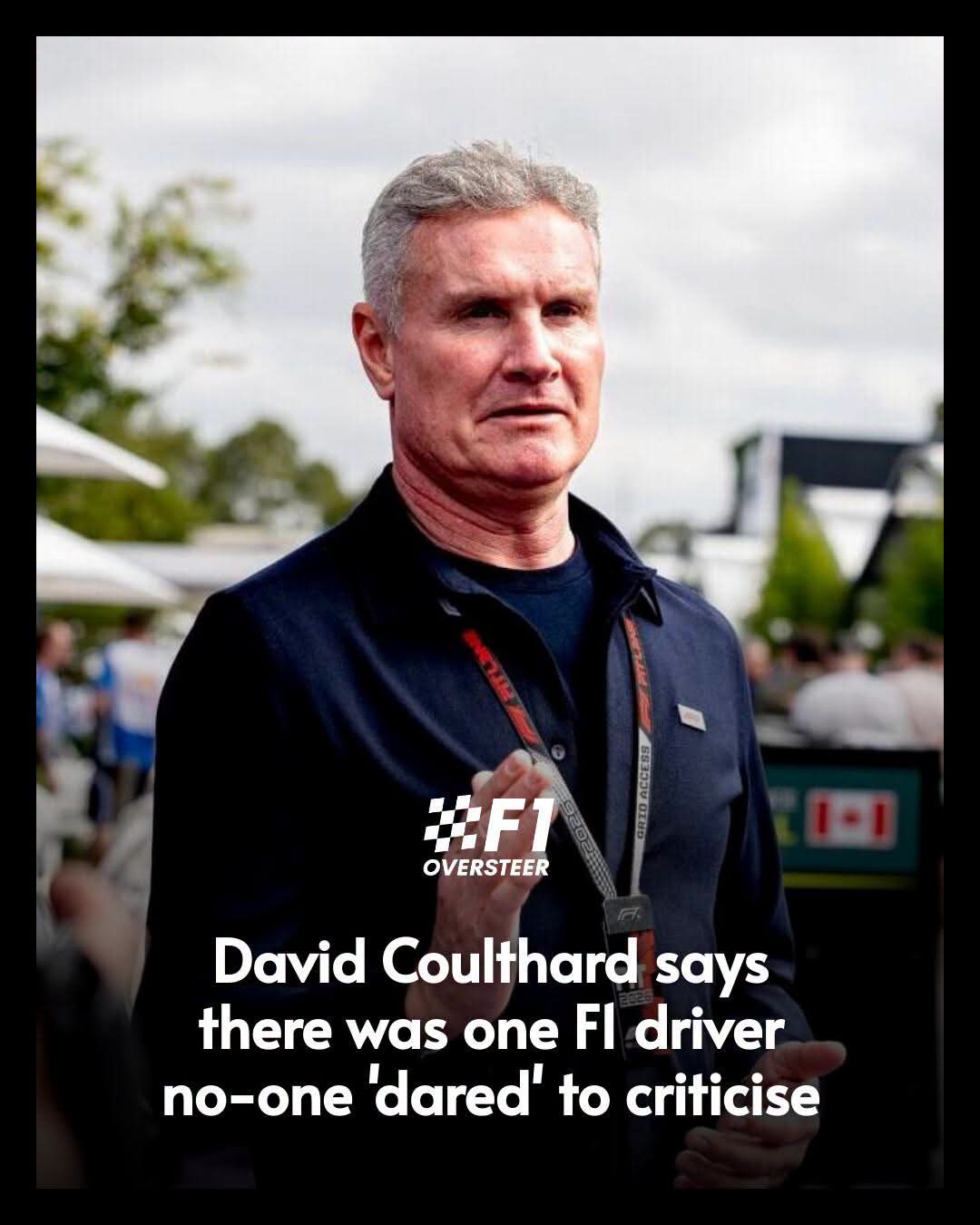
Michael Schumacher’s reign at Ferrari remains one of the most dominant periods Formula 1 has ever witnessed. More than two decades later, the German legend’s influence on the sport is still being discussed, and according to former rival David Coulthard, there was a time when Schumacher had reached a level where criticism simply did not exist.
Coulthard recently reflected on Schumacher’s extraordinary years with Ferrari, describing the seven-time world champion as “untouchable” and comparing his status within Formula 1 to that of a god. The comments offer a fascinating insight into just how powerful Schumacher’s presence was during Ferrari’s golden era and why even his fiercest competitors struggled to challenge the narrative surrounding his success.
As Formula 1 continues to celebrate modern superstars such as Lewis Hamilton, Max Verstappen, and Andrea Kimi Antonelli, Schumacher’s peak remains a benchmark that many still consider one of the greatest the sport has ever seen.
SCHUMACHER’S FERRARI ERA CHANGED FORMULA 1 FOREVER
When Schumacher joined Ferrari in 1996, the Italian team was desperate to return to championship-winning form. Ferrari possessed enormous resources and a passionate fanbase, but championships had become increasingly elusive.
Schumacher arrived not only as a driver but as the leader of a long-term rebuilding project.
The results did not come immediately. Ferrari spent several seasons battling McLaren and Williams before finally breaking through in 2000. What followed was unprecedented dominance.
Between 2000 and 2004, Schumacher won five consecutive world championships, a record streak that still stands today. Ferrari became the benchmark for excellence, combining technical superiority, operational precision, and a driver performing at an almost flawless level.
During that period, Schumacher accumulated victories at a staggering rate, often making races appear effortless.
For many fans and competitors, it felt as though Formula 1 belonged entirely to Schumacher and Ferrari.
WHY COULTHARD BELIEVES SCHUMACHER WAS “UNTOUCHABLE”
David Coulthard experienced Schumacher’s dominance firsthand.
Driving for McLaren, Coulthard was one of Ferrari’s primary challengers during the early 2000s. In 2001, he finished second in the Drivers’ Championship but still ended the season miles behind Schumacher.
Reflecting on that era, Coulthard suggested that Schumacher and Ferrari had achieved such a powerful position within Formula 1 that criticism became almost impossible.
Success played a major role in that perception.
Every season seemed to reinforce Schumacher’s greatness. Every championship added to his growing legend. Every Ferrari victory further strengthened the image of an unbeatable partnership.
Even controversial moments, including aggressive racing tactics and team orders, rarely damaged Schumacher’s standing because the results consistently justified Ferrari’s approach.
When a driver wins at that level for such a sustained period, public opinion often shifts from questioning success to simply admiring it.
Schumacher had reached that stage.
THE NUMBERS BEHIND THE LEGEND
Statistics alone explain why Schumacher commanded such respect.
Five consecutive world championships.
Seven world titles overall.
Ninety-one Grand Prix victories before his first retirement.
Countless records that stood untouched for years.
Yet the numbers only tell part of the story.
What truly separated Schumacher was his ability to transform Ferrari into a championship machine. Drivers win titles, but very few fundamentally reshape an organization.
Schumacher’s influence extended beyond the cockpit. He became deeply involved in development work, testing programs, and team culture. His relentless work ethic helped establish standards that turned Ferrari into Formula 1’s dominant force.
That combination of talent, leadership, and determination created an aura few drivers have ever matched.
THE COMEBACK THAT CHANGED THE NARRATIVE
While Schumacher’s first career chapter ended with legendary status intact, his return with Mercedes in 2010 presented a very different challenge.
The expectations were enormous.
Fans expected Schumacher to immediately fight for victories. Many believed he could add further championships to his already remarkable collection.
Instead, reality proved far more complicated.
Mercedes was still building the foundations that would eventually create one of Formula 1’s greatest dynasties. The team lacked the pace required to challenge consistently at the front, and Schumacher often found himself battling in the midfield rather than fighting for wins.
Across three seasons, he managed only a single podium finish.
Although he still displayed flashes of brilliance, the dominant Schumacher of the Ferrari years was no longer visible every weekend.
DID THE MERCEDES COMEBACK DAMAGE HIS LEGACY?
This remains one of Formula 1’s most debated questions.
According to Coulthard, Schumacher’s return generated a wave of criticism that had been absent during his Ferrari peak.
The German suddenly faced scrutiny whenever results failed to match expectations. Comparisons with teammate Nico Rosberg became increasingly common, and many questioned whether Schumacher should have remained retired.
However, judging his comeback purely through results may overlook important context.
Mercedes was not yet the championship-winning powerhouse it would become. The infrastructure, leadership, and technical advantages that later powered Lewis Hamilton to multiple titles were still under development.
Schumacher effectively helped lay the groundwork for Mercedes’ future success.
Without those early rebuilding years, the dominant Silver Arrows era that followed may never have happened.
HOW LEWIS HAMILTON EVENTUALLY SURPASSED SCHUMACHER
One of the most fascinating twists in Formula 1 history came shortly after Schumacher’s final retirement.
Mercedes replaced him with Lewis Hamilton ahead of the 2013 season.
At the time, some viewed the decision as ruthless. Others saw it as a necessary step toward the future.
History ultimately justified Mercedes’ choice.
Hamilton became the face of the team’s dominant era, winning multiple championships and eventually surpassing Schumacher’s records for race victories and pole positions.
The transition symbolized a changing of the guard between two Formula 1 legends.
Yet even as Hamilton rewrote the record books, Schumacher’s influence never disappeared.
Many of the foundations Hamilton benefited from were established during Schumacher’s years helping Mercedes grow into a competitive force.
HOW SCHUMACHER COMPARES TO TODAY’S STARS
Modern Formula 1 has produced extraordinary talents.
Max Verstappen’s recent dominance with Red Bull has drawn comparisons to Schumacher’s Ferrari era. Lewis Hamilton’s achievements have placed him firmly alongside Schumacher in discussions about the greatest driver of all time.
Now, rising stars like Andrea Kimi Antonelli are beginning to shape the next generation.
But Schumacher’s peak remains unique.
His combination of speed, consistency, mental strength, technical understanding, and leadership created a package that transformed an entire team and dominated an era.
While Verstappen, Hamilton, and others have produced incredible performances, Schumacher’s Ferrari years continue to serve as the gold standard for sustained excellence.
WHY SCHUMACHER’S LEGACY STILL MATTERS
Formula 1 constantly evolves.
Cars change. Regulations change. Teams rise and fall.
Yet certain figures transcend generations, and Schumacher remains one of them.
His story is not simply about championships or race wins. It is about building a legacy through relentless dedication, inspiring a team to achieve greatness, and setting standards that future champions continue to chase.
Coulthard’s comments serve as a reminder of how extraordinary Schumacher’s dominance truly was.
There was a period when Ferrari seemed unbeatable, Schumacher seemed unstoppable, and criticism seemed impossible.
Few drivers have ever reached that level.
Even fewer have managed to stay there for as long as Michael Schumacher did.
As Formula 1 enters a new era filled with fresh championship battles and emerging stars, Schumacher’s remarkable peak remains one of the sport’s greatest reference points—a reminder of what true dominance looks like when talent, timing, and determination align perfectly.