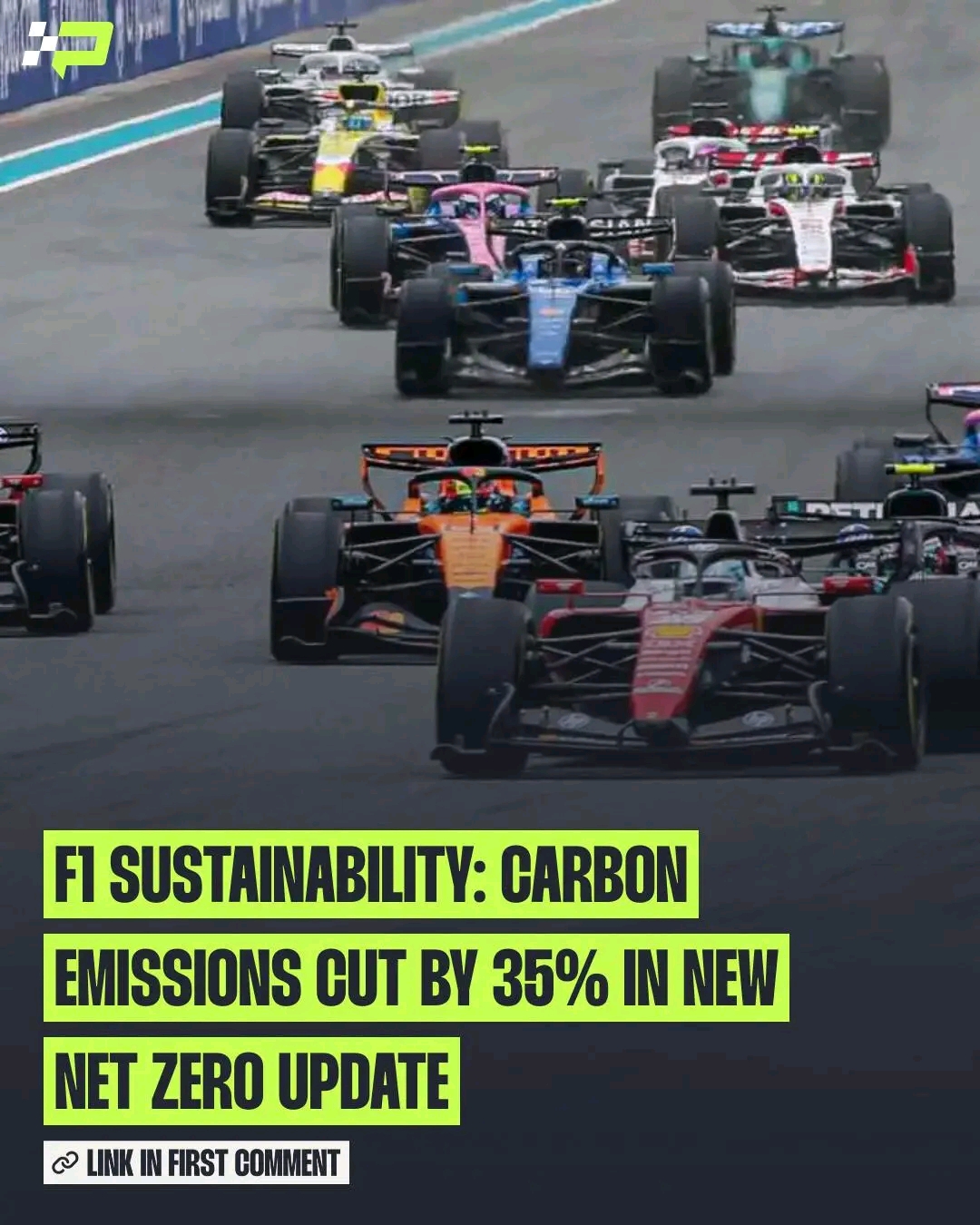
Formula 1’s push toward a net zero future has long been one of the sport’s most ambitious off-track projects, and a fresh sustainability update has once again brought the target into focus. According to the latest figures, the championship is not only staying on course for its 2030 net zero goal, but is also showing measurable reductions in its overall carbon footprint despite rapid global expansion of the sport.
Below is a deeper look at what the update means, why it matters, and how it could reshape the future of Formula 1 beyond the racetrack.
FORMULA 1’S NET ZERO TARGET: WHERE THINGS STAND
Formula 1 committed back in 2019 to becoming net zero carbon by 2030, with a minimum 50% reduction in emissions compared to 2018 levels before offsets are applied.
The latest update shows the sport is already more than halfway toward that reduction target, driven by operational changes across logistics, travel, energy use, and event management. �
Formula 1® – The Official F1® Website
One of the most significant milestones so far:
Around 26% reduction in total carbon emissions compared to 2018 levels by the end of 2024
This is especially notable because it has been achieved during a period where F1 has expanded its global footprint, adding more races and attracting larger audiences worldwide.
WHY EMISSIONS ARE FALLING DESPITE SPORT EXPANSION
At first glance, Formula 1 looks like it should be getting “dirtier,” not cleaner. The calendar has grown, attendance has surged, and global travel demands have increased significantly.
Yet emissions have still fallen due to structural changes, including:
More efficient freight logistics and regional shipping hubs
Increased use of sustainable aviation fuel in selected operations
Transition toward renewable energy at factories and paddocks
Reduced waste and elimination of single-use plastics at events
Smarter race calendar planning to reduce unnecessary long-haul travel
The key takeaway is that F1 is not just offsetting emissions, it is actively reducing operational carbon output at the source.
WHY THIS UPDATE MATTERS FOR THE SPORT
Sustainability in F1 is not just an environmental talking point anymore. It has become a strategic pillar of the sport’s long-term survival and reputation.
There are three major reasons this matters:
1. PRESSURE FROM SPONSORS AND GLOBAL BRANDS
Modern F1 partners are increasingly tied to ESG (Environmental, Social, Governance) targets. Brands want association with a sport that can demonstrate measurable climate progress, not just promises.
If F1 fails here, it risks losing high-value partnerships.
2. POLITICAL AND REGULATORY SCRUTINY
With governments tightening climate rules globally, international sporting events are under pressure to justify their carbon footprint.
F1’s ability to show real reductions strengthens its position when negotiating with host countries and city promoters.
3. PUBLIC PERCEPTION OF THE SPORT
Formula 1 is often criticized for being a “carbon-heavy circus” due to global travel and logistics.
This sustainability progress is partly about reshaping that narrative, showing that high-performance global sport and climate responsibility can coexist.
WHAT IT MEANS FOR TEAMS AND DRIVERS
While sustainability may sound like a corporate issue, it directly affects how teams operate.
LOGISTICS AND OPERATIONS IMPACT
Teams now face:
More structured shipping schedules
Increased reliance on regional storage hubs
Adjustments in travel planning between flyaway races
Smaller operational inefficiencies are becoming competitive factors in budgeting and planning.
TECHNICAL DEVELOPMENT SHIFT
Sustainability is also influencing engineering direction, especially with:
The push toward 100% sustainable fuels
Continued efficiency gains in hybrid power units
Greater focus on energy recovery systems
This creates an interesting overlap where environmental goals also drive performance innovation.
DRIVERS’ ROLE IN THE IMAGE SHIFT
Drivers are increasingly used as public ambassadors for sustainability messaging.
While they are still focused on performance, they are also part of a broader narrative: making modern F1 more acceptable to a climate-conscious global audience.
THE BIGGER PICTURE: CAN F1 REALLY HIT NET ZERO BY 2030?
This remains the most debated question in motorsport.
On one hand, the progress is real:
Clear emissions reduction trend
Measurable operational improvements
Strong institutional backing from FIA and stakeholders
On the other hand, major challenges remain:
Global air travel footprint is still massive
Freight logistics are inherently carbon intensive
Calendar expansion increases operational pressure
Even F1 acknowledges that a portion of emissions will still need to be addressed through credible offset programs once reductions are maximized.
WHAT COMES NEXT FOR F1 SUSTAINABILITY
Looking ahead, several key developments will define the next phase:
Wider adoption of advanced sustainable fuels in race cars
Continued restructuring of the race calendar for efficiency
Expansion of low-carbon logistics systems
Greater use of sea freight instead of air freight where possible
Stronger alignment with global climate standards
These changes suggest F1’s sustainability push is not a short-term campaign, but a long-term restructuring of how the sport operates globally.
FINAL THOUGHT
Formula 1’s sustainability journey sits in a complex space between performance, global entertainment, and environmental responsibility.
The latest update reinforces one key message: the sport is not just aiming for net zero as a symbolic target, but is actively redesigning its entire operating model to get there.
Whether it ultimately succeeds on every front or not, F1 is already reshaping how global motorsport thinks about sustainability, and that influence will likely extend far beyond the grid.