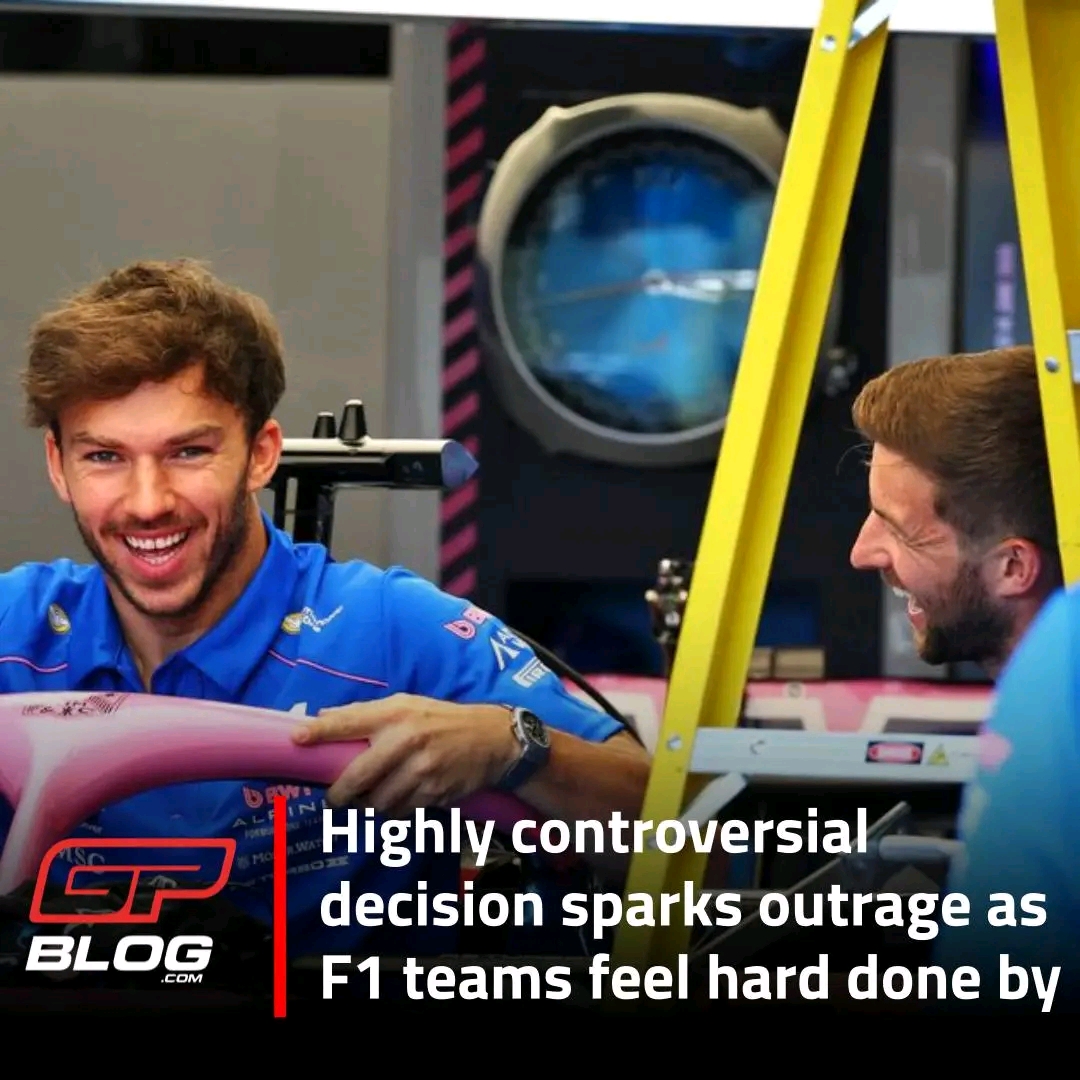
Formula 1 is no stranger to controversy, but the fallout from the Monaco Grand Prix has created one of the most debated stewarding decisions of the 2026 season.
Days after Pierre Gasly appeared to have lost a hard-earned podium finish due to pit-lane speeding penalties, Alpine successfully challenged the ruling and had the penalties overturned. The decision restored Gasly to third place, but it also opened a much bigger conversation about fairness, consistency, and the FIA’s race management procedures.
What initially looked like a straightforward penalty case has now evolved into a dispute involving multiple teams, frustrated drivers, and potential appeals that could continue long after the Monaco celebrations have ended.
HOW GASLY LOST AND REGAINED HIS PODIUM
Gasly delivered one of his strongest performances of the season in Monaco, climbing through the field and crossing the finish line in a podium position.
However, race officials issued two separate five-second penalties for alleged pit-lane speeding violations. Those penalties dropped the Alpine driver from third to seventh in the final classification, seemingly ending his hopes of a Monaco podium.
Alpine immediately questioned the ruling and pursued a Right of Review. During the investigation, new evidence emerged suggesting that the timing system used to calculate pit-lane speed contained an error. According to information presented during the review process, an incorrect measurement within the timing zone caused speeds to be overstated. FIA stewards ultimately agreed and rescinded both penalties, restoring Gasly to third place.
For everyone else, it was the beginning of a new controversy.
WHY OTHER TEAMS ARE ANGRY
The central issue is not whether Gasly deserved his podium.
Many in the paddock agree that if the timing data was flawed, correcting the result was the right thing to do.
The problem is that other drivers received similar penalties during the race and served them immediately, impacting their strategy and final results. Because those penalties were already served, there is currently no mechanism within the regulations to reverse the lost race time.
That has left teams wondering whether some competitors effectively benefited from circumstances that others did not.
Mercedes, in particular, has voiced concerns regarding George Russell’s race. Russell’s result was significantly affected by penalties connected to the same pit-lane monitoring system, yet his situation cannot simply be undone after the fact.
THE FIA’S BIGGEST PROBLEM IS TRUST
Formula 1 relies on trust in its officiating systems.
Teams invest hundreds of millions of dollars each season, and championships can be decided by only a handful of points. When a timing error changes a race result days after the event, confidence in the system inevitably takes a hit.
The Monaco situation is particularly uncomfortable because the error appears to have affected multiple drivers simultaneously. Critics argue that if the timing issue was significant enough to overturn Gasly’s penalties, questions naturally arise about every other penalty linked to the same data source.
Formula 1 has spent years improving transparency in stewarding decisions, but incidents like this remind fans and teams that even highly sophisticated systems remain vulnerable to mistakes.
WHAT THIS MEANS FOR ALPINE
From Alpine’s perspective, the decision represents a major victory.
The team not only recovered a valuable podium finish but also demonstrated persistence in challenging a ruling they believed was incorrect.
At a time when midfield battles are incredibly tight, every point matters. A podium finish carries financial benefits, boosts morale, and strengthens the team’s position in the Constructors’ Championship.
Gasly himself gains a significant confidence boost after proving he can capitalize on opportunities when they arise.
For a team seeking momentum in 2026, Monaco may ultimately be remembered as a turning point.
THE ISACK HADJAR FACTOR
One driver who has unfortunately become caught in the middle of the controversy is rookie sensation Isack Hadjar.
The Red Bull driver initially celebrated a podium finish before losing it when Gasly’s penalties were removed.
While Hadjar cannot be blamed for the situation, the emotional impact is undeniable. Drivers dream of standing on a Formula 1 podium, especially in Monaco, and losing that result after the event creates a unique frustration.
The incident highlights a difficult reality of post-race reviews: correcting one injustice can sometimes create disappointment elsewhere.
COULD THIS CHANGE HOW TEAMS HANDLE PENALTIES?
One of the most interesting long-term consequences may be strategic.
Teams now have a fresh example of a successful post-race review that dramatically altered the final classification.
That could encourage more teams to aggressively challenge stewarding decisions in future races, particularly when large championship points are at stake.
Several observers within the Formula 1 community have already suggested that the Monaco ruling could influence how teams approach disputed penalties moving forward.
The FIA may need to review its procedures to prevent similar situations from becoming a recurring issue.
WHAT HAPPENS NEXT?
The controversy is unlikely to disappear immediately.
Appeal discussions continue, and rival teams are expected to seek additional clarification regarding the handling of the Monaco result.
FINAL THOUGHTS
Pierre Gasly’s restored Monaco podium is ultimately a story about justice, but it is also a story about unintended consequences.
Alpine successfully proved that its driver should never have been penalized. Yet the correction has left other teams wondering whether they were unfairly disadvantaged by the same error.
For Formula 1, the controversy serves as a reminder that accuracy and consistency remain just as important as speed on the racetrack.
As the championship heads deeper into the 2026 season, the Monaco ruling could become one of the defining moments of the year—not because of who finished third, but because of the questions it raised about how Formula 1 governs itself when mistakes occur.