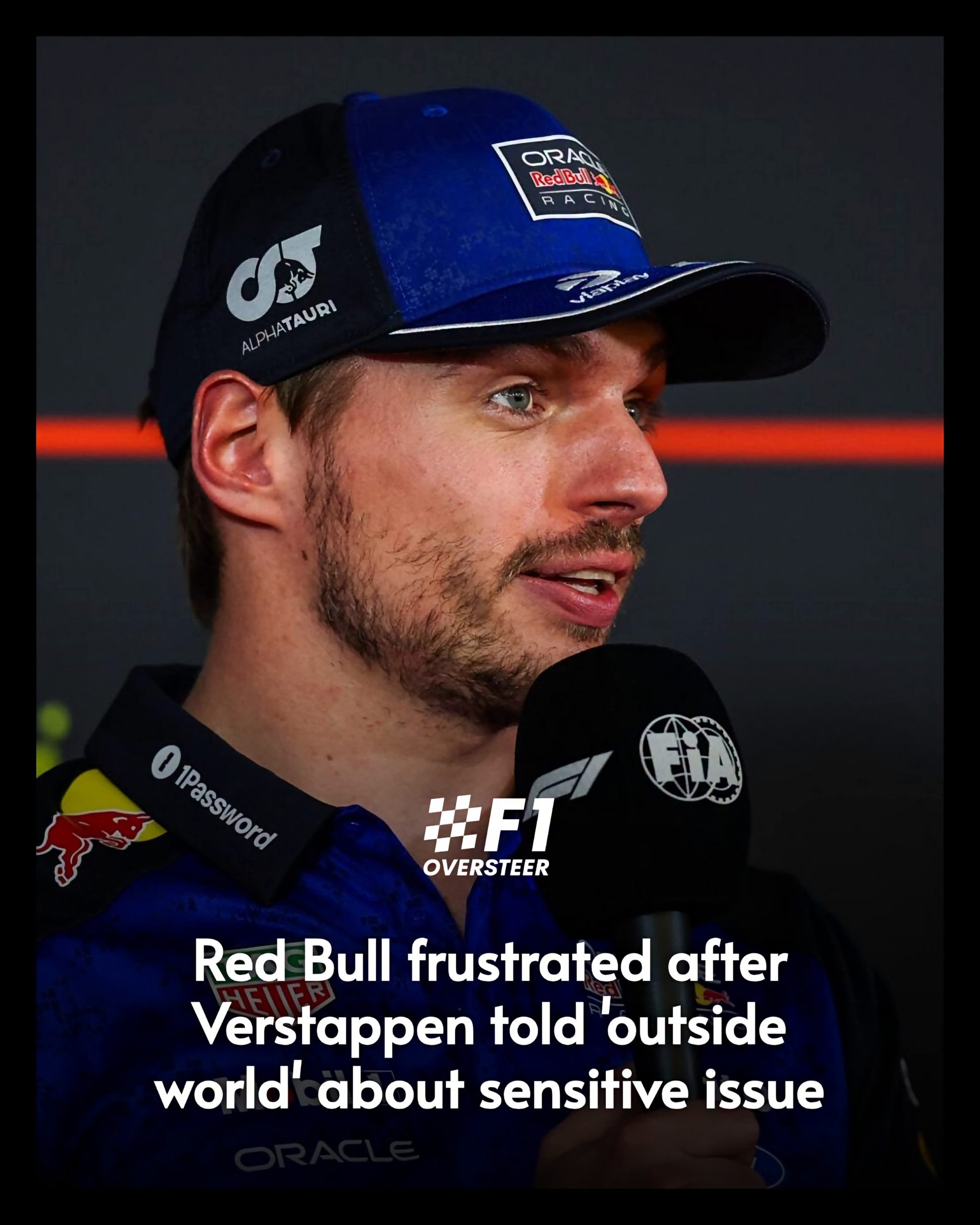
Max Verstappen’s remarkable recovery during the second half of the 2026 Formula 1 season has raised fresh questions about what was happening behind the scenes at Red Bull, particularly after the team’s technical leadership expressed reservations about the Dutchman’s decision to publicly reveal a sensitive car problem.
Red Bull technical director Pierre Wache has admitted that he was unsure why Verstappen felt the need to discuss the issue with the outside world, suggesting the team would have preferred to keep the technical difficulties away from rival manufacturers.
The situation highlights a familiar challenge in Formula 1: balancing a driver’s desire to speak honestly about performance problems with a team’s responsibility to protect valuable technical information.
VERSTAPPEN EXPOSED A STRANGE RED BULL PROBLEM
The controversy dates back to the Hungarian Grand Prix, where Verstappen struggled throughout the weekend and suffered an uncharacteristic spin during qualifying.
Rather than blaming tyre performance alone, the four-time world champion suggested that the car itself was deteriorating as the weekend progressed.
His explanation was particularly concerning because aerodynamic performance is one of the most important factors in modern Formula 1.
Verstappen explained that Red Bull was experiencing a loss of aerodynamic performance, with the situation becoming progressively worse.
He also revealed after the race that the car had sustained damage despite avoiding contact with walls and other competitors.
The problem appeared to involve the RB21’s sensitivity to kerbs, bumps and gravel, with certain components potentially suffering damage that reduced aerodynamic efficiency.
For a team with Red Bull’s engineering resources, such a problem was particularly frustrating. Even small losses in aerodynamic performance can significantly affect cornering speed, tyre management and overall race pace.
PIERRE WACHE QUESTIONS WHY THE INFORMATION BECAME PUBLIC
Red Bull technical director Pierre Wache has now indicated that he would have preferred the issue to remain within the team.
Speaking to Motorsport.com, Wache said: “I’m just not sure the outside world needed to know about that.”
His comments suggest that Red Bull was concerned about revealing too much information about its technical weaknesses.
In Formula 1, every manufacturer constantly studies the performance of its competitors. Details about aerodynamic weaknesses, component durability and car behaviour can provide valuable clues to rival engineering departments.
Even when a team does not reveal the exact technical solution, publicly acknowledging a specific weakness can help competitors understand where to look.
That makes Wache’s reaction understandable from an engineering perspective.
However, Verstappen has built a reputation for being unusually direct when discussing problems with his machinery. His willingness to speak openly has often made him one of the most revealing drivers during difficult weekends.
RED BULL’S RECOVERY SHOWS HOW MUCH PROGRESS HAS BEEN MADE
Although the Hungarian Grand Prix exposed serious concerns, Red Bull’s results since then suggest that the team has made considerable progress.
Verstappen has secured eight podium finishes in nine races following that difficult weekend, including four victories.
His performance has been particularly impressive considering the difficulties he experienced earlier in the campaign.
The Dutchman charged from the back of the field to finish second at the Brazilian Grand Prix before delivering another victory in Las Vegas.
Those performances demonstrate that Red Bull has managed to recover much of its competitiveness, even if questions remain about the precise technical changes behind the improvement.
For Verstappen, having a more predictable car has clearly made a difference. A driver can only consistently extract maximum performance when the machinery behaves in a way that allows confidence and precision.
Red Bull’s recent results suggest that the situation is considerably better than it was during the Hungarian weekend.
VERSTAPPEN NOW APPEARS MORE RELUCTANT TO DISCUSS CAR PROBLEMS
There is another interesting development surrounding Verstappen’s approach to media questions.
When asked to explain the unusual issues he had experienced in Brazil and Las Vegas, the Dutchman reportedly offered a very short response.
“No.”
That answer was a sharp contrast to his earlier willingness to explain the technical difficulties affecting his car.
It is impossible to know whether Wache’s criticism directly influenced Verstappen’s decision to remain silent. However, the contrast raises an interesting question about whether the driver has become more cautious about revealing information that could benefit Red Bull’s rivals.
The team also limited Verstappen’s media appearances during the difficult Hungarian weekend, allowing him only a few minutes with reporters.
That decision may have reflected Red Bull’s desire to control the amount of information emerging from its garage during a particularly sensitive period.
WHY RED BULL CANNOT AFFORD TO REVEAL TOO MUCH
Technical secrecy remains one of the biggest competitive advantages in Formula 1.
Teams spend enormous amounts of money developing aerodynamic packages, suspension systems and other components designed to deliver performance gains.
When a weakness becomes public, rival teams can begin examining whether they are experiencing similar problems or whether an opportunity exists to exploit another manufacturer’s difficulties.
Red Bull therefore has every reason to protect information about its car.
However, there is also a human side to the situation. Drivers are expected to explain their performances, answer difficult questions and communicate honestly with supporters.
Verstappen’s frustration in Hungary was understandable, particularly if he believed the car was losing performance through no fault of his own.
The challenge for Red Bull is finding the right balance between transparency and competitive protection.
VERSTAPPEN’S CHAMPIONSHIP CHALLENGE ENTERS AN IMPORTANT STAGE
With the 2026 season approaching its conclusion, Red Bull will be hoping its recent improvements continue into the remaining races.
Verstappen sits second in the drivers’ championship with 304 points, according to the latest standings supplied alongside the recent F1 reports.
Although Kimi Antonelli has already secured the title, Verstappen still has a significant battle ahead to protect his position from George Russell and the other challengers.
His performances in Brazil and Las Vegas have demonstrated that he remains capable of producing exceptional results when the car is competitive.
The bigger question is whether Red Bull has permanently solved the technical weaknesses that troubled it earlier in the season.
Wache’s comments also reveal that the team is keen to control how information about its machinery reaches the outside world.
Verstappen may prefer to speak his mind, but Red Bull’s engineers know that information can be just as valuable as outright speed.
As the championship reaches its final races, the team will want its technical problems discussed inside the garage rather than becoming another advantage for its rivals.