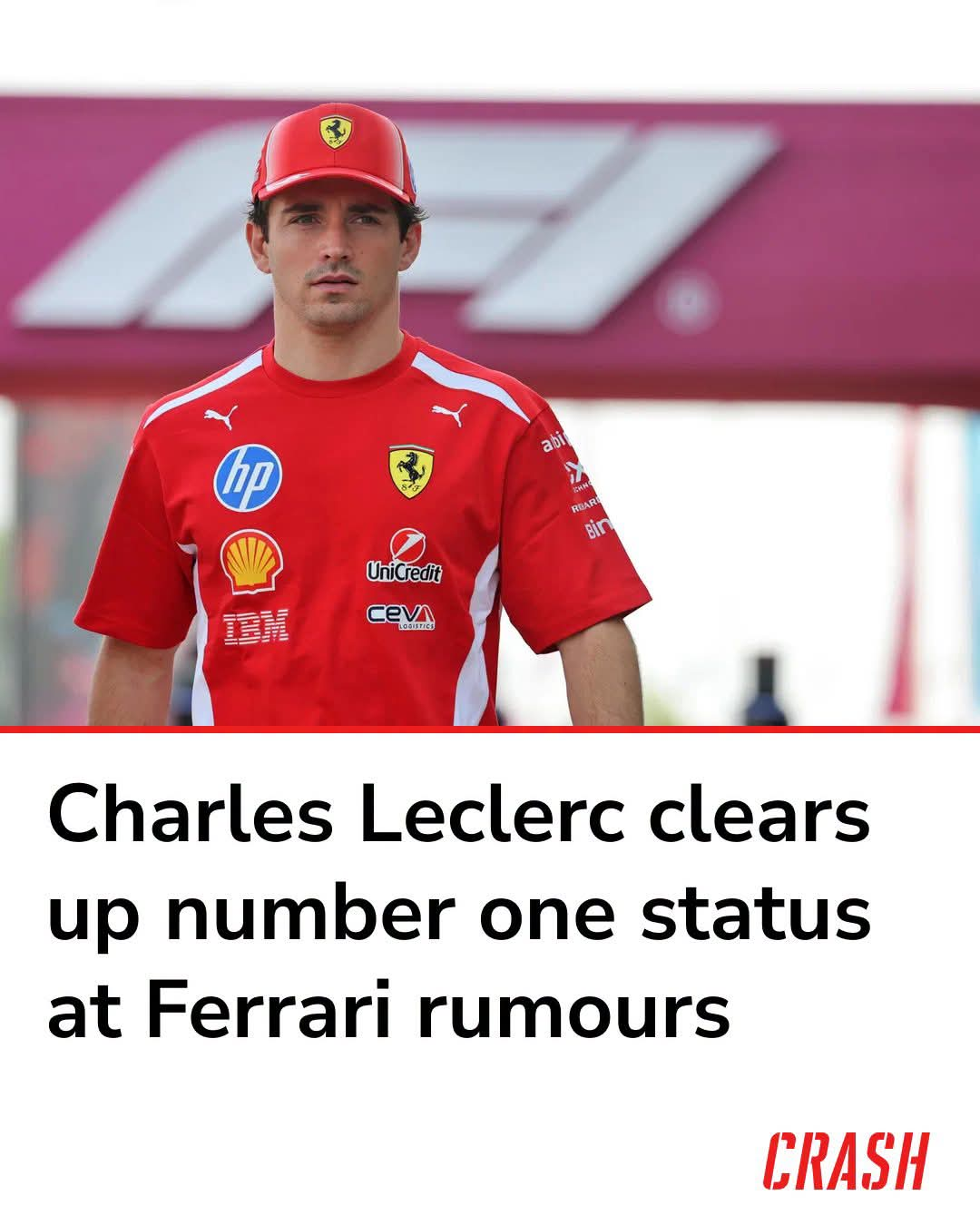
Charles Leclerc has drawn a firm line under swirling speculation about his status inside Ferrari. Speaking ahead of the Qatar Grand Prix, the Monegasque driver made it clear he holds no contractual number-one privileges and never sought them.
The comments land at a delicate moment. After another on-track collision with teammate Lewis Hamilton in Las Vegas, questions about hierarchy, team orders, and internal harmony at the Scuderia have dominated the paddock. Leclerc’s response was direct and personal.
“I normally never disclose what I have in my contract, but I think this one is an important one to kind of speak about, and I absolutely have zero clause that says that in my contract,” he said. “It’s never something that I was interested in and never something that I personally wanted. So no, I don’t.”
He went further, pushing back against suggestions that his actions on track somehow undermine the team. “The only thing that I don’t like seeing is people questioning my integrity to the team, my love for the team. I’ve been in Ferrari since 2019; I think there’s nothing clearer than the love I have for the team. I’ll do absolutely everything in order to bring Ferrari back to the top.”
WHY THE NUMBER ONE DEBATE EXPLODED NOW
The rumour originated from comments by journalist Rebecca Clancy on the Chequered Flag podcast in the aftermath of the Las Vegas incident. She suggested Leclerc had secured formal number-one recognition in his deal, while Hamilton had never pursued or held such a designation. The claim gained traction because it fitted a familiar narrative: the long-serving Ferrari driver protecting his position against the seven-time champion who joined in 2025.
Ferrari has publicly maintained an equal-status approach under team principal Fred Vasseur. Both drivers are treated as potential race winners. That philosophy has produced genuine intra-team competition, but it has also delivered costly contact in Mexico City and Las Vegas. Vasseur himself described the situation as becoming “unmanageable.” Former champions and pundits have piled in, some urging Ferrari to back Hamilton’s title experience, others arguing Leclerc’s long-term contract and institutional knowledge make him the natural cornerstone.
Leclerc’s denial removes one easy explanation for the friction. There is no secret clause quietly tilting the scales. What remains is a more complex reality: two elite drivers, both convinced they can win, sharing a car that has not yet delivered the consistent edge required to settle the argument on pure performance.
THE REAL STAKES FOR FERRARI AND THE DRIVERS
This is not just about ego or contract language. It is about how a top team extracts maximum points when its two drivers are racing each other as hard as the opposition. Every time the red cars make contact, championship points disappear and rivals capitalize. In a season where Ferrari has shown flashes of competitiveness but has not dominated, those lost points carry extra weight.
For Leclerc, the denial protects his public image as a team-first driver who has given nearly a decade of his career to Maranello. Questioning his loyalty clearly stung. For Hamilton, the absence of a formal hierarchy matches the approach he has taken throughout his career. He has repeatedly stated he never asked to be named number one, even while suggesting earlier in the season that stronger strategic support when he sat second in the championship could have kept him in the title fight longer.
The broader industry impact is significant. Ferrari remains one of Formula 1’s most valuable brands and a perennial title contender in the public imagination. Prolonged internal tension risks eroding confidence among sponsors, fans, and the factory workforce that has invested heavily in the current regulatory cycle. Other teams watch closely. Clear hierarchies (Red Bull with Verstappen) or carefully managed dual number-one setups (historically Mercedes) both have precedents. Ferrari’s current experiment is testing the limits of the equal-status model under real championship pressure.
WHAT COMES NEXT FOR THE SCUDERIA
Expect sharper internal protocols rather than a sudden public demotion of either driver. Vasseur has already signalled that the team will intervene more decisively when the situation demands it. Clearer rules of engagement in wheel-to-wheel battles, stricter guidance on when to hold position versus when to race, and perhaps more explicit communication from the pit wall are the most likely near-term steps.
Longer term, the 2027 season and beyond will force harder choices. Leclerc’s contract runs deep into the next decade. Hamilton’s future is less certain. Performance will ultimately decide the hierarchy more than any document. If one driver consistently outpaces the other and converts that into championship contention, the team will naturally coalesce around him. Until then, the equal-status experiment continues under intense scrutiny.
Leclerc’s intervention is valuable because it removes a convenient conspiracy theory from the conversation. The problems at Ferrari are real, visible, and operational. They are not the product of a hidden contractual preference. Solving them will require clearer leadership decisions, better on-track discipline, and a car capable of rewarding the intensity both drivers bring. The next few races will show whether the Scuderia can convert this moment of clarity into tangible progress.