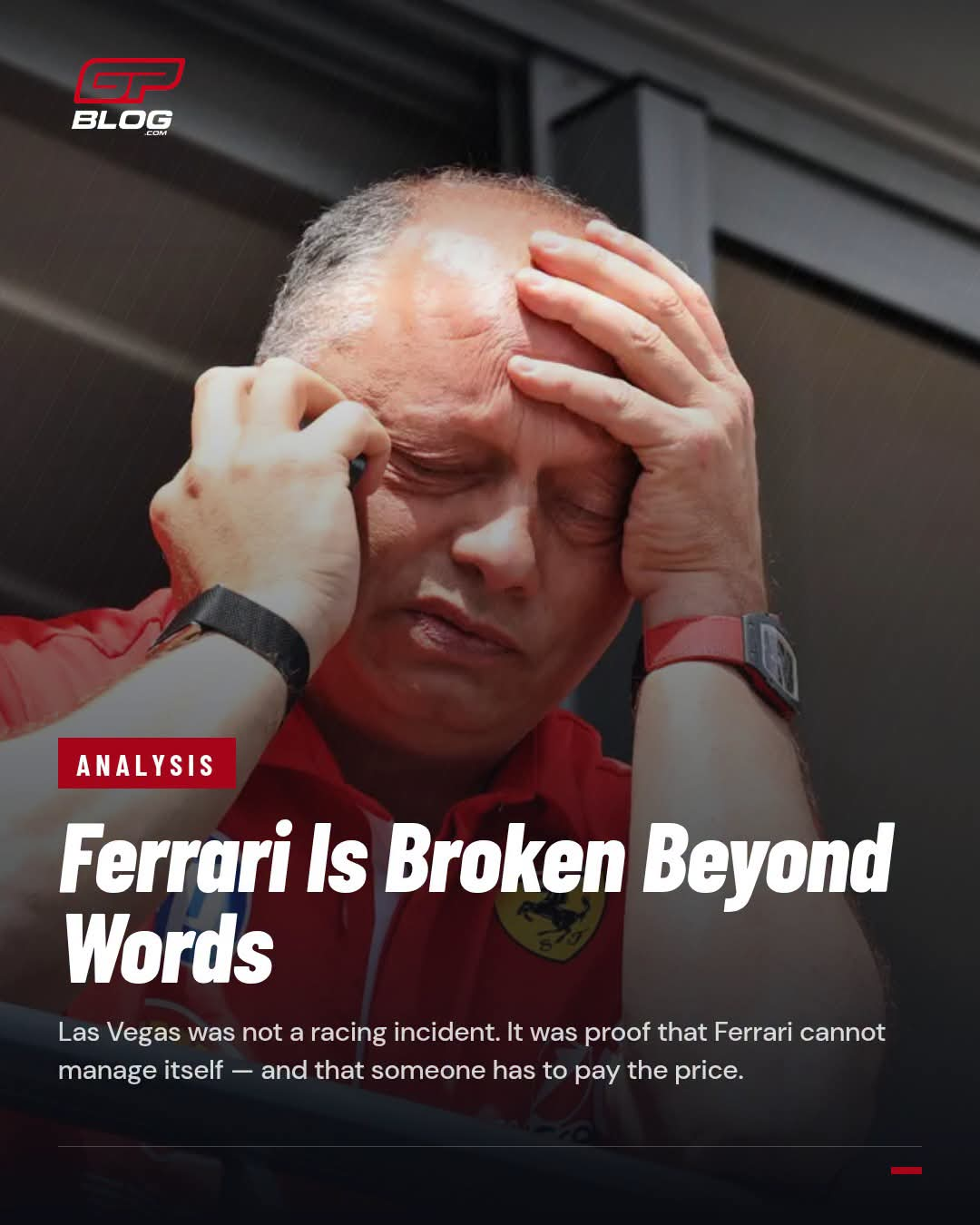
The Las Vegas Grand Prix was supposed to deliver lights, speed, and spectacle under the neon glow of the Strip. Instead, it delivered another chapter in Ferrari’s ongoing internal soap opera. Charles Leclerc and Lewis Hamilton collided once more, this time on lap 38 at Turn 7. Leclerc attempted an inside move from too far back, made contact with Hamilton’s rear-left, and sent the seven-time champion into a spin. Stewards handed Leclerc a 10-second penalty. He finished 10th. Hamilton recovered to seventh. Team principal Fred Vasseur was furious.
This was not an isolated moment. It followed earlier flashpoints at Monza and Mexico City. The pattern is clear, the frustration is public, and the question hanging over Maranello is the same one fans keep asking: how is this still going on?
THE LATEST FLASHPOINT AND VASSEUR’S FURY
Vasseur did not mince words. He called the collision “completely unacceptable” and a “lack of respect” toward the team, the sponsors, and the hundreds of people working in Maranello. He revealed the pit wall had told Leclerc not to attack Hamilton shortly before the incident. The message was ignored. After the race Vasseur summoned Leclerc for a private conversation that, by his own account, was mostly one-sided.
Leclerc accepted the penalty and described the moment as embarrassing for the team. Hamilton, for his part, made clear that racing each other when points for the constructors’ championship are on the line is not the priority. The team sits second in the standings and is still fighting to lock in that position with two races remaining. Every point lost to internal contact hurts.
The radio traffic before the clash told its own story. Both drivers were already complaining about each other. The tension that clear-the-air talks after Mexico were supposed to ease had clearly returned.
WHY TWO SUPERSTARS KEEP COLLIDING
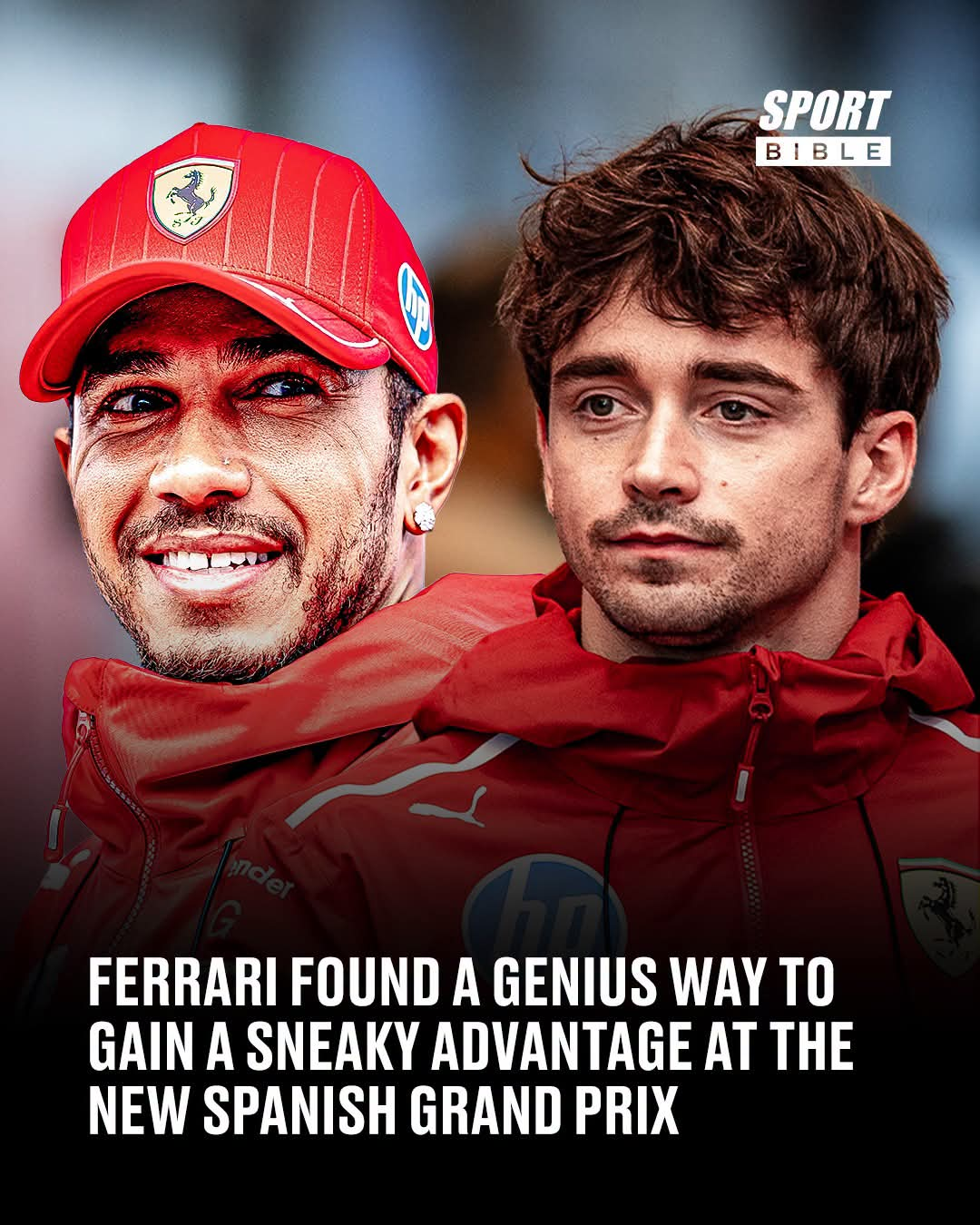
Ferrari signed Lewis Hamilton to pair with Charles Leclerc because the combination looked like pure firepower on paper. One is a seven-time world champion chasing one more title in red. The other is the long-time face of the modern Scuderia, still hungry for his first championship. Both are elite. Both are aggressive. Neither is wired to play second fiddle.
Without a clear hierarchy or written rules of engagement, wheel-to-wheel battles between them become high-stakes gambles. Hamilton has previously suggested formal guidelines similar to those he experienced at Mercedes. Ferrari has so far preferred internal discussions and appeals to professionalism. Those discussions are not working.
The car itself adds pressure. The SF-26 has shown strong chassis qualities in places, yet it continues to lack straight-line speed on circuits like the Las Vegas Strip. When the package is not dominant, every position becomes precious and the temptation to attack a teammate grows. Qualifying in Las Vegas was already a low point — both cars eliminated in Q2 — so the race carried extra urgency.
THE REAL COST TO FERRARI
Intra-team collisions do more than drop points. They drain energy, erode trust, and create narrative noise that distracts from the bigger picture. Ferrari is still chasing consistency and long-term competitiveness under the current regulations. Every time the two drivers take points off each other, the constructors’ battle becomes harder and the development focus risks shifting toward damage control.
Sponsors and the factory workforce notice. Vasseur has repeatedly framed these incidents as disrespectful to the people who build and prepare the cars. That message is not just for the drivers — it is a public signal that patience is finite.
There is also the human element. Both men are competitive animals. Asking them to dial back natural instincts while still delivering results is a delicate balance. When the balance fails, the result looks exactly like Las Vegas: two red cars fighting each other while rivals pull away.
WHAT COMES NEXT FOR THE SCUDERIA
Vasseur has already indicated that further talks and possible internal measures are coming. Whether that means stricter team orders for the final two races in Qatar and Abu Dhabi, a formal number-one and number-two arrangement, or something more drastic remains to be seen. The team cannot afford another public collision with the season still mathematically alive in the constructors’ championship.
Looking further ahead, the 2027 car is already the priority. Development on the current machine has largely stopped. The real test will be whether Ferrari can produce a package strong enough that both drivers can fight at the front without needing to take points off each other. A dominant car solves many interpersonal problems. A midfield or second-tier car magnifies them.
Fans of the Scuderia have watched versions of this story for years. Different pairings, same underlying tension. The difference now is the caliber of the two drivers and the visibility of every radio message and every contact. Social media and 24-hour coverage turn private frustrations into global headlines within minutes.
The Las Vegas incident will not be the last word. It is simply the latest reminder that pairing two number-one drivers without a clear framework is a high-risk strategy. Ferrari has the talent. It still needs the structure and the discipline to match it. Until that happens, the question will keep returning every time the two red cars get too close on track: how is this still going on?