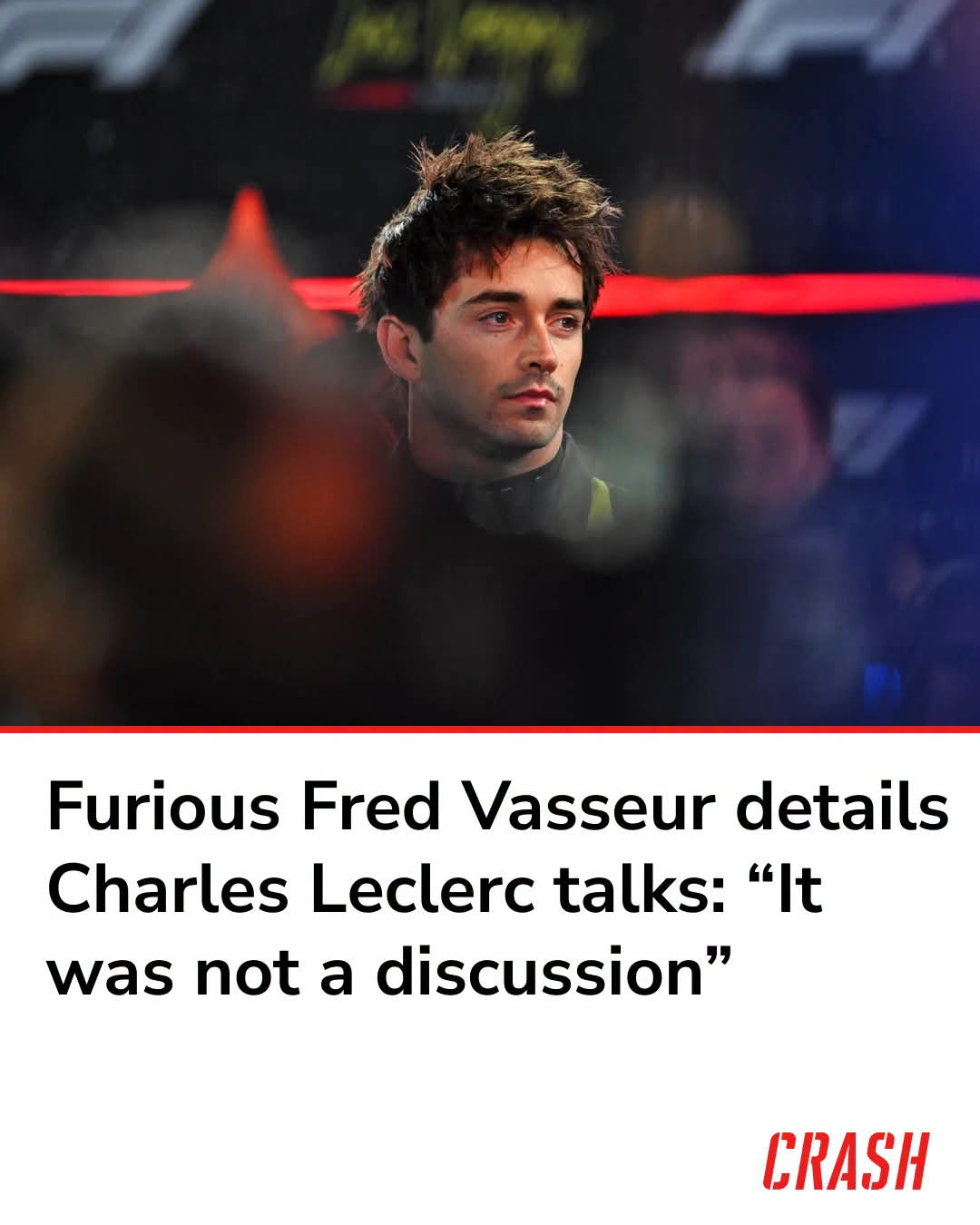
Ferrari team principal Fred Vasseur wasted no time after the Las Vegas Grand Prix. On the cool-down lap, he delivered a terse radio message to Charles Leclerc that cut through the usual post-race noise: “Charles, I want to see you just after the race, before everything.”
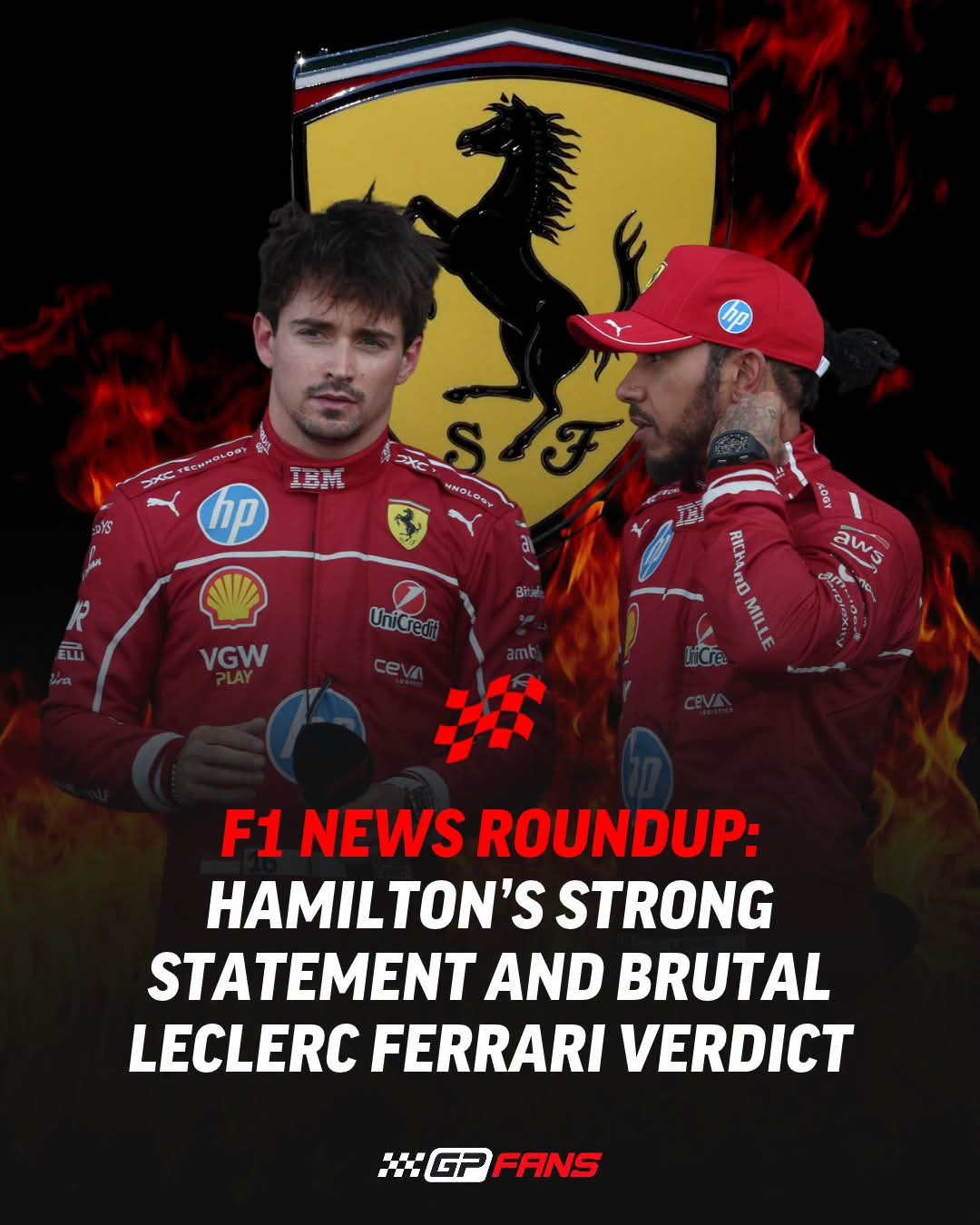
What followed was not a long debate. Vasseur later confirmed he spoke, Leclerc apologised and understood, and the Frenchman left the conversation more frustrated than ever. The incident that triggered it — contact between Leclerc and Lewis Hamilton that spun the seven-time champion and earned Leclerc a 10-second penalty — has become the clearest public signal yet that Ferrari’s internal driver dynamic is reaching a breaking point.
THE LAS VEGAS INCIDENT THAT PUSHED FERRARI OVER THE EDGE
On lap 38 of the Las Vegas street race, Leclerc and Hamilton found themselves battling for position near the chicane. Contact occurred. Hamilton spun. Stewards investigated and placed the blame squarely on Leclerc, handing him a 10-second time penalty that dropped him to 10th. Hamilton recovered to seventh.
What made the moment especially damaging was the context. Ferrari had already told Leclerc not to attempt the overtake. The team wanted both cars focused on the cars ahead rather than fighting each other on a circuit where slipstreaming and traffic can quickly undo progress. The instruction was ignored. The result was another self-inflicted wound for a team that had shown improved form in recent events.
This was not an isolated flashpoint. Just three weeks earlier in Mexico, the pair had clashed on the opening lap, costing Ferrari a realistic shot at a strong result. Clear-the-air talks followed in Brazil. Vasseur said both drivers left that meeting joking together. The message in Las Vegas was supposed to be the reinforcement of those guidelines. Instead, the same problem reappeared.
WHY VASSEUR WENT STRAIGHT TO LECLERC AND WHAT HE SAID
The radio call was deliberate. Vasseur wanted to speak to Leclerc before the driver faced the media, before emotions hardened into public statements that would be difficult to walk back. When asked later about the conversation, the team principal was blunt: it was not a discussion. He spoke. Leclerc apologised. The apology did not erase the outcome.
Vasseur’s language after the race was unusually sharp. He called the incident “completely unacceptable” and a lack of respect for the people working in Maranello, the sponsors, and the wider Ferrari organisation. He noted that the same core message had already been delivered after Mexico and reiterated in Brazil. The fact that it still needed to be said mid-race in Las Vegas only deepened his frustration. “I’m more than upset,” he said.
He also made clear that personal history would not soften the response. Whether he had worked with the drivers years earlier or not was irrelevant. Both are employees of the team. The issue sits between the team and its drivers, not between individuals.
THE BIGGER PROBLEM FERRARI CAN NO LONGER PAPER OVER
Teammate tension is not new in Formula 1. What makes the current Ferrari situation different is the combination of high expectations, two strong-willed drivers, and a team still chasing consistent race-winning form. Hamilton arrived with a record of excellence and a clear desire to win again. Leclerc has spent years as the face of Ferrari’s future and is not programmed to yield easily.
When the car is not dominant enough to create clear hierarchy or when race strategy creates close racing, the competitive instinct that makes both drivers valuable starts to collide with team needs. Las Vegas showed that verbal agreements and previous meetings have not yet produced reliable on-track discipline.
For the organisation, the cost is more than lost points. Every intra-team collision damages credibility with sponsors, demoralises the factory workforce that has poured resources into upgrades, and feeds external narratives that Ferrari still cannot manage its own drivers. In a Constructors’ Championship fight where every point matters, these self-inflicted losses are especially painful.
WHAT THIS MEANS FOR THE REST OF THE SEASON AND BEYOND
Vasseur has indicated that decisions will follow after the team has time to review the situation calmly. He stopped short of announcing immediate sanctions, but the tone left little doubt that further action is under consideration. Whether that means stricter team orders, revised racing guidelines, internal disciplinary measures, or simply another round of intense meetings remains to be seen.
The practical challenge is clear. You cannot eliminate competitive fire from drivers of this calibre. The goal has to be channeling it. Ferrari needs both cars maximising points when the opportunity exists, not taking points off each other. On street circuits and in dense midfield packs, the margin for error is small. The next few races will test whether the latest warning lands differently from the previous ones.
Looking further ahead, the pairing still has the potential to deliver strong results if the relationship stabilises. Both drivers remain elite operators. The question is whether the organisation can impose the structure and mutual respect required before the tension becomes a permanent feature of the team’s public image.
A TEST OF LEADERSHIP AS MUCH AS DRIVER DISCIPLINE
Fred Vasseur’s decision to call Leclerc in immediately and then speak openly about the failure of previous messages shows a leader unwilling to let the issue drift. In the high-pressure environment of modern Formula 1, silence can be interpreted as acceptance. By going public with his disappointment and confirming that consequences will be discussed, Vasseur is attempting to reset expectations again.
Whether that reset sticks will depend on what happens the next time the two Ferraris find themselves side by side in a fight for position. The cars, the strategy, and the pace matter. So does the ability of two highly competitive athletes to prioritise the team when the team asks them to. Las Vegas demonstrated that the current arrangement still falls short of that standard. The coming weeks will reveal whether Ferrari can close the gap.