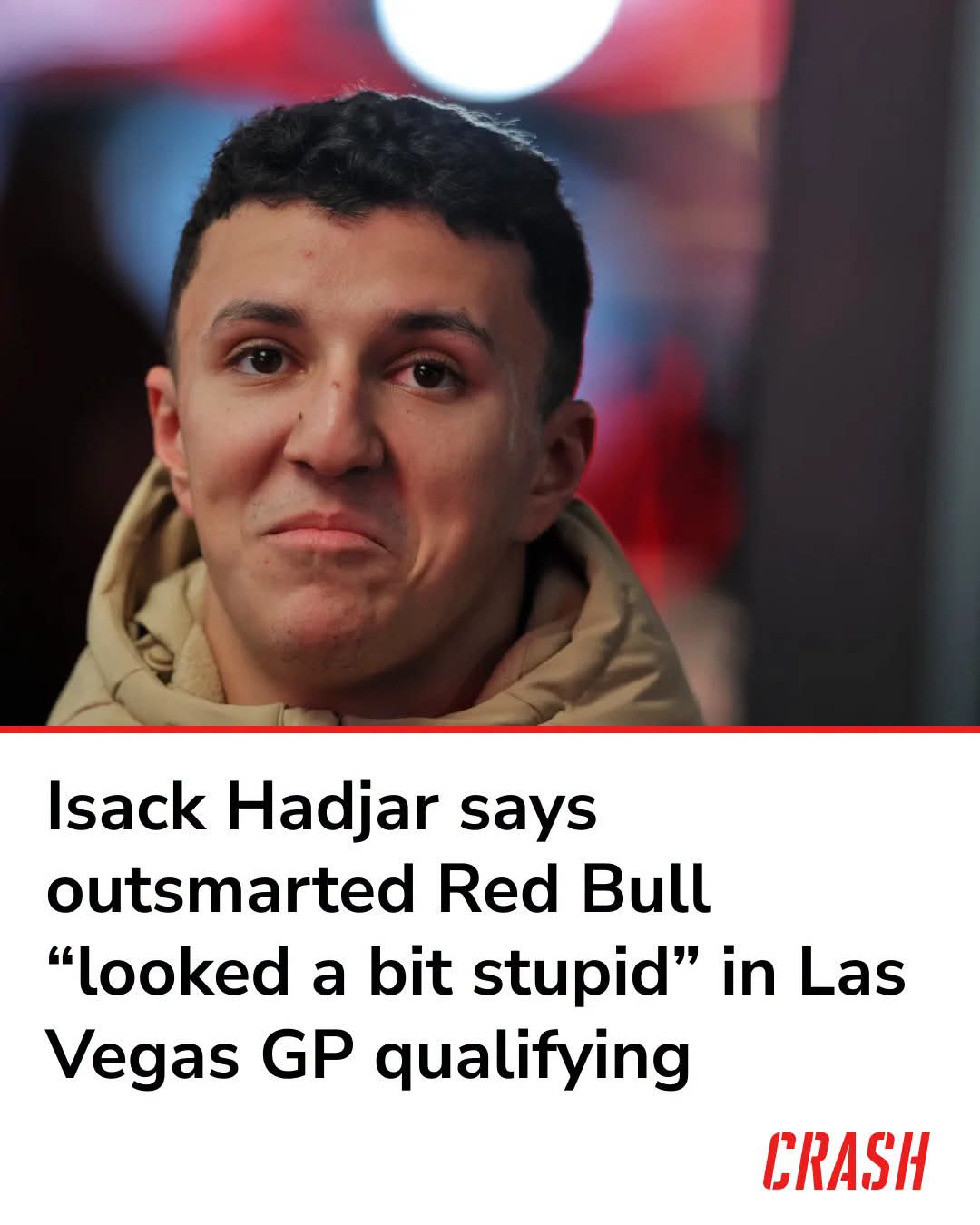
ISACK HADJAR BLASTS RED BULL FOR LOOKING “A BIT STUPID” AFTER TOW GAMES COST HIM IN LAS VEGAS QUALIFYING
Red Bull’s young French driver Isack Hadjar did not hold back after a chaotic final run in Q3 at the Las Vegas Grand Prix left him without the slipstream he needed. While Max Verstappen will start from pole and Hadjar himself moves up to fourth thanks to a grid penalty for Mercedes’ Kimi Antonelli, the Frenchman made it clear he felt his team had been outmaneuvered by smarter rivals.
The long, high-speed straights of the Las Vegas Strip Circuit turn qualifying into a game of cat and mouse. A clean tow can be worth several tenths. On the decisive final runs, several teams positioned cars near Turn 1 to control the traffic and secure that aerodynamic advantage. Red Bull, by contrast, exited the pit lane into open air. Hadjar found himself alone.
“We had no tow. So yeah, we looked a bit stupid out there for the final run, but the other teams played it very smart, parking the car in Turn 1 while we were exiting the pit,” Hadjar told reporters. He abandoned the lap once it became obvious the straight-line deficit would erase any gains he made in the corners.
WHY THE TOW BATTLE MATTERS SO MUCH IN LAS VEGAS
Las Vegas is one of the most tow-dependent tracks on the modern calendar. The combination of long straights, relatively low downforce setups, and cool night-time temperatures amplifies the value of following another car. Drivers and strategists spend the entire session calculating when to leave the pits, where to wait, and who to follow. It is less pure racing and more high-stakes positioning.
Hadjar’s honest assessment highlights a recurring tension in Formula 1. Some drivers thrive on these tactical games. Others, like the 22-year-old Red Bull driver, prefer to simply drive the car as fast as possible. “I don’t really like those games anyway. I like driving the car fast,” he said. “There’s just things you can’t really control, and it’s a bit like rolling the dice. So I don’t really care.”
That mindset is refreshing. It also explains why he remains upbeat. Hadjar was satisfied with his cornering performance and knows the car has genuine race pace. Starting fourth, with Verstappen on pole and several cars around him that may not match Red Bull’s long-run strength, puts him in a strong position for a podium.
HADJAR’S GROWING VOICE INSIDE RED BULL
This is not the first time Hadjar has spoken candidly about team execution. Earlier in the season he was critical of starts and radio communication. Those comments sometimes landed him in hot water, but they also showed a driver who refuses to stay quiet when he sees avoidable mistakes. In Las Vegas he was careful not to attack the engineers directly, yet the message was clear: the team was outsmarted on the timing and positioning of the final run.
For Red Bull, the result is still excellent. Verstappen inherits pole after Antonelli’s five-place penalty for exceeding the allowed number of power unit components. Hadjar starts on the second row. On a circuit where overtaking is possible and tyre management will be critical in cooler conditions, the team has two cars well placed to fight at the front.
WHAT THIS MEANS FOR THE RACE AND BEYOND
The night race in Las Vegas often rewards those who manage the early chaos and keep their tyres alive. Starting fourth gives Hadjar a clean shot at the leaders if the race settles into a strategic battle. A strong result would further cement his status as a long-term Red Bull asset and quiet any remaining questions about his readiness at this level.
It also raises a broader question for the sport. As tracks become more sensitive to slipstream, will teams continue to treat the final minutes of qualifying as a positioning contest rather than a pure speed contest? Drivers like Hadjar clearly dislike it. Fans often find the games entertaining. The FIA has limited tools to intervene without creating new problems.
Hadjar’s reaction was measured but pointed. He knows the car is quick in the corners. He knows he starts in a podium position. And he knows that pure speed still matters more than games once the lights go out. For a young driver still building his reputation inside one of Formula 1’s most intense teams, that combination of honesty and confidence is exactly what supporters want to see.
Sunday night under the lights will show whether the strategic misstep in qualifying costs Red Bull anything, or whether the underlying pace is strong enough to make the “stupid” moment irrelevant.