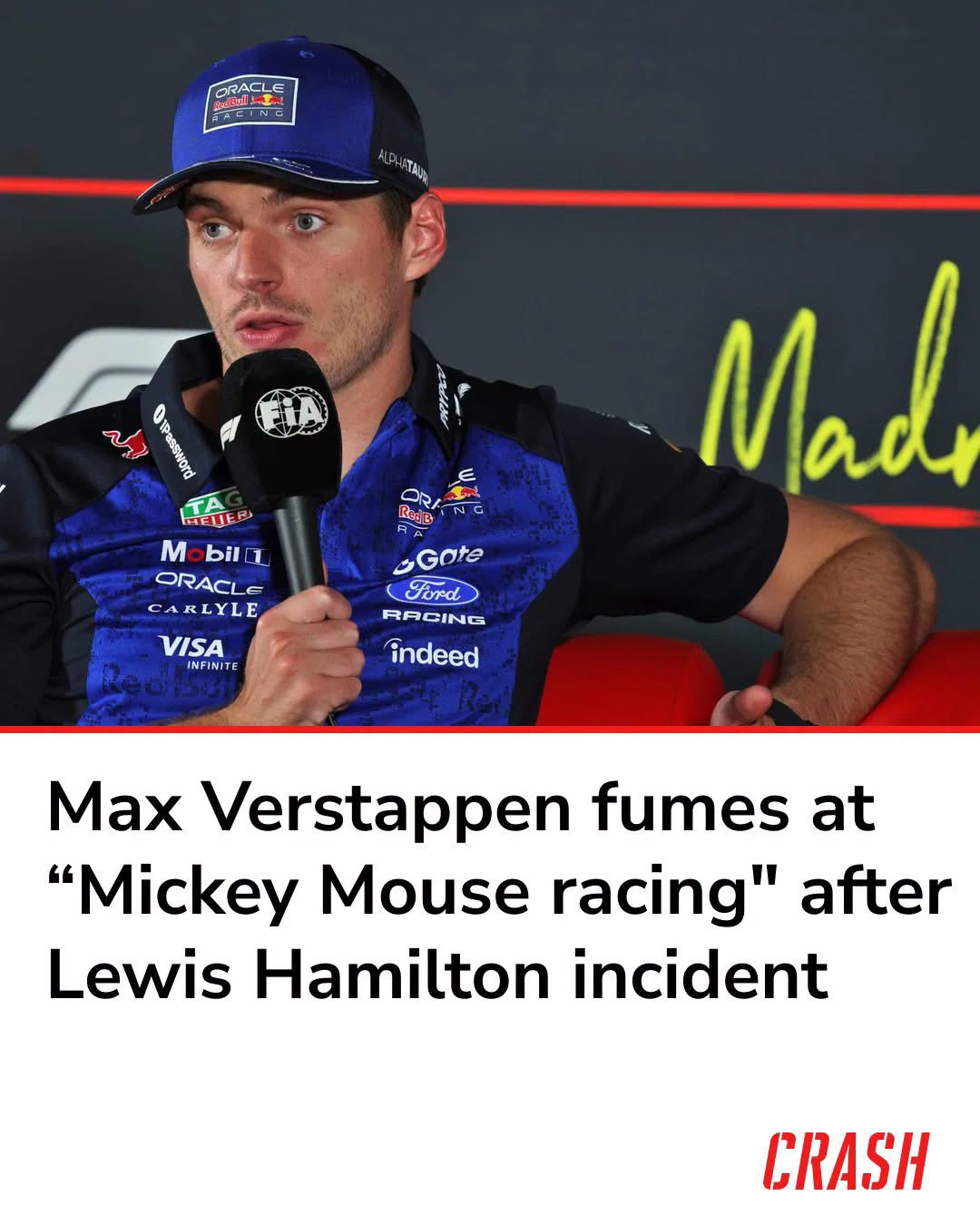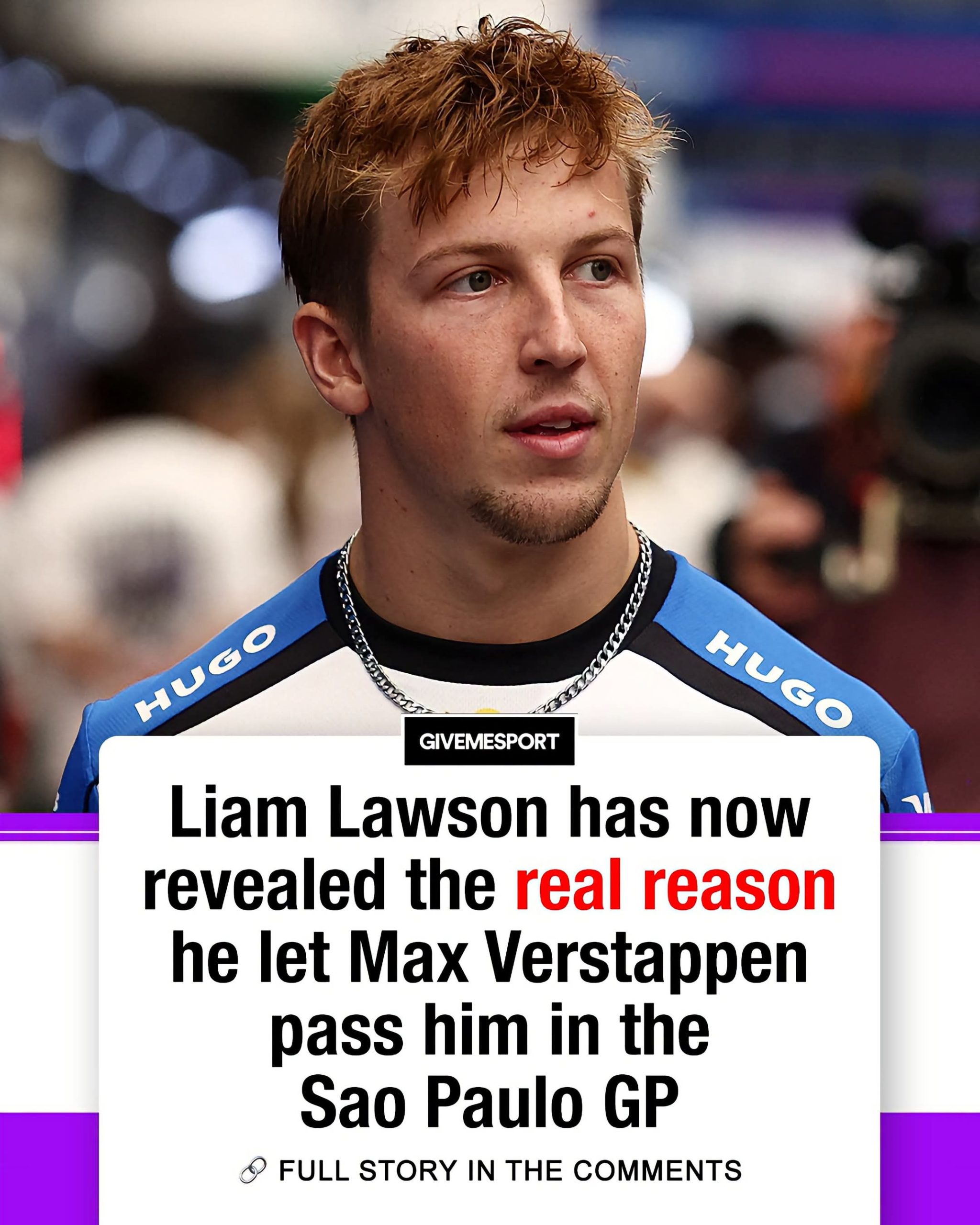
Liam Lawson has finally explained the reasoning behind his decision to offer little resistance when Max Verstappen overtook him during the Brazilian Grand Prix, following growing questions from Formula 1 fans about the relationship between Red Bull and Racing Bulls. The New Zealand driver insisted that his actions were driven entirely by race strategy rather than any obligation to the senior Red Bull team.
The incident attracted attention at Interlagos, particularly because Red Bull and Racing Bulls operate under the same ownership structure. With Lawson’s future in Formula 1 reportedly still uncertain, the moment has added another layer of intrigue to an already complicated situation surrounding the 24-year-old’s career.
Despite the controversy, Lawson enjoyed a strong weekend in Brazil, securing a valuable seventh-place finish and strengthening Racing Bulls’ position in the constructors’ championship.
LAWSON EXPLAINS WHY HE DID NOT FIGHT VERSTAPPEN
Lawson’s decision to allow Verstappen through appeared unusual to some observers, especially considering his impressive start to the Brazilian Grand Prix.
After qualifying fifth, power unit changes for George Russell and Charles Leclerc promoted Lawson to third on the starting grid. The Racing Bulls driver then produced an excellent opening lap, overtaking Lando Norris and briefly moving into second place.
However, once the race settled down, the pace difference between Lawson and the leading cars became increasingly apparent.
Explaining his approach after the race, Lawson said he had enjoyed strong grip at the start but recognised that the faster cars would eventually catch him.
He explained that his priority was to avoid losing too much time while allowing the race to develop.
His comments suggest that Lawson believed defending aggressively against Verstappen would have compromised his own race rather than delivered a meaningful advantage.
VERSTAPPEN’S OVERTAKE SPARKS QUESTIONS ABOUT RED BULL’S RELATIONSHIP
The situation immediately generated discussion because Verstappen and Lawson represent two different teams within the Red Bull organisation.
Red Bull Racing and Racing Bulls are separate Formula 1 constructors, but both operate under the same corporate ownership. Racing Bulls has traditionally served as a development environment for young drivers hoping to progress to the senior team.
Lawson himself experienced that pathway when he was promoted to Red Bull Racing in 2025 before returning to Racing Bulls.
That history makes any on-track interaction between the two teams particularly sensitive.
Although shared ownership is permitted within Formula 1’s regulatory framework, teams are still expected to compete independently. Consequently, moments that appear to involve one driver yielding to another can attract scrutiny.
However, the Brazilian Grand Prix incident alone does not establish that Lawson received team instructions or deliberately sacrificed his position for Verstappen.
His explanation was that the decision reflected the difference in pace and his desire to protect his own result.
LAWSON’S BRAZILIAN GP PERFORMANCE DESERVES RECOGNITION
The controversy surrounding Verstappen’s overtake risks overshadowing what was otherwise a strong performance from Lawson.
Starting third, the New Zealander briefly challenged the leading drivers and demonstrated impressive race-start execution.
Although he eventually dropped back as faster cars moved through the field, his seventh-place finish represented a valuable result for Racing Bulls.
Lawson’s ability to secure points in a competitive midfield environment has become increasingly important as the team fights to maintain its position among Formula 1’s leading midfield constructors.
His performance also reinforces the argument that he has developed considerably since his difficult spell at Red Bull Racing.
Rather than simply focusing on the overtake, Racing Bulls will likely place greater importance on the points he delivered and the consistency he has demonstrated throughout the season.
LAWSON’S FUTURE AT RACING BULLS REMAINS UNCERTAIN
Despite his recent performances, Lawson’s future remains one of the major talking points surrounding Red Bull’s driver programme.
Racing Bulls is reportedly considering its options for the 2027 season, with rookie Nikola Tsolov emerging as a potential candidate for promotion.
Lawson’s previous opportunity at Red Bull Racing could complicate his position, particularly given the organisation’s reputation for making difficult driver decisions.
Nevertheless, his recent performances provide a strong argument for retaining him.
The GiveMeSport report states that Lawson has recorded 16 top-10 finishes across 20 races and sits ninth in the drivers’ championship with 89 points.
Those figures highlight the value he has brought to Racing Bulls, especially in a midfield battle where every point can influence the final constructors’ standings.
Lawson has also reportedly expressed frustration about the uncertainty surrounding his future, with the team still yet to provide a definitive answer.
RED BULL’S DRIVER PROGRAMME FACES AN IMPORTANT DECISION
Red Bull’s approach to developing young drivers has historically been aggressive.
The organisation has repeatedly promoted promising talents into Formula 1 while making rapid changes when performances fail to meet expectations.
Lawson’s career has become a clear example of how demanding that system can be.
His promotion to the senior team in 2025 offered an opportunity to establish himself alongside Verstappen, but the move was short-lived.
Returning to Racing Bulls has allowed him to rebuild confidence and demonstrate greater consistency.
Now, Red Bull must decide whether Lawson’s development justifies another opportunity or whether a younger driver should be given the chance to progress.
That decision could have consequences beyond the immediate driver lineup, potentially influencing how future Red Bull junior drivers view the organisation’s development pathway.
COULD LAWSON’S BRAZIL RESULT HELP SAVE HIS F1 SEAT?
Lawson’s seventh-place finish in Brazil could prove significant as the 2027 driver market approaches its final decisions.
His performances have demonstrated that he can compete effectively in the midfield and deliver consistent points when the machinery allows it.
However, Formula 1 driver decisions are rarely based on results alone.
Red Bull will also consider long-term potential, technical feedback, consistency, adaptability and the availability of alternative drivers.
Lawson’s challenge is therefore to continue producing strong performances while making a compelling case that he remains the best option for Racing Bulls.
If he maintains his current form, dropping him could become a difficult decision to justify from a purely sporting perspective.
THE VERSTAPPEN-LAWSON INCIDENT MAY NOT BE THE FINAL CONTROVERSY
The Brazilian Grand Prix overtake has created an interesting debate about how drivers within related teams should interact on track.
Lawson’s explanation appears straightforward: he recognised Verstappen’s superior pace and chose to avoid wasting time defending a position he was unlikely to retain.
Yet, given the relationship between Red Bull and Racing Bulls, the incident was always likely to attract additional attention.
The bigger story may ultimately be Lawson’s uncertain future rather than the overtake itself.
With the 2027 lineup decision approaching, every performance could influence his prospects.
Lawson has shown that he can deliver strong results in Formula 1. Whether those performances are enough to secure his future remains a question Red Bull will soon have to answer.