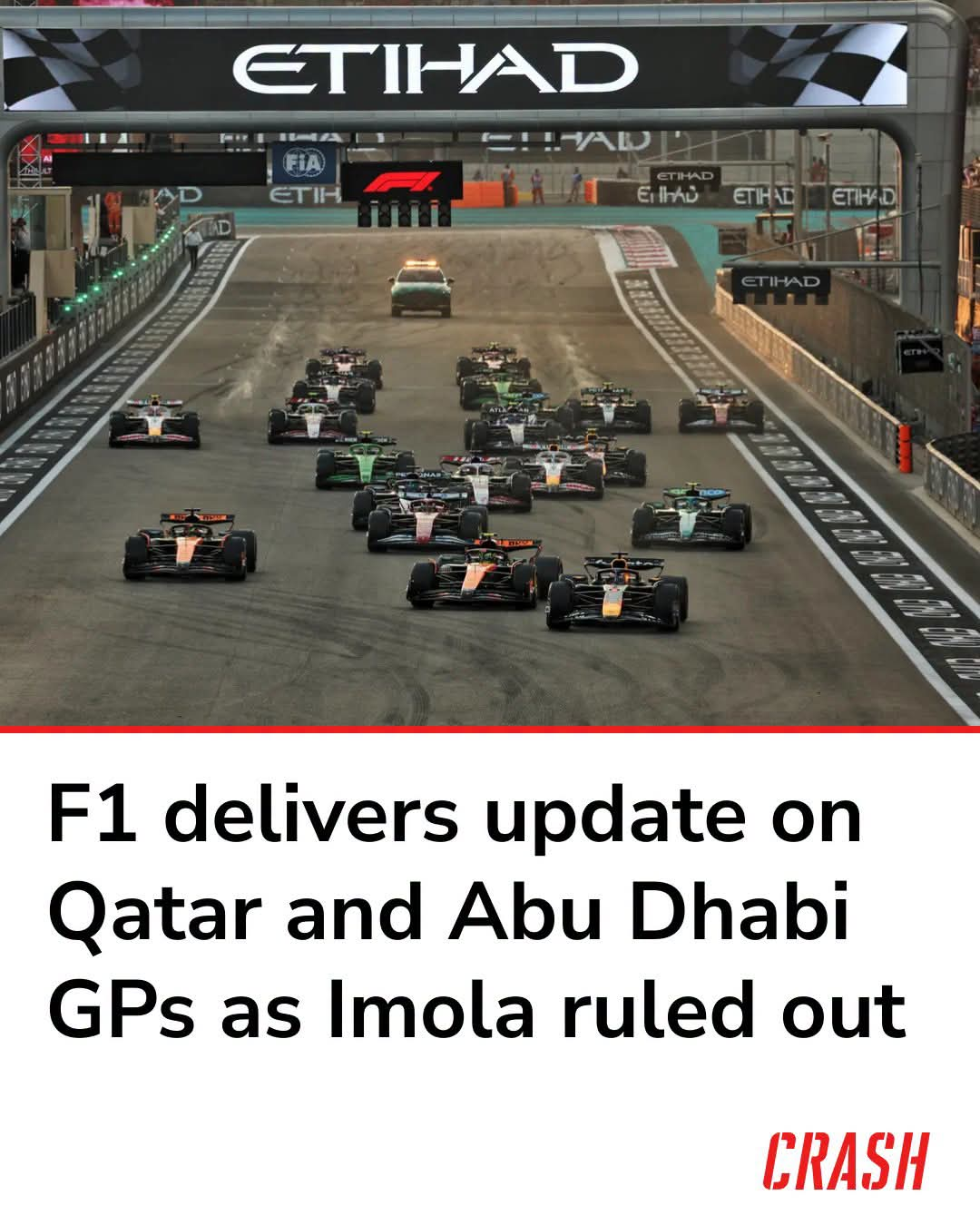
Formula 1 has reaffirmed its commitment to completing the 2026 season in Qatar and Abu Dhabi, bringing renewed confidence to the championship’s closing stages after weeks of uncertainty surrounding the Middle East races.
The sport had previously explored alternative arrangements, with Italy’s Imola circuit emerging as a potential replacement venue if the regional security situation made it impossible to stage the final two Grands Prix as scheduled.
However, the latest developments indicate that Formula 1 intends to proceed with its original plans, keeping Qatar and Abu Dhabi firmly on the calendar.
The decision represents an important development for the championship, particularly after the disruption that has already affected the 2026 racing calendar.
FORMULA 1 REMAINS COMMITTED TO ITS MIDDLE EAST FINALE
The FIA has made its position clear, with president Mohammed Ben Sulayem confirming that the governing body is fully prepared to deliver the Qatar and Abu Dhabi Grands Prix.
In a statement shared publicly, Ben Sulayem reiterated the organisation’s commitment to both events, expressing confidence in the preparations being undertaken alongside local partners.
The Qatar Grand Prix is scheduled for November 29, while the Abu Dhabi Grand Prix will take place the following weekend, on December 6.
Formula 1’s chief executive, Stefano Domenicali, has also consistently maintained that completing the season in the Middle East remains the preferred outcome.
Importantly, the decision means that Imola, which had been considered as a contingency option, is no longer required as a replacement under the current plans.
According to Reuters, all 11 Formula 1 teams supported the decision to retain the original season-ending arrangements.
Nevertheless, the FIA has stressed that safety remains the overriding consideration. Should circumstances deteriorate, the possibility of cancelling the events cannot be completely ruled out.
WHY IMOLA EMERGED AS A POTENTIAL REPLACEMENT
The uncertainty surrounding Qatar and Abu Dhabi was not an isolated concern.
Earlier disruptions had already forced Formula 1 to reconsider parts of its 2026 calendar following escalating tensions in the Middle East.
The Bahrain Grand Prix was moved to Malaysia, while the Saudi Arabian Grand Prix was cancelled.
These developments naturally raised questions about whether Qatar and Abu Dhabi could safely host their respective events later in the year.
Consequently, Formula 1 began examining alternative arrangements to ensure the championship could reach a satisfactory conclusion.
Imola quickly became an attractive possibility.
The historic Italian circuit has considerable Formula 1 experience, having hosted numerous Grands Prix over the years. Its existing infrastructure and familiarity with the championship made it a practical candidate for an emergency replacement.
However, organising a Grand Prix at short notice is never straightforward.
Travel arrangements, freight transportation, accommodation, commercial agreements and circuit preparations all require extensive coordination.
There were also concerns about potentially challenging weather conditions in Italy during December.
Ultimately, maintaining the original Middle East schedule has become the preferred solution.
WHY QATAR AND ABU DHABI ARE IMPORTANT TO FORMULA 1
The decision to retain both races carries significance beyond simply completing the championship calendar.
Qatar and Abu Dhabi have become important destinations within Formula 1’s commercial and international expansion strategy.
The Qatar Grand Prix, hosted at the Lusail International Circuit, provides the championship with a distinctive racing environment. Its high-speed layout and demanding technical characteristics create an interesting challenge for drivers and engineering departments.
Abu Dhabi, meanwhile, occupies an even more established position in Formula 1’s modern history.
The Yas Marina Circuit has hosted the championship’s season finale for many years, becoming synonymous with dramatic championship conclusions, celebrations and major moments in motorsport.
Keeping Abu Dhabi as the final destination therefore preserves an important element of Formula 1’s established identity.
From a commercial perspective, both events also represent valuable partnerships for the championship.
Moving or cancelling races can create complications involving broadcasters, sponsors, hospitality providers, ticket holders and local organisers.
By retaining the original schedule, Formula 1 avoids another significant logistical challenge while maintaining continuity for its commercial partners.
SAFETY REMAINS FORMULA 1’S BIGGEST PRIORITY
Despite the renewed confidence surrounding the two races, the decision should not be interpreted as Formula 1 ignoring the wider security situation.
The sport operates with thousands of personnel, including drivers, engineers, mechanics, media representatives, officials and hospitality staff.
Their safety must be considered alongside the interests of fans and local communities.
This is particularly important because the previous cancellations demonstrated that Formula 1 is prepared to make difficult decisions when circumstances threaten the safe organisation of an event.
The FIA and Formula 1 therefore face the responsibility of continuously assessing the situation rather than treating the current confirmation as an unconditional guarantee.
For the teams, this means preparing for Qatar and Abu Dhabi while remaining aware that circumstances could still change.
WHAT THE DECISION MEANS FOR THE FORMULA 1 TEAMS
For the 11 teams competing in the 2026 championship, calendar stability is extremely valuable.
Formula 1 operations involve enormous logistical commitments. Cars, spare components, garage equipment, technical personnel and other essential resources must be transported between countries according to carefully coordinated schedules.
A last-minute venue change could disrupt these arrangements and place additional pressure on already demanding operations.
Keeping Qatar and Abu Dhabi on the calendar allows teams to concentrate on their sporting preparations rather than spending additional resources adapting to another major schedule alteration.
It also gives drivers greater certainty about the final two races of the campaign.
Although the drivers’ and constructors’ championships have already been decided, the remaining events still offer opportunities to secure race victories, podium finishes and valuable championship points.
For teams further down the competitive order, the final races could also influence their position in the constructors’ standings and their financial rewards.
That makes the successful organisation of both events important even without a championship battle hanging in the balance.
THE COMMERCIAL IMPORTANCE OF A STABLE F1 CALENDAR
Formula 1’s decision also highlights how important calendar stability has become to the championship’s global business model.
Modern Formula 1 is no longer simply a collection of racing events. It is a major international entertainment business involving broadcasting agreements, sponsorship arrangements, tourism, hospitality and extensive commercial partnerships.
Every Grand Prix represents a substantial investment for the championship and its local organisers.
When an event is cancelled or relocated, the consequences can extend far beyond the racing itself.
Hotels, restaurants, tourism businesses, transport companies and event suppliers can all be affected.
For Qatar and Abu Dhabi, successfully hosting their respective Grands Prix would reinforce their positions as important destinations on the international motorsport calendar.
For Formula 1, retaining both events protects valuable commercial relationships while demonstrating its determination to deliver the championship as planned.
COULD FORMULA 1 STILL CHANGE ITS PLANS?
Although the current intention is to race in Qatar and Abu Dhabi, Formula 1 cannot completely eliminate the possibility of further calendar changes.
The governing body has made it clear that safety considerations will take precedence over commercial commitments and sporting expectations.
If the regional situation deteriorates significantly, the championship could be forced to reconsider its position.
However, the latest developments suggest that Formula 1 believes the original arrangements remain achievable.
The decision to move forward without requiring Imola as a backup represents a positive indication of the sport’s confidence in its current plans.
It also demonstrates how much preparation takes place behind the scenes before a major international sporting event can be confirmed.
WHAT HAPPENS NEXT FOR THE 2026 FORMULA 1 SEASON?
Attention will now turn towards delivering the remaining races without further disruption.
The Qatar Grand Prix will take place on November 29, followed by the Abu Dhabi Grand Prix on December 6.
These events will provide the final competitive opportunities of an already eventful 2026 campaign.
For Formula 1, successfully completing the season in the Middle East would represent an important achievement after the earlier calendar disruptions.
It would also allow the championship to preserve its traditional Abu Dhabi conclusion rather than introducing an unexpected European replacement.
Ultimately, the decision is a positive development for the sport, its teams, commercial partners and supporters.
However, Formula 1 must continue monitoring the situation carefully, ensuring that the desire to complete the calendar never comes ahead of the safety of everyone involved.
For now, Qatar and Abu Dhabi remain the destinations for the final two races of the 2026 Formula 1 season.
And unless circumstances change dramatically, the championship’s curtain call will take place exactly where Formula 1 originally intended.SEO KEYWORDS: Formula 1 2026, Qatar Grand Prix 2026, Abu Dhabi Grand Prix 2026, F1 calendar 2026, FIA, Mohammed Ben Sulayem, Stefano Domenicali, Imola F1 replacement, Middle East F1 races.
SEO META DESCRIPTION: Formula 1 reaffirms its commitment to the Qatar and Abu Dhabi Grands Prix despite previously considering Imola as an alternative amid Middle East security concerns.
FACTUAL SOURCES: [Reuters – F1 season to end in the Middle East as scheduled](https://www.reuters.com/sports/formula1/f1-season-end-middle-east-scheduled-2026-11-10/?utm_source=chatgpt.com) | [Associated Press – Formula 1 plans to go ahead with Qatar and Abu Dhabi races](https://www.sportsnet.ca/formula-1/article/formula-1-plans-to-go-ahead-with-qatar-and-abu-dhabi-races/?utm_source=chatgpt.com)