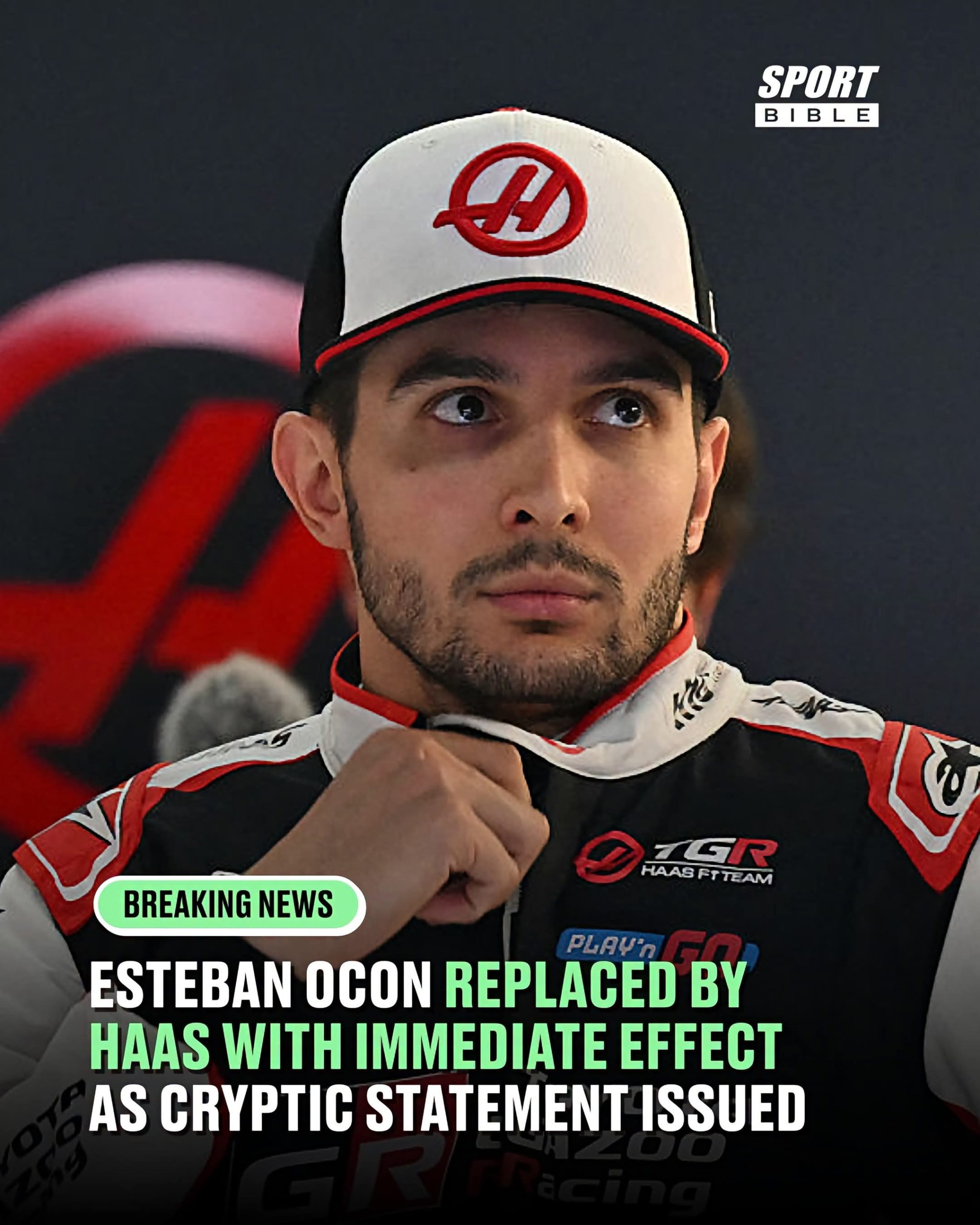
Esteban Ocon’s Formula 1 future has been thrown into further uncertainty after Haas made the unexpected decision to remove him from the remainder of the Mexican Grand Prix weekend. The American outfit confirmed that reserve driver Ryo Hirakawa would take over the Frenchman’s car, partnering Ollie Bearman for final practice, qualifying and Sunday’s 71-lap race. The announcement came just hours before qualifying, leaving the paddock searching for answers about what had happened behind the scenes.
The decision is particularly surprising because Ocon had completed both Friday practice sessions before being informed that he would no longer participate in the weekend. Haas did not provide a detailed explanation, instead confirming that Hirakawa would replace him and adding that no further statements would be made at that time. With Ocon already scheduled to leave the team at the end of 2026, the sudden development has raised questions about whether his relationship with Haas has deteriorated beyond repair.
HAAS CONFIRMS HIRAKAWA AS OCON’S REPLACEMENT
In its official announcement, Haas confirmed that Hirakawa would take over the VF-26 for the remainder of the Mexican Grand Prix.
The Japanese driver had already participated in FP1 at the Autodromo Hermanos Rodriguez, finishing 15th. It was his third free practice appearance of the season with the team, meaning he had some familiarity with the car before being handed the unexpected opportunity.
However, stepping into a Grand Prix weekend at such short notice is a completely different challenge. Hirakawa had to prepare for qualifying and a full race while adapting to the pressure of competing against established Formula 1 drivers.
For Haas, the priority will be ensuring that the unexpected driver change does not compromise its weekend. Bearman will also have to shoulder additional responsibility as the team’s more experienced race-weekend driver.
OCON’S DISAGREEMENT WITH HAAS ADDS TO THE MYSTERY
The timing of the announcement has drawn particular attention because Ocon had a tense radio exchange with race engineer Laura Muller during Friday’s second practice session.
The disagreement centred on the team’s tyre programme. Ocon expected to use soft tyres for his planned run, but Haas instructed him to switch to mediums instead.
The Frenchman questioned the change and expressed frustration over the decision, saying: “No, no. I want to do soft… don’t do that to me, come on.”
He later added: “Yeah, it is my turn this weekend, so come on.”
Although the exchange revealed tension between the driver and his engineer, there is no confirmed evidence that it directly caused Haas to remove him. The team has not explained its decision, and the radio conversation should not be treated as the definitive reason behind the replacement.
WHO IS RYO HIRAKAWA?
Hirakawa is far from an inexperienced racing driver. The 32-year-old Japanese competitor has established an impressive reputation in endurance racing, winning the World Endurance Championship in 2022 and 2023.
He drives for Toyota Gazoo Racing in the World Endurance Championship and previously spent time within McLaren’s driver development programme. His opportunities with Haas have come through the technical relationship between the American team and Toyota.
Despite his achievements outside Formula 1, a full-time seat had appeared increasingly unlikely after Haas selected Ferrari junior Rafael Camara to replace Ocon from 2027.
Hirakawa had previously admitted disappointment about missing out on the opportunity but remained grateful that Haas continued to trust him with practice appearances.
Speaking after his FP1 outing in Mexico, he praised the improvements made to the car since his previous outing in Budapest.
“It was really nice to feel the car has been improved since I last drove it in Budapest, so really happy to see that,” he said.
He also explained that completing a clean long run on the medium tyre had gone according to plan despite a yellow-flag interruption.
HIRAKAWA GETS A SECOND CHANCE TO IMPRESS HAAS
The unexpected promotion gives Hirakawa an opportunity that could become important for his future in Formula 1. Although Camara has already been selected for 2027, a strong performance in Mexico could strengthen Hirakawa’s reputation within the team and demonstrate that he can adapt quickly to the demands of a Grand Prix weekend.
His endurance racing experience should help with tyre management, race strategy and maintaining consistency over long distances. However, Formula 1 presents different challenges, particularly in qualifying, where drivers must extract maximum performance over a limited number of laps.
Hirakawa will also have to adapt quickly to the specific demands of the Mexico City circuit, where altitude affects engine performance, aerodynamic efficiency and cooling.
WHAT DOES THIS MEAN FOR ESTEBAN OCON’S F1 FUTURE?
Ocon’s situation is becoming increasingly difficult to understand. Haas has already confirmed that he will not drive for the team in 2027, with Ferrari junior Camara expected to take his place. But being removed from a race weekend before the season has ended is a much more serious development than simply losing a future contract.
The Frenchman has previously demonstrated his ability to compete at the highest level, including winning the 2021 Hungarian Grand Prix and securing four career podiums. Those achievements mean he should not be written off simply because of his current difficulties with Haas.
Nevertheless, finding another opportunity for 2027 could prove challenging. Cadillac has been linked with potential driver options, while other reports have suggested that a reserve role could become a possibility.
For now, Haas has offered no explanation for its decision, and Ocon’s immediate future remains uncertain. Hirakawa has been handed an unexpected opportunity, but the biggest unanswered question from Mexico is why Haas decided that its regular driver would not complete the weekend.