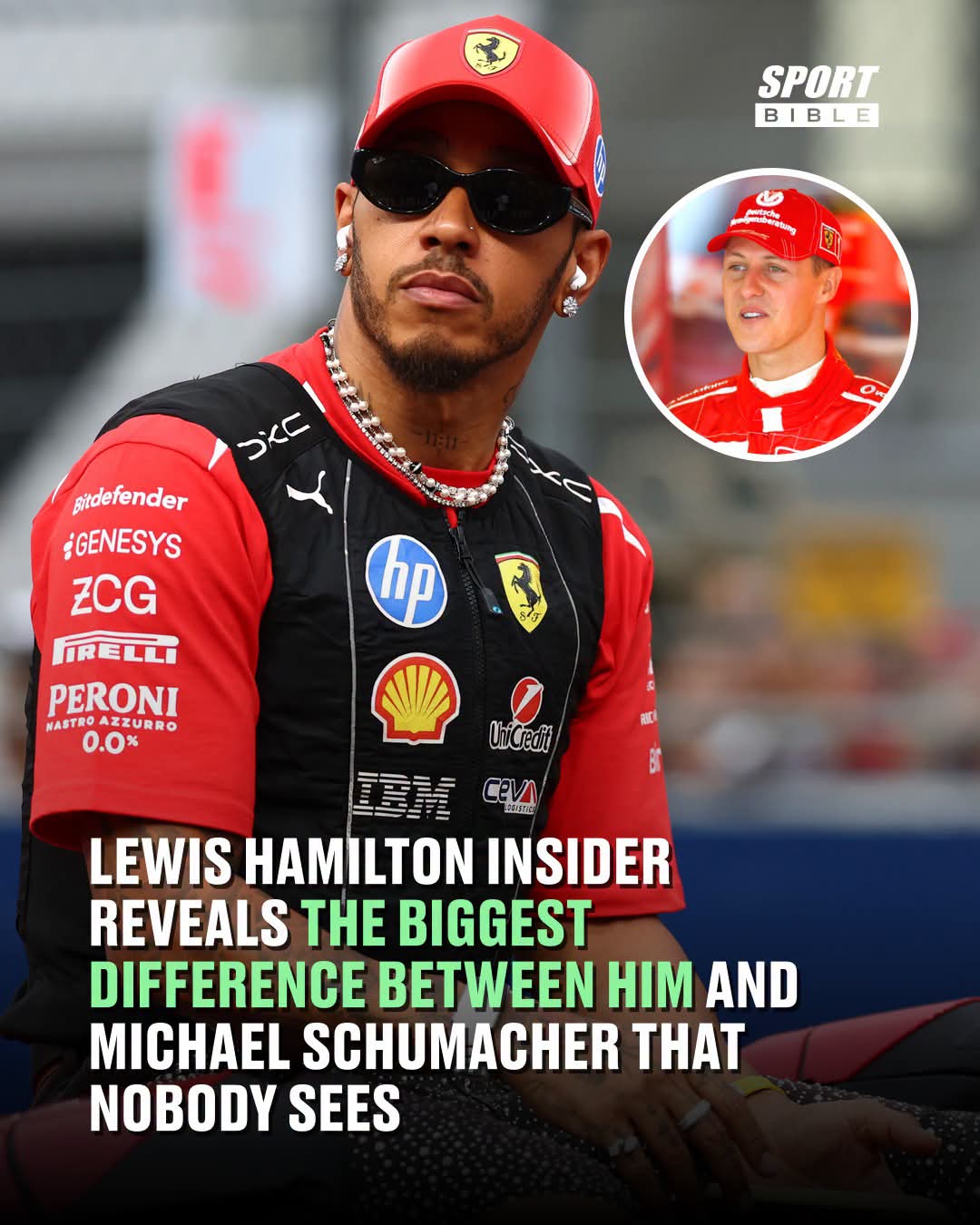
Jock Clear, the engineer who has worked closely with both Lewis Hamilton and Michael Schumacher, has identified the clearest personal difference between the two seven-time world champions. While both men share an exceptional level of dedication and the rare ability to elevate a team, Clear says their emotional styles could hardly be more contrasting.
Hamilton wears his heart on his sleeve. Schumacher kept his private.
### THE ENGINEER WHO HAS SEEN BOTH UP CLOSE
Clear’s perspective carries unusual weight. He served as Jacques Villeneuve’s race engineer when the Canadian beat Schumacher to the 1997 title, later worked as Schumacher’s performance engineer during the German’s return to Mercedes between 2011 and 2012, and then spent years alongside Hamilton at the same team. He is currently at Ferrari in a driver-coach role, primarily supporting Charles Leclerc.
Few people in the paddock have observed both champions from inside the garage across different phases of their careers.
### EMOTION VERSUS PRIVACY
Speaking about the two drivers, Clear drew a sharp distinction in how they expressed themselves.
“I think the commonality is exceptional dedication,” he said. “I’ve worked with Michael and Lewis; that’s doing everything you can as a driver. But they’re very different to each other. Lewis wears his heart on his sleeve, Michael didn’t. You see Lewis’s emotions; you see when he’s upset, you see when he’s happy. Michael was much more private.
“What works for Lewis works for Lewis, and what works for Michael works for Michael. Both can bring a team on, build a team around themselves, in different ways.”
The observation captures something rarely discussed in purely statistical comparisons of the two record-breaking careers. Schumacher’s public persona was controlled and often inscrutable. Hamilton’s has always been more transparent, for better and for worse, allowing fans and team members alike to read his state of mind in real time.
### THE INTANGIBLE QUALITY BOTH SHARED
Despite the contrast in emotional style, Clear recognised the same rare quality in both men that he had previously seen in Ayrton Senna.
“When you’ve got seven championships, you’re at a level nobody else has been at, and that brings a level of credibility and respectability. There’s a bit of stardust. I saw it when I worked with Senna, and I certainly saw it when I worked with Michael. I saw the same when I started working with Hamilton. There’s a sparkle there. It’s almost intangible.”
That “stardust,” Clear suggested, enables both drivers to shape the culture around them, even if the methods differ.
### HAMILTON’S CONSISTENCY OF CHARACTER
Clear also pushed back against the idea that success has fundamentally changed Hamilton. Having first worked with him at Mercedes when he had only a single world title, Clear said the core personality remains recognisable even after six further championships.
“I don’t think he’s changed that much as a person. When I last worked with him at Mercedes, he’d only won one championship. Since then, he’s won six more, and you might think that could have changed him, but I don’t sense that. He’s almost like a Disney character — he doesn’t age. He’s still a fun character, still enjoys the same things and brings the same energy.”
At Ferrari, Clear believes Hamilton is once again attempting to influence the wider culture in his own way, just as he did during the successful years at Mercedes.
### WHY THE DIFFERENCE MATTERS
In an era when driver psychology and team dynamics are scrutinised as closely as pure speed, Clear’s distinction offers a useful lens. Schumacher’s reserve projected an aura of impenetrable control. Hamilton’s openness creates a different kind of connection — more immediate, more human, and sometimes more volatile.
Both approaches have delivered seven world championships. Both have inspired intense loyalty inside their teams. The methods simply diverge.
Clear’s long view suggests that the most successful drivers do not conform to a single template. They maximise their own nature. For Schumacher that meant privacy and control. For Hamilton it has meant visible emotion and an unmistakable personal energy that still, according to one of the few engineers who has worked with both, remains essentially unchanged.