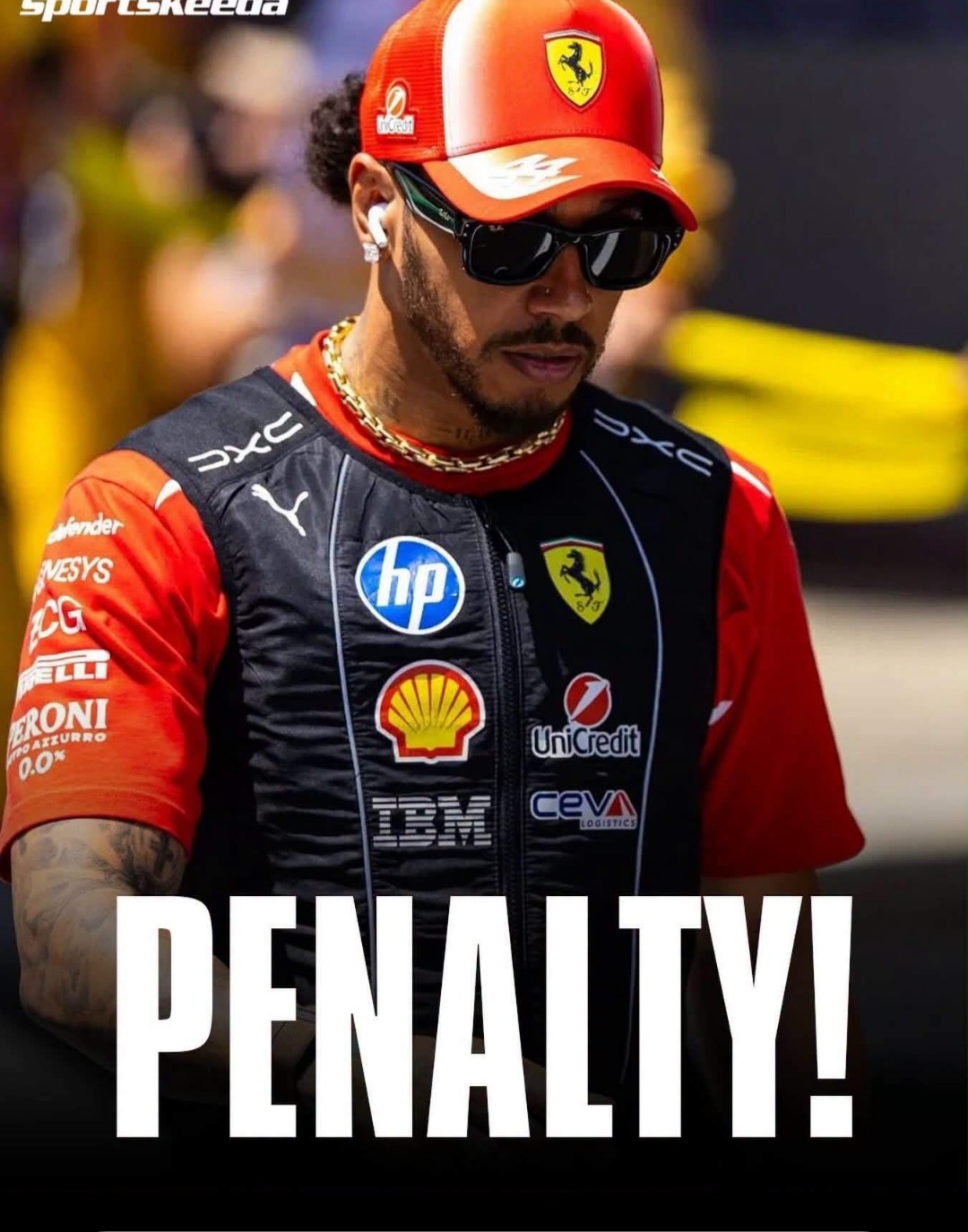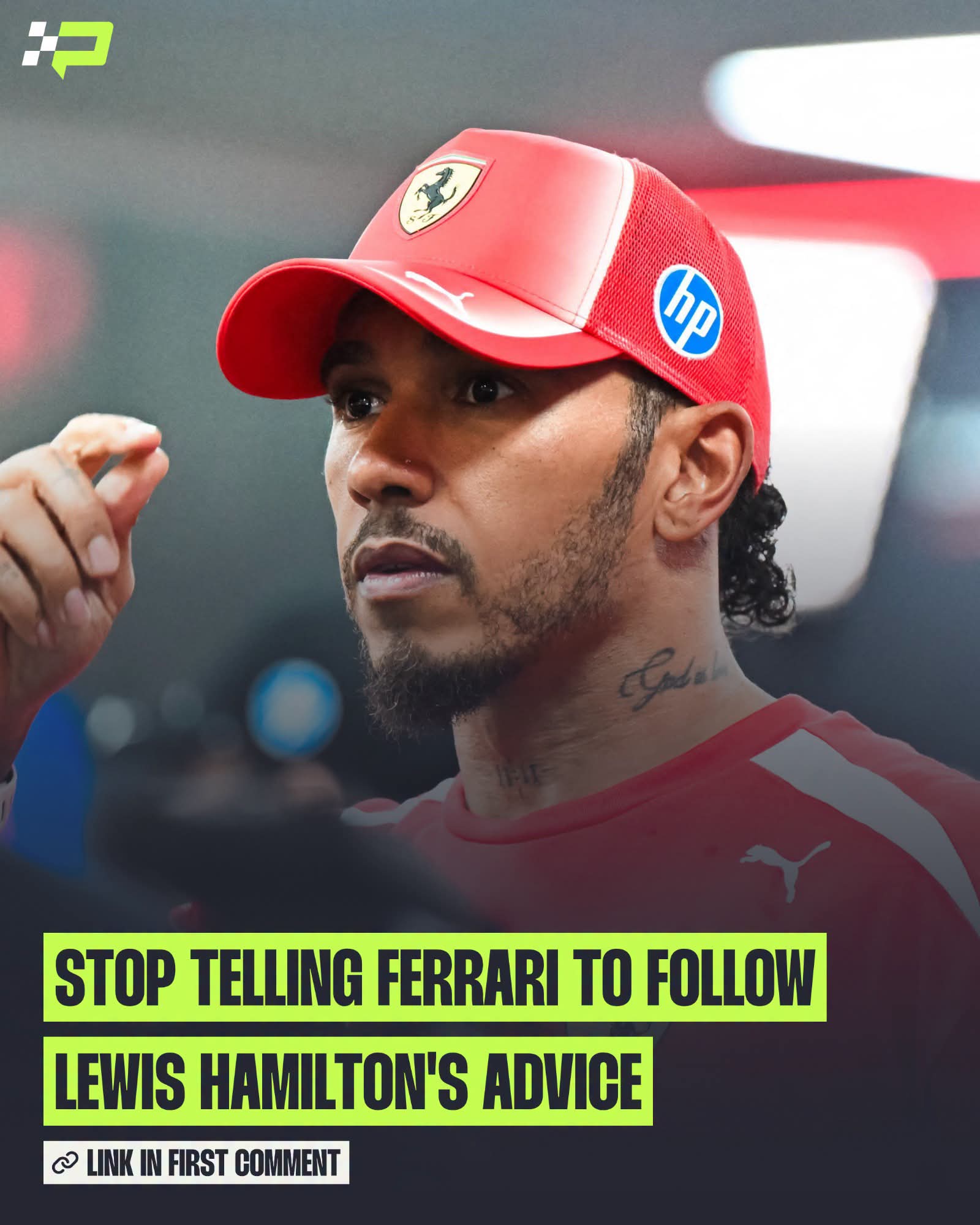
🚨BREAKING JUST BECAUSE HAMILTON IS AN ENORMOUSLY SKILLED DRIVER, IT DOES NOT AUTOMATICALLY MAKE HIM AN EFFECTIVE TEAM BUILDER…🚨 BREAKING: HAMILTON’S DRIVING BRILLIANCE DOES NOT AUTOMATICALLY MAKE HIM AN EFFECTIVE TEAM BUILDER
The debate surrounding Lewis Hamilton’s leadership, technical influence, and ability to build a competitive Formula 1 team has reignited discussions about the difference between individual driving excellence and organizational leadership.
In Formula 1, few drivers have demonstrated the level of success, consistency, and determination associated with Lewis Hamilton. His remarkable achievements on the track have established him as one of the most accomplished drivers in the sport’s history. However, a different question continues to emerge whenever discussions turn to team performance and leadership: does being an exceptionally skilled driver automatically make someone an effective team builder?
The answer is not necessarily.
Hamilton’s driving ability is widely recognized, but building a successful Formula 1 team requires a different set of skills. Beyond speed, racecraft, and championship experience, a competitive team depends on engineering excellence, strategic decision-making, communication, staff management, and the ability to create a unified environment where everyone works toward a common objective.
DRIVING TALENT AND TEAM BUILDING ARE TWO DIFFERENT SKILLS
There is no denying Hamilton’s reputation as an outstanding racing driver. His ability to manage pressure, extract performance from a car, and compete against some of the strongest drivers in the world has been central to his career.
However, Formula 1 is not an individual sport in the traditional sense. Although only one driver sits behind the steering wheel during a race, hundreds of people may contribute to the performance of a competitive team.
Engineers develop the car, mechanics prepare it, strategists make crucial decisions, and management coordinates the operation. Every department must work effectively to deliver consistent results.
A driver can provide exceptional feedback and inspire the people around him, but those qualities alone cannot guarantee that a team will develop the fastest car or make the right decisions throughout a season.
This distinction is important when evaluating Hamilton or any other driver. Personal excellence and organizational effectiveness are related, but they are not identical.
WHY LEADERSHIP MATTERS IN FORMULA 1
Building a successful racing team requires more than motivation. Effective leadership involves identifying weaknesses, communicating priorities, encouraging collaboration, and helping people make difficult decisions under enormous pressure.
A strong team builder must understand how to bring together different personalities, professional backgrounds, and technical responsibilities. They must also recognize that the best results often come from trusting specialists who possess expertise in areas outside the driver’s direct control.
Hamilton’s experience could provide valuable insight into vehicle behaviour, race strategy, and the demands of competing at the highest level. His feedback can help engineers understand what a car needs to become more competitive.
Nevertheless, the effectiveness of that feedback depends on several factors, including the quality of the engineering response, the available resources, the development programme, and the wider team’s ability to implement improvements.
If a car continues to struggle, it would be simplistic to blame the driver alone. Equally, it would be unreasonable to assume that a driver’s legendary status automatically guarantees successful leadership across every department.
THE CHALLENGE OF TURNING EXPERIENCE INTO RESULTS
One of the biggest challenges facing experienced drivers is translating years of racing knowledge into measurable improvements for a team.
Experience can be an enormous advantage, particularly when a driver understands how championship-winning operations function. A veteran can recognize recurring problems, explain subtle differences in handling, and help establish realistic performance targets.
However, experience must be combined with effective communication and a willingness to adapt.
Formula 1 technology evolves rapidly. Aerodynamics, tyre management, simulation tools, data analysis, and car development methods require constant learning and collaboration. What worked in one technical era may not necessarily deliver the same results in another.
For Hamilton, as for any driver, the challenge is not simply knowing what a competitive car feels like. It is helping the people responsible for designing and developing that car translate observations into practical solutions.
That process requires patience, trust, and cooperation between the cockpit and the factory.
SHOULD HAMILTON BE JUDGED ON TEAM PERFORMANCE?
The discussion becomes more complicated when individual drivers are evaluated according to their team’s results.
A driver may deliver outstanding performances while operating machinery that is not capable of consistently challenging for victories. Another driver may benefit from a car that has a significant competitive advantage.
Consequently, championship positions and race results cannot always provide a complete picture of an individual’s contribution.
At the same time, a driver’s reputation should not make their decisions or leadership immune to criticism. Every competitor must be assessed within the appropriate context, particularly when expectations are high.
If questions arise about Hamilton’s effectiveness as a team builder, meaningful analysis should examine specific evidence: the quality of his collaboration with engineers, the clarity of his technical feedback, his relationship with team personnel, and whether the working environment supports progress.
Without such evidence, declaring him either an exceptional or ineffective team builder would be premature.
The same standard should apply to every driver, regardless of popularity, achievements, or public reputation.
THE PRESSURE OF EXPECTATIONS
Hamilton carries expectations that few drivers experience. His achievements have made him a central figure in Formula 1, meaning that every difficult weekend can attract intense attention.
When a team performs well, discussions often celebrate the driver, engineers, strategists, and management. When results disappoint, however, the conversation can quickly become focused on individual blame.
This environment makes objective evaluation particularly important.
A team’s performance is shaped by numerous interconnected factors, including car design, reliability, strategic execution, financial resources, recruitment, and long-term planning. Even a highly talented driver cannot independently control all these elements.
Effective leadership therefore involves understanding the limits of individual influence while making the best possible contribution within those limits.
Hamilton’s experience and competitive instincts may be valuable assets, but their ultimate impact depends on how effectively they complement the work of the wider organization.
THE BIGGER LESSON FOR FORMULA 1
The debate highlights a broader truth about elite sport: being the best performer in one role does not automatically make someone the best leader in another.
An exceptional player is not necessarily an exceptional coach. A successful entrepreneur is not automatically an effective manager. Similarly, an extraordinary Formula 1 driver does not automatically possess every skill required to build and manage a championship-winning organization.
Leadership is a separate discipline that must be demonstrated through communication, accountability, decision-making, and the ability to help others perform at their best.
This does not diminish Hamilton’s achievements. Instead, it recognizes that sporting excellence and organizational leadership require different strengths.
The most successful teams understand how to combine individual talent with collective responsibility. They create an environment in which drivers, engineers, mechanics, and strategists can challenge ideas, solve problems, and pursue improvements without losing sight of their shared objectives.
CONCLUSION: TALENT ALONE IS NOT ENOUGH
The statement that Hamilton’s extraordinary driving skills do not automatically make him an effective team builder is a reminder that Formula 1 success depends on more than what happens on the track.
Hamilton’s accomplishments provide a strong foundation of experience and credibility, but leadership effectiveness must be judged by the quality of collaboration, the contribution to development, and the ability to work productively with the people responsible for delivering results.
Ultimately, the question is not whether Hamilton is a talented driver. His career has already established his standing among the sport’s most accomplished competitors.
The more relevant question is how his experience, feedback, and leadership contribute to the performance of the organization around him.
That question deserves careful analysis rather than assumptions based solely on reputation or disappointing results.
In Formula 1, speed can win races, but building a consistently competitive team requires an entire organization to function effectively. Even the greatest driver needs the right people, the right machinery, and the right working environment to achieve sustained success.
The bottom line: Hamilton’s driving brilliance is undeniable, but effective team building is a different challenge — one that must be measured by collaboration, leadership, and results rather than driving talent alone.