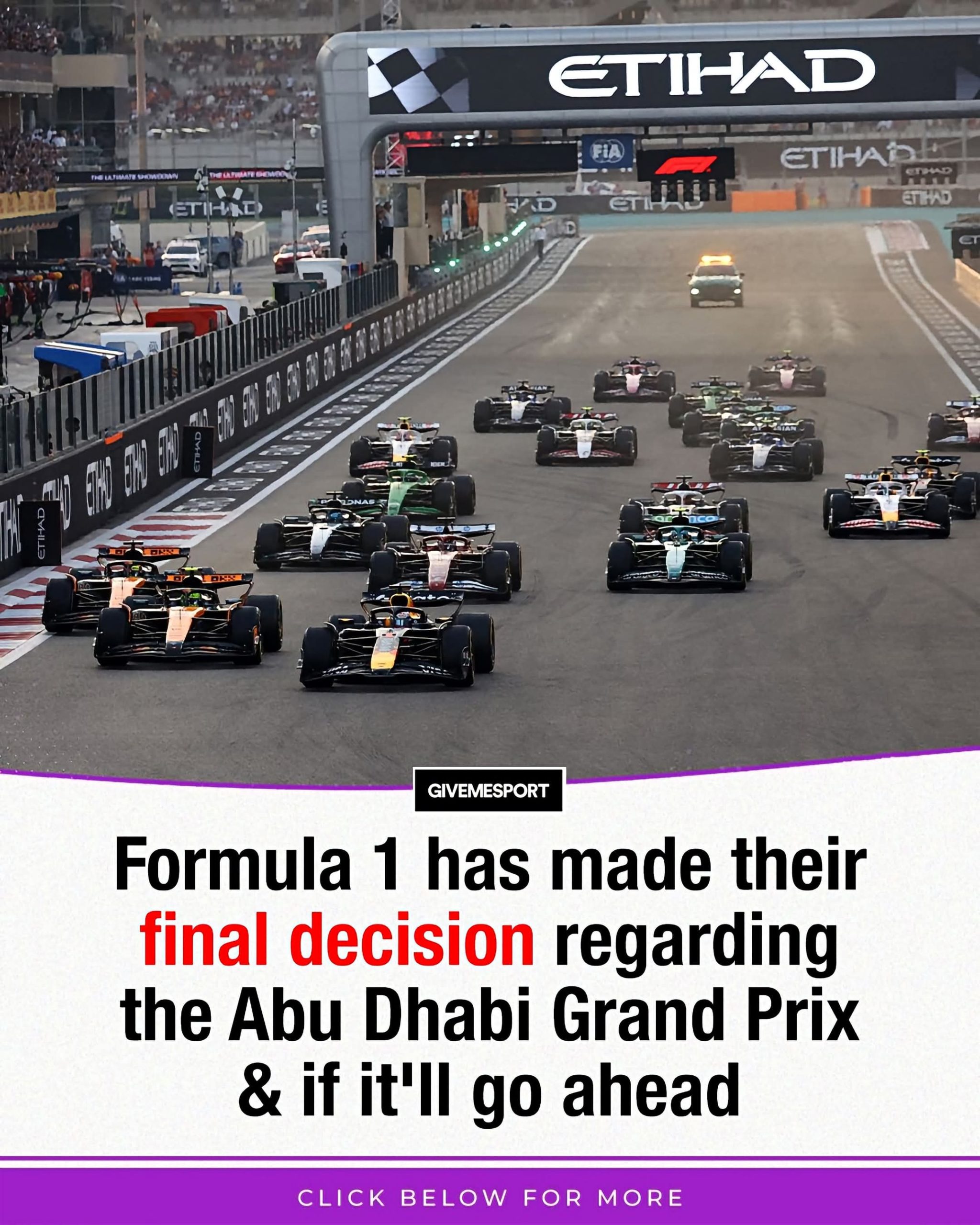
Formula 1 has removed the remaining doubt over its 2026 season finale. CEO Stefano Domenicali has confirmed that the Qatar and Abu Dhabi Grands Prix will go ahead as scheduled, bringing the championship to a close in the Middle East on 29 November and 6 December respectively.
The announcement ends weeks of speculation that geopolitical tensions could force a late switch to a European alternative such as Imola.
### DOMENICALI DELIVERS THE CLARITY THE PADDOCK NEEDED
Speaking to French broadcaster Canal+ and Sky Sport Italia, Domenicali stated that current information supports proceeding with both events. He emphasised that teams and drivers are being kept fully informed and noted the strong commercial momentum behind the Abu Dhabi race, with 99 percent of tickets already sold and “great excitement” surrounding the season-ending event.
The confirmation provides the logistical certainty that teams require as they plan freight, personnel and operational schedules for the final flyaway double-header.
### A SEASON ALREADY RESHAPED BY GEOPOLITICS
The 2026 calendar has not escaped the impact of regional instability. The Saudi Arabian Grand Prix was cancelled outright, while the Bahrain Grand Prix was relocated from the Bahrain International Circuit to Sepang in Malaysia. Those earlier changes demonstrated Formula 1’s willingness to adapt when security conditions demanded it.
With the final two rounds now reaffirmed, the championship can focus on sporting rather than logistical questions in its closing stages.
### CONTRASTING VIEWS INSIDE THE DRIVER MARKET
Not every driver has viewed the Middle East finale the same way. Lewis Hamilton has been clear in his desire to race in the region, stating during the Azerbaijan weekend: “I personally want to go. I love going to the Middle East.”
Max Verstappen has struck a more cautious note. The four-time world champion previously argued that Formula 1 should avoid the area while conflict continues nearby, regardless of existing contracts. His position reflects a broader debate about the balance between commercial commitments and the duty of care owed to everyone who travels to a Grand Prix.
Domenicali’s latest comments suggest the organisation believes the necessary assurances are now in place to satisfy both sporting and safety requirements.
### WHAT THE CONFIRMATION MEANS FOR THE TITLE FIGHT
Calendar certainty is particularly valuable while the drivers’ and constructors’ championships remain live. Teams can now finalise simulation work, upgrade plans and strategic models specifically for Losail and Yas Marina rather than splitting resources across potential contingency venues.
Abu Dhabi’s traditional role as the season finale also preserves the sporting theatre that has defined the end of many recent campaigns. A late move to Imola would have altered the character of the title decider; that prospect has now receded.
### IMOLA’S ROLE AS PLAN B QUIETLY ENDS
For several weeks Imola had been understood to be preparing as a standby option. With Domenicali’s public confirmation, that contingency appears to have been stood down. The Italian circuit’s willingness to step in at short notice provided Formula 1 with valuable insurance, but the preferred commercial and sporting outcome has always been to complete the season as originally planned.
### LOOKING AHEAD TO THE FINAL DOUBLE-HEADER
Attention now turns to the remaining races before the field heads to Qatar and Abu Dhabi. The confirmation allows the paddock to shift fully from contingency planning back to competition.
For Formula 1 the decision represents a statement of confidence in the information and assurances it has received. For the teams and drivers it removes a significant unknown at a critical stage of the season. And for fans it preserves the familiar climax of the championship under the lights at Yas Marina on 6 December.
After a year already marked by forced calendar changes, the 2026 season finally has a definitive destination.