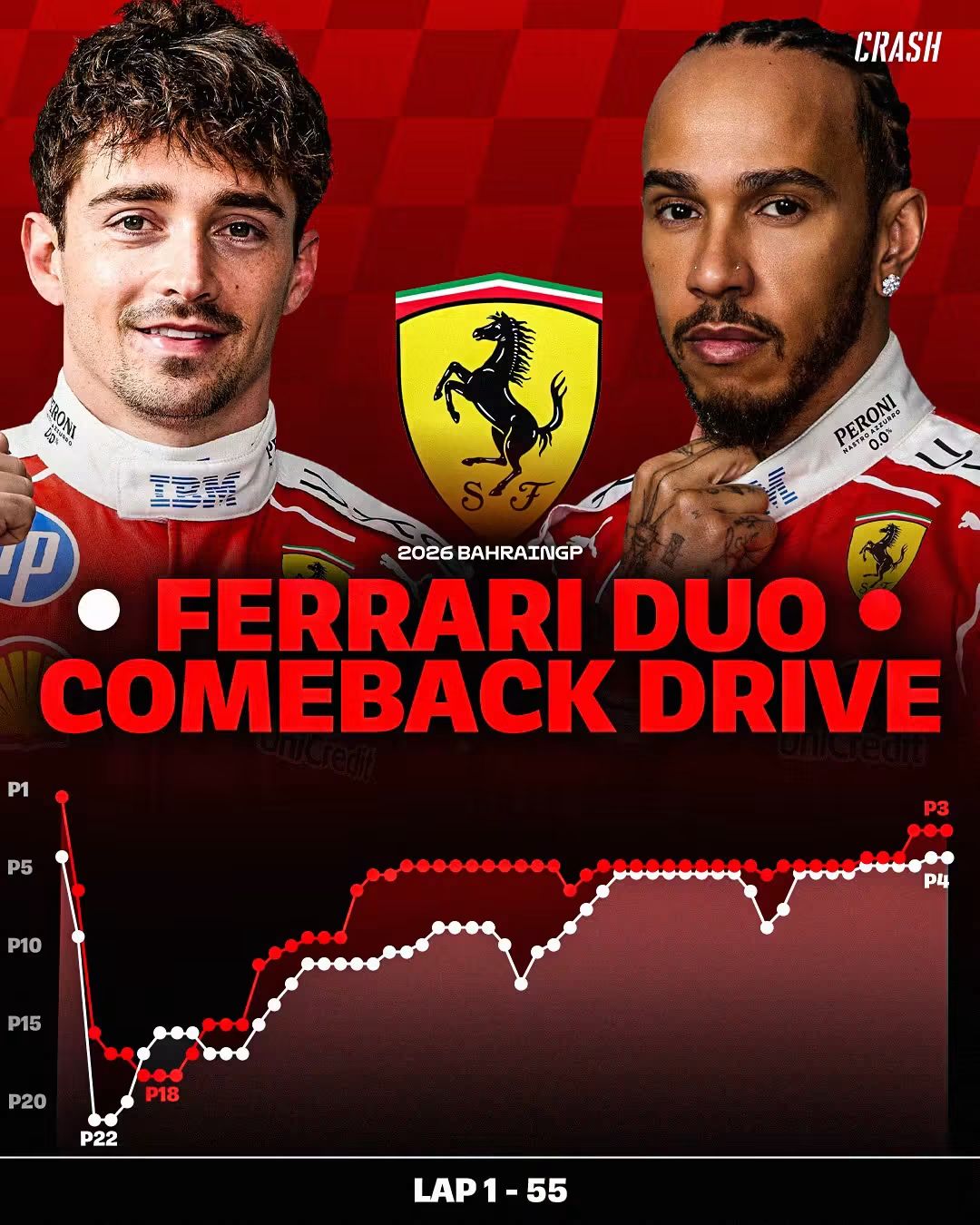
Formula 1 rarely delivers a more dramatic plot twist than the one Scuderia Ferrari scripted at the 2026 Bahrain Grand Prix. Relocated to Sepang International Circuit in Malaysia amid regional tensions, the race was already chaotic before the lights went out. Heavy rain forced lengthy delays. When the field finally rolled out, both Ferraris sat on soft slick tyres while much of the competition—including race winner Max Verstappen—opted for intermediates on a still-damp track.
What followed looked like disaster. Lewis Hamilton and Charles Leclerc plummeted toward the rear. Hamilton later admitted his “heart sank” the moment he saw the tyre blankets come off the cars ahead. For a few laps the Scuderia cars occupied the very bottom of the order. Yet by the chequered flag the same two drivers occupied third and fourth. That recovery was not luck. It was resilience, sharp mid-race calls, and the kind of driver skill that turns strategic rock bottom into a points haul that keeps championship hopes alive.
WHY THE OPENING GAMBLE FELT LIKE THE RACE WAS OVER
The decision to start on soft slicks was a calculated risk. Teams expected the Malaysian heat to dry the circuit quickly once cars began circulating. Half the grid shared that view. The other half, led by Red Bull and Mercedes, played it safer with intermediates. Ferrari’s choice left Hamilton and Leclerc fighting for grip while spray from the cars ahead made visibility and traction treacherous.
Hamilton dropped as low as 18th and fell more than a minute behind the leaders. Leclerc compounded the misery with early contact that forced a front-wing change and an early switch to intermediates. At that moment the podium looked unreachable. Team principal Fred Vasseur later conceded the call was wrong with the information available from the pit wall. From the cockpit the picture was clearer—and bleaker. Hamilton told the team he wanted to stay out rather than double down on another pit stop that would only cost more time. That refusal to cut losses early became the foundation of the recovery.
HOW HAMILTON AND LECLERC CLIMBED BACK FROM THE ABYSS
Once the track began to dry and safety-car periods bunched the field, Ferrari’s race pace finally shone. Hamilton’s decision to stay on the softs paid off as conditions improved. Clean pit stops and consistent lap times allowed him to pick off cars one by one. A late safety car handed him fresh softs and the perfect platform to pass Isack Hadjar for third place in the closing stages.
Leclerc’s afternoon was messier—four stops in total after the early damage—but he still found enough speed to follow his teammate through and secure fourth. The pair finished just a few seconds behind Verstappen and second-placed Kimi Antonelli. Twenty-seven points. Second place in the Constructors’ Championship consolidated. Ferrari’s first podium in five Grands Prix.
The numbers alone do not capture the character on display. Hamilton has spoken of mixed emotions: gratitude for the podium mixed with the knowledge that a better opening call might have put victory within reach. Leclerc described a race in which everything that could go wrong early went wrong, and everything that could go right later did. That balance of frustration and satisfaction is exactly what championship teams live with every weekend.
WHAT THIS RESULT MEANS FOR FERRARI, THE DRIVERS AND THE CHAMPIONSHIP
In pure points terms the afternoon was a success. In psychological terms it may prove more valuable. Ferrari had endured a difficult stretch. Returning to the podium after starting from near the back restores belief inside the garage and among the tifosi. Hamilton, still relatively new to the team in the broader arc of his career, delivered the kind of recovery drive that builds trust between driver and strategy group. Leclerc showed he can still extract results even when the car and the strategy are working against him.
For the Constructors’ battle the 27 points keep Ferrari firmly in the hunt. Red Bull and Mercedes remain the clear pace-setters in mixed conditions, yet the SF-26 clearly possesses race-day speed once the rubber is right. The gap to the front is real, but it is no longer a chasm.
The broader industry lesson is familiar yet never outdated: wet-weather tyre decisions remain one of the highest-stakes gambles in Formula 1. From the pit wall the global picture of a drying track is incomplete. Drivers feel the grip—or lack of it—in real time. The best teams blend both perspectives. Ferrari learned that the hard way on Sunday and still salvaged the result. That combination of accountability and recovery capacity is what separates contenders from also-rans.
LOOKING AHEAD TO SINGAPORE AND BEYOND
The calendar offers no time for reflection. The Singapore Grand Prix arrives next, another night race where strategy and tyre management often decide the outcome. Ferrari will arrive with fresh data on wet and intermediate performance and, more importantly, with two drivers who have just proven they can dig themselves out of deep holes.
Hamilton’s sixth podium of the season and Leclerc’s consistent points keep both men relevant in the Drivers’ Championship conversation even if outright wins remain elusive for now. More critically, the team has shown it can convert adversity into points. In a season defined by tight margins and occasional chaos, that trait may matter more than pure peak pace.
Sepang delivered a reminder that Formula 1 still rewards character as much as calculation. Ferrari hit rock bottom early on Sunday afternoon. By the time the lights went out on the race they had climbed back to the steps of the podium. That kind of afternoon does not win championships on its own, but it builds the belief required to chase them. The tifosi will take the points and the resilience. The rest of the grid has been put on notice that the red cars are far from finished.