🏎️ Hans-Joachim Stuck has strongly criticised F1’s electric future, questioning whether electric power and DRS-style overtaking have any place in Formula 1…Hans-Joachim Stuck Questions F1’s Electric Future and New Overtaking Rules
Former Formula 1 driver Hans-Joachim Stuck has delivered a strong critique of Formula 1’s new technical direction, questioning whether the sport has moved too far toward electric power and technology-assisted overtaking.
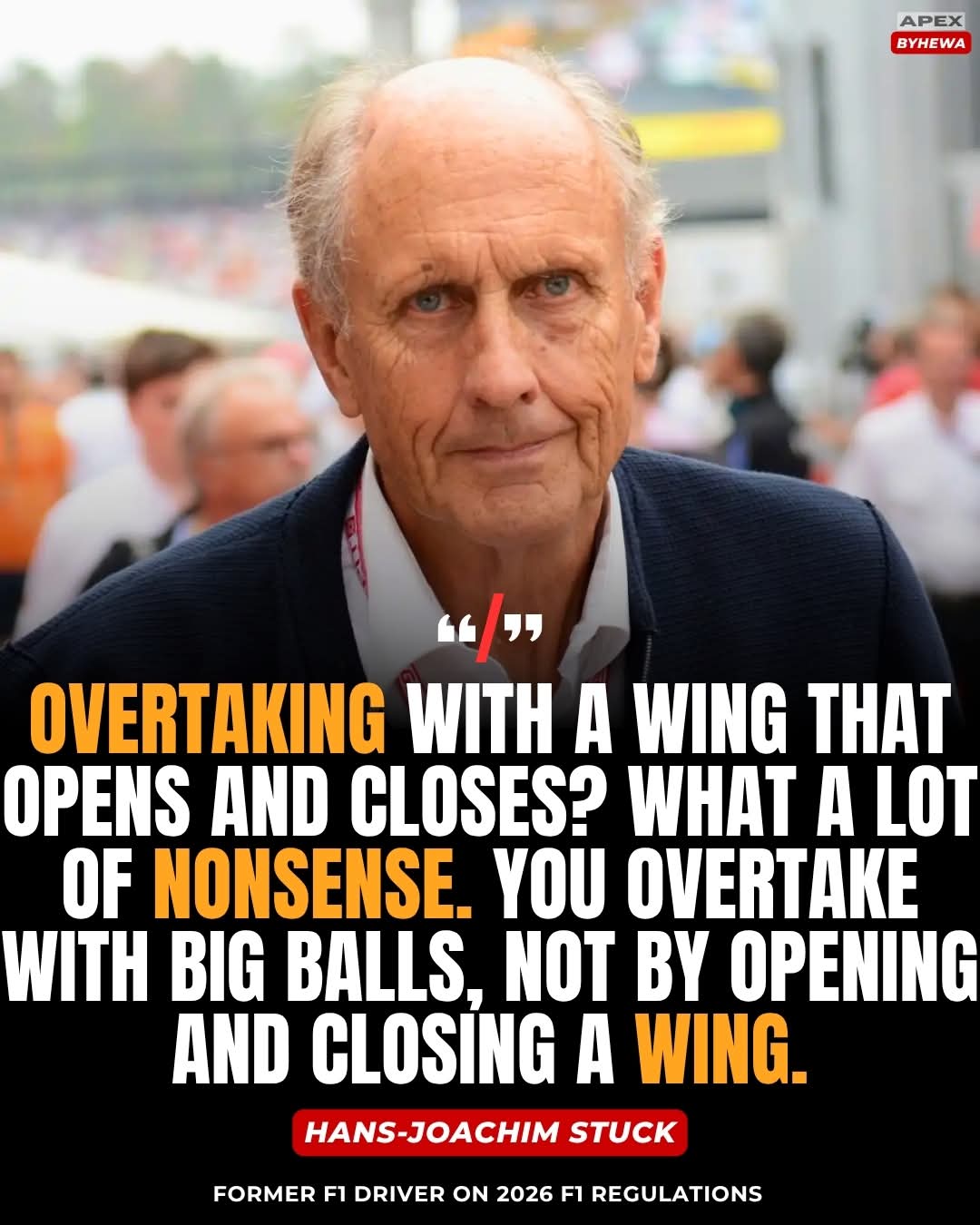
Speaking on Servus TV’s Sport und Talk aus dem Hangar-7, the 75-year-old German was particularly critical of the regulations introduced for the 2026 season. Stuck argued that the increased role of electrical energy and movable aerodynamic systems risks reducing the importance of the driver in determining the outcome of a race.
His comments come during one of the biggest technical changes in Formula 1 history. The 2026 regulations introduced a new generation of power units in which the electrical contribution has increased substantially. The FIA says the redesigned power unit remains based around a 1.6-litre internal-combustion engine, but electrical power has risen significantly, with the electric component capable of producing up to 350kW.
The changes have also transformed the way drivers approach overtaking.
Traditional DRS, which allowed a following driver to open a rear-wing flap when within one second of a rival at designated detection points, has been replaced. Instead, the 2026 cars use active aerodynamics and a new Overtake Mode that relies on electrical energy to assist attacks.
That new approach is precisely what has attracted Stuck’s criticism.
The former Grand Prix driver argued that overtaking should depend more heavily on aerodynamic efficiency, slipstreaming and driver commitment rather than systems that alter the car’s aerodynamic configuration. He pointed to IndyCar as an example of the type of racing philosophy he would prefer to see in Formula 1.
Stuck has expressed reservations about DRS before. In a 2023 interview with Motor Sport Magazine, he said he did not particularly like DRS and suggested that reducing aerodynamic dependence could help create closer competition. He also advocated the use of technologies such as synthetic fuels as part of Formula 1’s environmental efforts.
His latest criticism therefore represents a continuation of an opinion he has expressed for several years rather than an entirely new position.
Formula 1’s governing body, however, has presented the 2026 changes differently. According to the FIA, active aerodynamics are not simply intended to create artificial overtaking opportunities. Reducing drag on straights is also important because the new power units depend much more heavily on electrical energy management.
The new cars have two principal aerodynamic configurations. Straight Mode reduces drag, while Corner Mode prioritises downforce for cornering. Unlike the old DRS system, active aero is not restricted to a following car that is within one second of another competitor.
Overtake Mode provides another layer to the system. Formula 1 says a driver who is within one second of a rival at the relevant detection point can receive additional electrical energy to help attempt an overtake on the following lap.
The result is a different form of strategic racing, with drivers and teams required to manage electrical energy throughout a lap and decide when it can be used most effectively.
That technical complexity has divided opinion among fans and former competitors. Some see the new systems as an extension of Formula 1’s long history of technological innovation, while others argue that too many electronic and aerodynamic aids can make the driver less influential.
Stuck clearly belongs to the latter camp.
His comments also touch on a wider debate about what Formula 1 should represent in the modern era. The championship is attempting to combine its traditional identity as a high-performance motorsport series with increasing demands for efficiency and sustainability.
The 2026 regulations reflect that balance. The internal-combustion engine remains an important part of the power unit, while the electrical contribution has been increased substantially. Formula 1 has also moved toward sustainable fuel technology as part of its broader environmental strategy.
For Stuck, however, technological progress should not come at the expense of the driver’s role.
His remarks are likely to fuel an ongoing discussion about whether Formula 1’s new generation of cars has achieved the right balance between engineering innovation and traditional racing.
The sport has always evolved, from ground-effect aerodynamics to turbocharged engines, hybrid power units and sophisticated electronic systems. Every major technical change has produced debate about whether Formula 1 is becoming too dependent on technology.
The 2026 regulations have simply created a new version of that conversation.
For now, Formula 1 has no indication that it intends to reverse its electric and active-aerodynamic direction. The FIA has designed the regulations around closer racing, improved energy efficiency and a new interpretation of overtaking.
Stuck’s comments nevertheless provide a reminder that not everyone is convinced by the new formula.
For the former driver, the central question is straightforward: how much of a modern Formula 1 race should be determined by the machinery, and how much should be decided by the person behind the wheel?
As the 2026 season continues, that debate is likely to remain one of the sport’s most closely watched discussions.