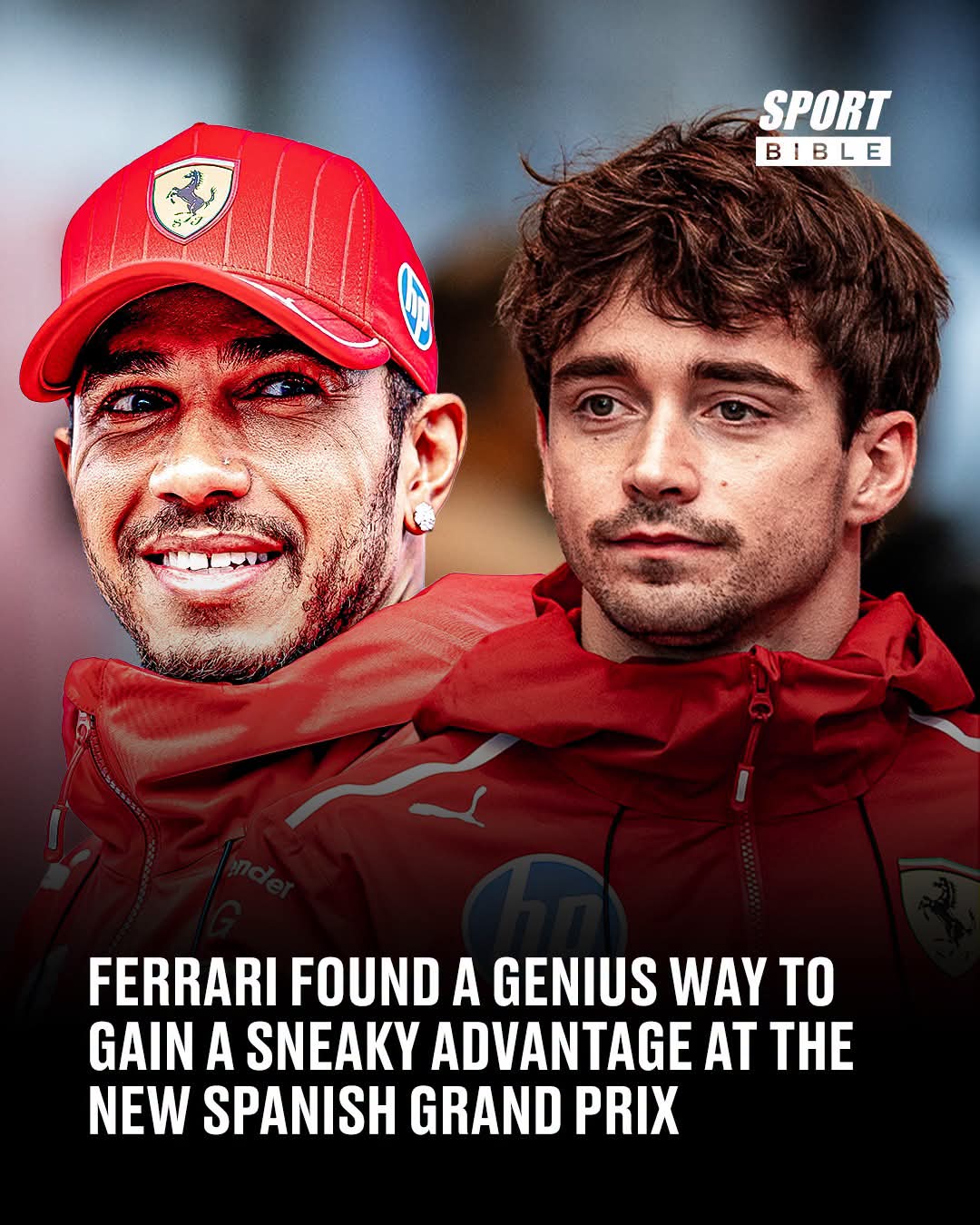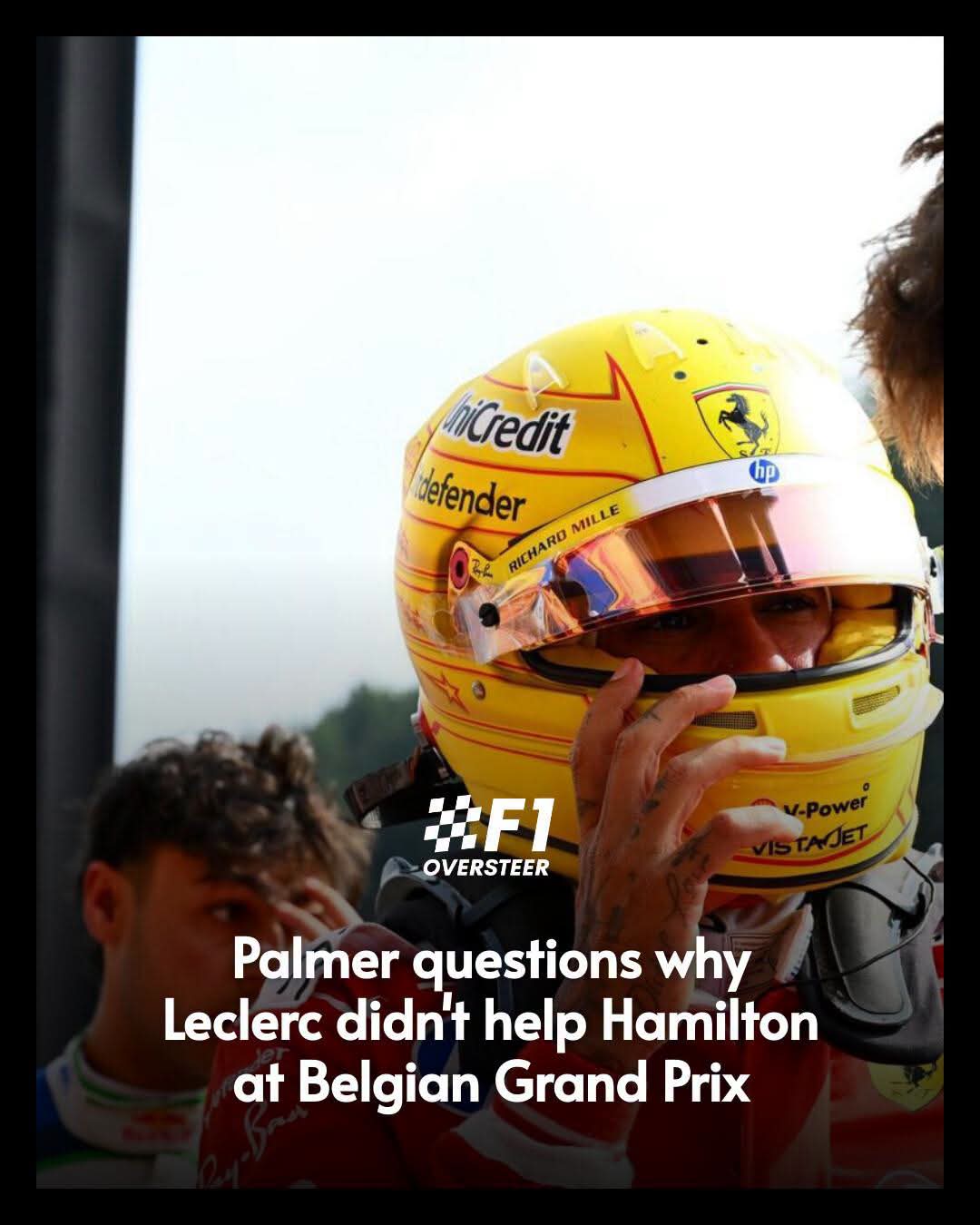
Ferrari’s strategy during the 2026 Belgian Grand Prix has come under fresh scrutiny after former Formula 1 driver Jolyon Palmer questioned why the Scuderia refused to let Lewis Hamilton attack teammate Charles Leclerc despite the seven-time world champion insisting he had superior pace. The controversial decision has reignited debate over Ferrari’s internal hierarchy at a time when every championship point could prove decisive.
Leclerc ultimately secured second place at Spa-Francorchamps while Hamilton crossed the finish line in fourth after serving a five-second penalty for his opening-lap collision with George Russell. Although Hamilton still climbed ahead of Russell into second place in the Drivers’ Championship, Leclerc significantly reduced the gap between the Ferrari teammates to just 33 points, adding another layer of complexity to Ferrari’s championship strategy.
FERRARI’S DECISION LEFT HAMILTON FRUSTRATED
Hamilton’s afternoon became increasingly complicated after his clash with Russell, but despite the penalty, he remained convinced he had the pace to challenge Max Verstappen for the final podium position. During the opening stint, Hamilton closed rapidly on Leclerc and informed Ferrari over team radio that he was faster, effectively asking the team to consider swapping positions.
Instead, Ferrari instructed both drivers to continue racing. Leclerc defended aggressively through the Les Combes chicane, preventing Hamilton from finding a way past. Eventually, the Monegasque began extending his advantage before the Virtual Safety Car neutralized the race.
Palmer argued that Ferrari missed an opportunity to maximize its overall race result. From his perspective, allowing Hamilton through temporarily would have given Ferrari two chances to pressure Verstappen, while the team could always have restored the positions later if Hamilton failed to make progress.
The decision reflected Ferrari’s preference to avoid unnecessary interference between two drivers still fighting for major championship positions rather than prioritizing one over the other.
THE CHAMPIONSHIP PICTURE HAS BECOME MORE COMPLICATED
Ferrari now faces a strategic headache that barely existed earlier in the season. Hamilton remains ahead in the standings, but Leclerc’s recent performances have dramatically shifted momentum within the team.
Leclerc followed his British Grand Prix victory with another impressive podium in Belgium, while Hamilton’s weekend was undermined by penalties, pit-stop drama and lost opportunities. Instead of extending his advantage, Hamilton watched his teammate close to within striking distance.
Meanwhile, the bigger challenge remains Mercedes. Andrea Kimi Antonelli continues to lead the Drivers’ Championship after claiming his sixth victory of the season at Spa, while Mercedes also maintains a healthy lead over Ferrari in the Constructors’ standings.
That broader championship context raises an important question: should Ferrari prioritize whichever driver has the better chance of catching Antonelli, or should both drivers continue receiving equal treatment?
The answer becomes more difficult every weekend that Leclerc continues narrowing Hamilton’s advantage.
TEAM ORDERS ARE NEVER A SIMPLE DECISION
Team orders have always been among Formula 1’s most controversial subjects. While fans often prefer unrestricted racing, constructors are ultimately competing for championships, prize money and long-term success.
In Belgium, Ferrari appeared determined to avoid creating internal tension by favoring Hamilton, particularly while Leclerc himself remained under investigation for contact with Oscar Piastri. From the pit wall’s perspective, there was little reason to disrupt the running order unless Hamilton could clearly demonstrate a decisive pace advantage.
That conservative approach may have protected team harmony, but it also potentially sacrificed an opportunity to pressure Verstappen and extract a stronger overall result.
The situation highlights the delicate balance every top Formula 1 team must manage between individual driver ambitions and collective championship goals.
FERRARI’S STRATEGY COULD DEFINE THE REST OF THE SEASON
With only one race remaining before the summer break, Ferrari finds itself entering a critical phase of the championship. Hamilton still occupies second in the standings, Leclerc is closing rapidly, and Antonelli continues building a commanding lead at Mercedes.
If Ferrari continues allowing both drivers to race freely, the team risks splitting valuable points while Antonelli strengthens his title advantage. On the other hand, introducing team orders too early could create unnecessary friction inside the garage and damage driver morale.
The Hungarian Grand Prix may offer the next major test. Budapest’s technical layout often rewards strategy and track position more than outright straight-line speed, meaning Ferrari’s pit wall decisions could once again prove decisive.
For now, Ferrari appears committed to treating Hamilton and Leclerc as equals. Whether that approach ultimately strengthens or weakens its championship ambitions could become one of the defining storylines of the 2026 Formula 1 season.