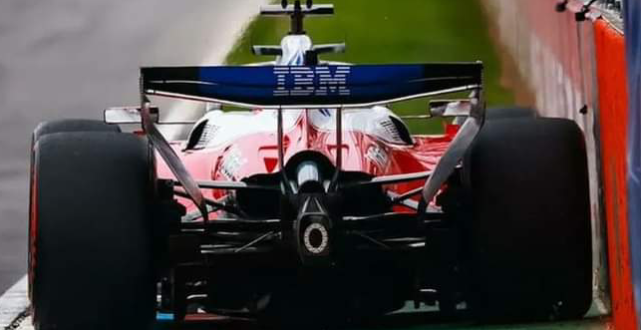
Ferrari’s development strategy has taken another intriguing turn as the Scuderia continues to prioritize its FTM package, which has already been used during outings at Silverstone and the newly introduced Madring circuit. While many expected Ferrari’s much-discussed new “Macarena” rear wing to appear sooner, the team has instead delayed its competitive debut, signaling that engineers believe greater performance gains can still be extracted from the current package before introducing another major aerodynamic upgrade.
FERRARI CHOOSES A MEASURED DEVELOPMENT APPROACH
In the relentless battle for performance, Formula 1 teams rarely introduce upgrades simply because they are available. Every new component must deliver a measurable improvement without creating unintended balance issues.
Ferrari’s decision to continue refining the FTM package demonstrates a disciplined approach to development. Rather than rushing multiple upgrades onto the car simultaneously, the team appears focused on fully understanding the data gathered from Silverstone and the first running at Madring. This allows engineers to identify exactly where the current package excels and where further improvements are still needed.
Such patience has become increasingly important under Formula 1’s cost cap, where every development decision must justify both its financial investment and its performance potential.
WHY THE NEW MACARENA REAR WING IS BEING HELD BACK
The delayed arrival of Ferrari’s latest “Macarena” rear wing has naturally fueled speculation throughout the paddock. However, postponing an aerodynamic upgrade is not necessarily a sign of concern.
Modern Formula 1 cars rely on highly interconnected aerodynamic systems. A new rear wing can alter airflow over multiple sections of the car, affecting balance, tire degradation, straight-line speed, and cornering performance. If engineers believe the existing package still has untapped potential, introducing another major variable too early could complicate development rather than accelerate it.
Waiting for the ideal circuit characteristics may also allow Ferrari to maximize the effectiveness of the new design when it finally reaches the race weekend.
WHAT THE FTM PACKAGE HAS DELIVERED
The FTM configuration has become an important part of Ferrari’s current development program. Running it at both Silverstone and Madring has provided engineers with valuable real-world data across two very different circuit layouts.
Silverstone’s combination of high-speed corners places enormous demands on aerodynamic stability, while Madring offers engineers a fresh opportunity to evaluate performance under different braking zones, corner profiles, and track surfaces.
Every lap completed with the FTM package strengthens Ferrari’s understanding of how the SF-26 behaves in varying conditions, helping the team build a stronger foundation before introducing additional upgrades.
THE IMPACT ON LEWIS HAMILTON AND CHARLES LECLERC
For Lewis Hamilton and Charles Leclerc, development consistency is almost as valuable as outright speed.
Both drivers benefit from predictable handling characteristics, allowing them to push harder and provide clearer technical feedback. Introducing too many aerodynamic changes in rapid succession can make it difficult to separate genuine improvements from setup variations.
Hamilton’s extensive experience developing championship-winning cars gives Ferrari another valuable perspective, while Leclerc’s familiarity with the team’s engineering philosophy helps accelerate the evaluation process. Together, their feedback will play a critical role in determining when the new rear wing is finally ready for competition.
THE CHAMPIONSHIP IMPLICATIONS
Every upgrade matters in a tightly contested Formula 1 season.
Ferrari is locked in an intense battle with rivals who continue introducing improvements almost every race weekend. Choosing the right moment to deploy a major aerodynamic package could make the difference between gaining valuable championship points or losing ground to competitors.
If the delayed rear wing delivers the expected increase in efficiency and downforce, Ferrari could become significantly more competitive across a wider variety of circuits during the second half of the season.
Conversely, if rivals make larger gains before Ferrari introduces its next major update, the Scuderia risks falling further behind in both the Constructors’ and Drivers’ Championships.
WHY THIS STRATEGY COULD PAY OFF
History has shown that successful Formula 1 teams rarely chase quick fixes. Instead, they focus on understanding every aspect of their car before committing to major development changes.
Ferrari’s current approach suggests confidence in its engineering process rather than uncertainty. By maximizing the value of the existing FTM package first, the team increases the likelihood that the upcoming rear wing will integrate seamlessly into the overall aerodynamic concept.
This methodical philosophy could prove more beneficial over an entire championship than rushing upgrades that require several races to fully understand.
WHAT TO EXPECT NEXT
Attention will now turn to Ferrari’s next race weekend, where fans and rivals alike will be watching closely for signs that the long-awaited Macarena rear wing is finally ready to make its competitive debut.
If testing data continues to meet expectations, Ferrari could soon unveil one of its most significant aerodynamic upgrades of the season. Should the new package deliver the anticipated performance boost, it could strengthen the team’s challenge against Formula 1’s leading contenders and provide Hamilton and Leclerc with a more consistent platform to fight for podiums and victories.
With every development decision becoming increasingly critical as the championship progresses, Ferrari’s cautious but calculated strategy may ultimately prove to be one of the defining stories of the season.