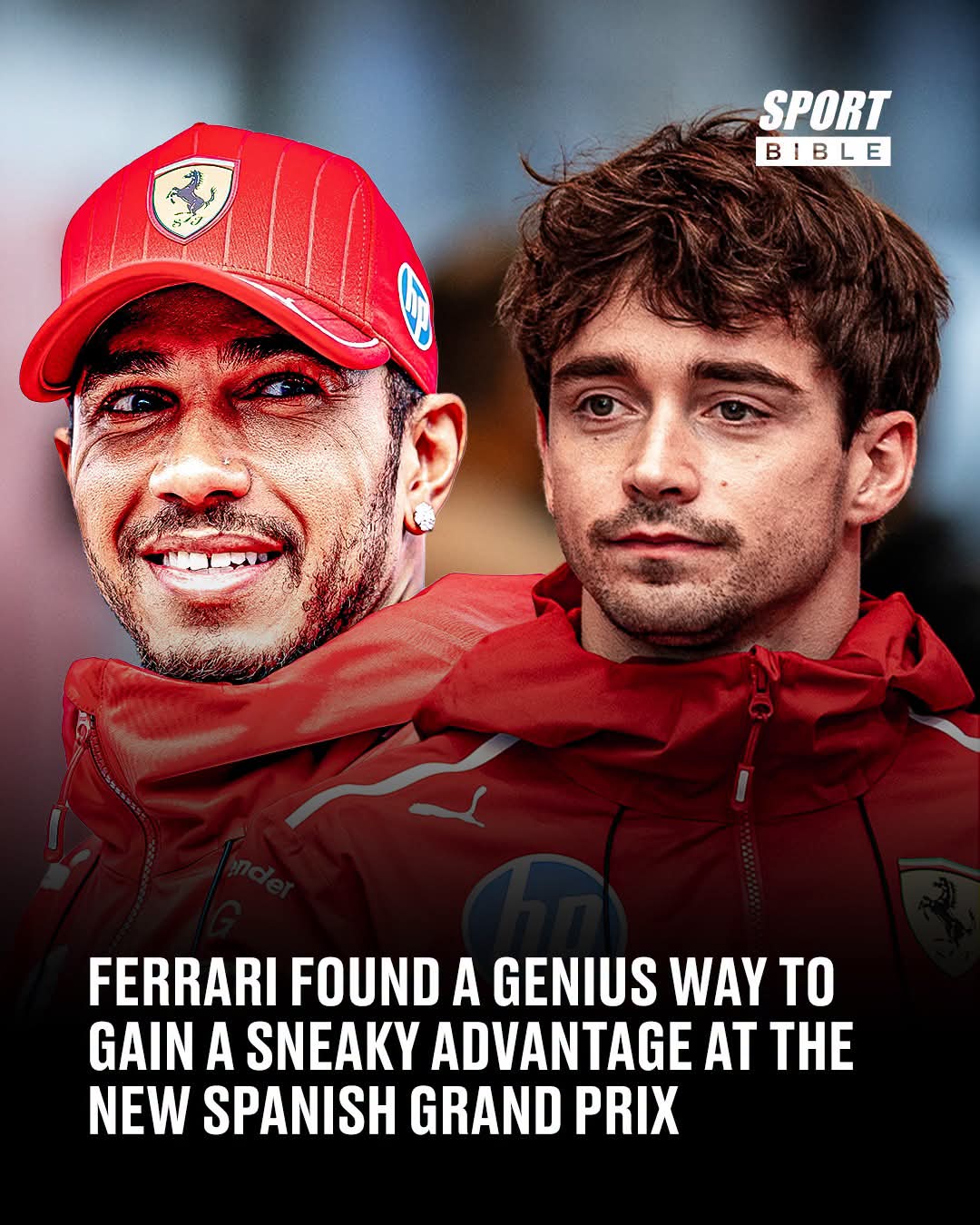
Formula 1 teams are constantly searching for every possible advantage, and Ferrari may have just pulled off one of the smartest strategic moves of the 2026 season. While much of the paddock remains focused on championship battles and technical upgrades, the Italian giants have quietly gathered valuable information ahead of Formula 1’s first-ever race at Madrid’s brand-new Madring circuit.
By using an official filming day to run Lewis Hamilton and Charles Leclerc around the new venue, Ferrari has potentially given itself a head start before the Spanish Grand Prix arrives later this season. Although the session complied with Formula 1 regulations, many observers believe the Scuderia has expertly exploited an opportunity that other teams failed to capitalize on.
FERRARI MAKES THE MOST OF A LITTLE-USED REGULATION
Formula 1 regulations allow each team a limited number of promotional filming days during the season. These sessions are restricted to 200 kilometers of running and require special demonstration tyres rather than competitive race compounds.
Rather than treating the event as nothing more than a marketing exercise, Ferrari transformed it into a valuable learning opportunity.
With the racing surface at the Madring already completed, Lewis Hamilton and Charles Leclerc were able to experience the circuit firsthand while engineers gathered crucial telemetry relating to energy deployment, braking zones, corner sequences, steering inputs, and general circuit characteristics.
While the special tyres prevented meaningful performance comparisons, the data collected still offers significant benefits when preparing simulations for September’s race weekend.
WHY THE MADRID CIRCUIT PRESENTS A UNIQUE CHALLENGE
Every new Formula 1 venue introduces uncertainty.
Unlike established circuits where teams possess years of historical data, the Madring represents a completely fresh challenge for engineers, strategists, and drivers alike.
The circuit is expected to feature:
Long straights demanding efficient energy deployment.
Several technical corners requiring precise braking.
Formula 1’s longest banked corner.
Multiple overtaking opportunities.
Completely new asphalt characteristics.
These unknown variables normally level the playing field.
However, Ferrari has now removed much of that uncertainty from its own preparation.
Its simulator programs can now be refined using real-world data rather than relying entirely on computer-generated models.
LEWIS HAMILTON COULD BE THE BIGGEST WINNER
Lewis Hamilton’s move to Ferrari has gathered serious momentum during recent races.
After claiming his first Ferrari victory earlier this season in Spain’s traditional Barcelona event and continuing to close the championship gap, Hamilton appears increasingly comfortable with the SF-26.
Having already driven the Madring layout before any official Formula 1 session gives Hamilton another valuable advantage.
Circuit familiarity is often overlooked, but knowing where the surface changes, where braking references naturally appear, and how the banking affects corner entry can save precious tenths of a second from the very first practice session.
For a championship contender chasing every available point, those small margins often become decisive.
CHARLES LECLERC ALSO STANDS TO BENEFIT
Charles Leclerc has consistently demonstrated exceptional one-lap speed throughout his Formula 1 career.
Having already completed meaningful running at the Madring, the Monegasque driver should also arrive in Madrid with greater confidence than many of his rivals.
Combined with Ferrari’s recent improvements in straight-line speed and race pace, the early circuit knowledge could make Leclerc an even bigger threat during qualifying.
Should Ferrari begin the weekend closer to an optimal setup than its competitors, both drivers could spend valuable practice time refining performance rather than simply learning the track.
THE REST OF THE GRID MAY HAVE TO PLAY CATCH-UP
While Ferrari insists the session complied fully with Formula 1 regulations, rival teams will almost certainly study the situation closely.
The regulations currently prohibit Testing of Previous Cars (TPC) at circuits that have not recently hosted Formula 1 races. However, Ferrari’s use of a promotional filming day appears to fall outside those restrictions.
The move highlights an important reality of modern Formula 1.
Success is no longer determined solely by designing the fastest car. Increasingly, championships are influenced by how effectively teams interpret the sport’s complex regulations.
Finding legal opportunities before competitors recognize them has become almost as valuable as discovering aerodynamic gains.
WHAT THIS COULD MEAN FOR THE CHAMPIONSHIP
The 2026 championship remains fiercely competitive.
Mercedes currently leads both championships, but Ferrari has steadily reduced the performance gap over recent races.
If Ferrari enters Madrid with a more refined understanding of the circuit than its rivals, the Scuderia could gain valuable points during a crucial stage of the season.
Whether that advantage ultimately translates into victory remains uncertain.
Every team will have access to practice sessions before qualifying, and Formula 1’s elite engineers adapt remarkably quickly.
Still, beginning the weekend with superior data can influence setup decisions, tyre strategy, and driver confidence—all factors capable of determining the outcome of an entire Grand Prix.
FERRARI’S NEW MINDSET COULD PROVE JUST AS IMPORTANT AS ITS CAR
Perhaps the biggest takeaway isn’t the data itself but Ferrari’s changing philosophy.
For years, the team was often criticized for reacting rather than innovating away from the racetrack. This latest move suggests a more proactive, aggressive approach under the current leadership.
Instead of waiting for opportunities, Ferrari appears determined to create them.
As Formula 1 continues evolving into an increasingly data-driven competition, these intelligent strategic decisions may prove just as valuable as any aerodynamic upgrade or engine improvement.
When the lights go out for Formula 1’s first race around the Madring, Ferrari hopes the groundwork laid months earlier will already have delivered its first competitive advantage.