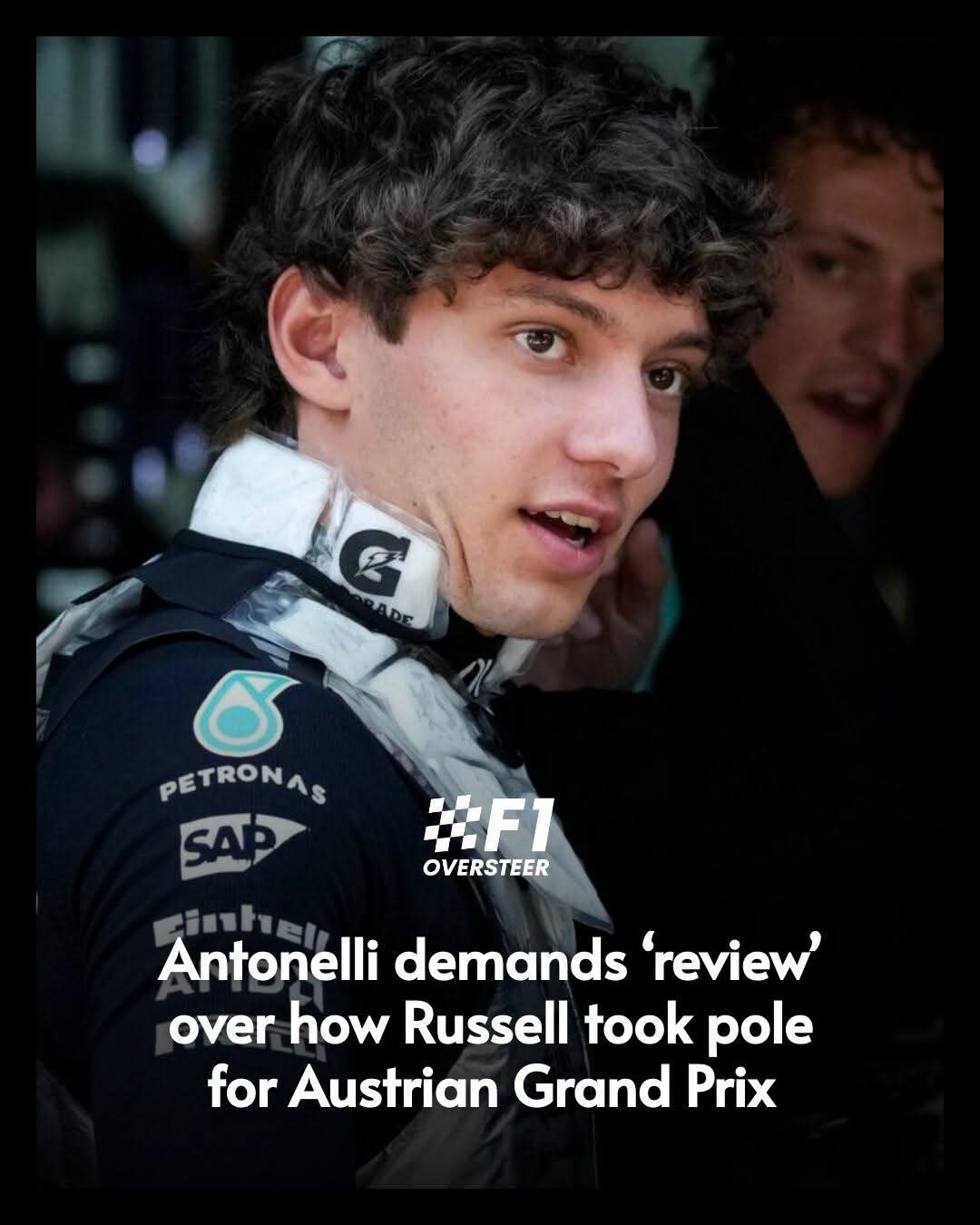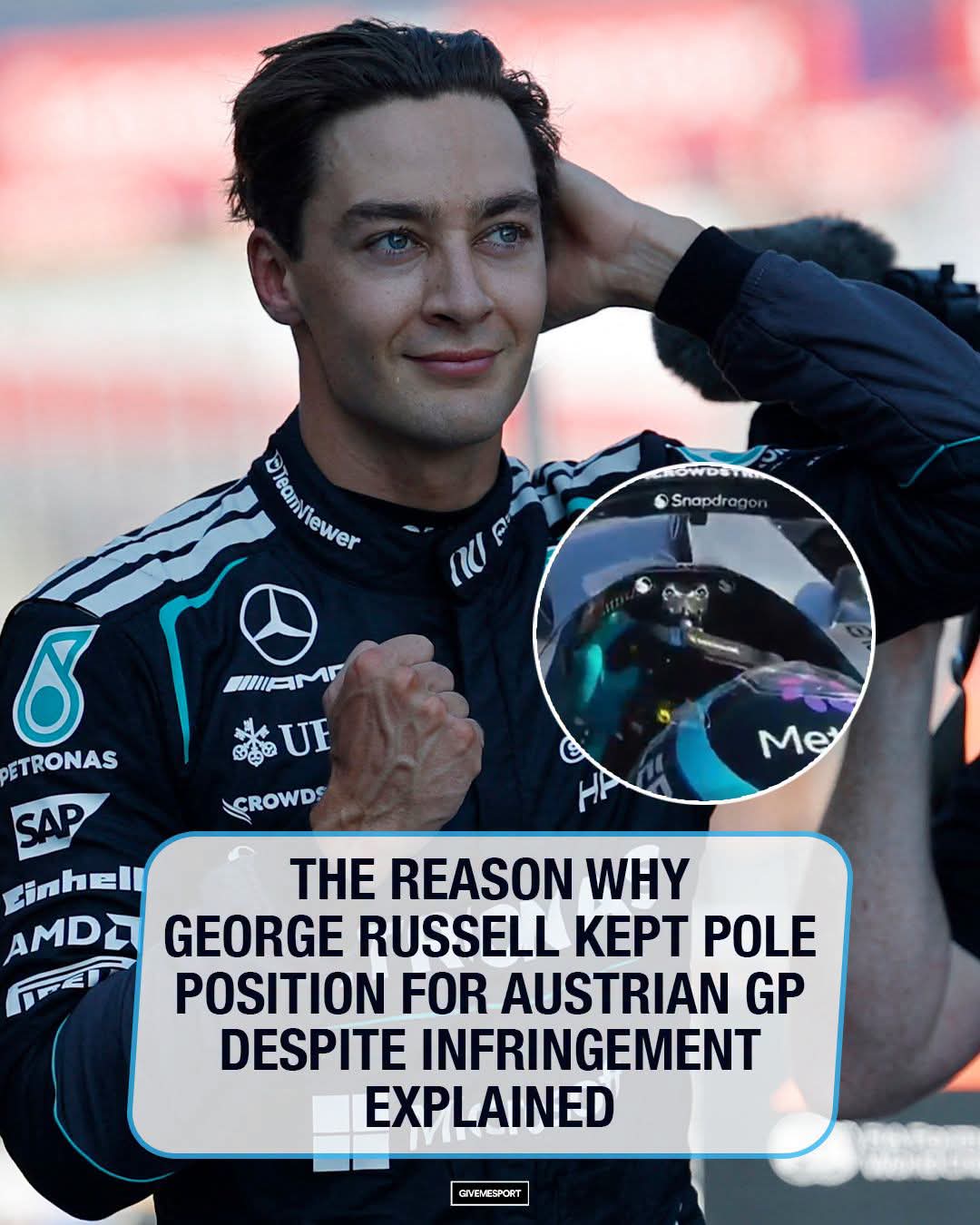
George Russell’s sensational pole position for the 2026 Austrian Grand Prix may have lasted only a few minutes before controversy erupted, but the FIA’s final verdict has now settled one of Formula 1’s biggest talking points of the weekend. Despite setting his fastest lap after Max Verstappen’s dramatic crash at Turn 9 triggered yellow flags, the Mercedes driver retained pole after officials determined he had complied with the sporting regulations. The decision has sparked widespread debate throughout the paddock, with championship leader Andrea Kimi Antonelli among those questioning whether the yellow-flag procedure itself needs to be reviewed rather than Russell’s driving.
HOW THE POLE POSITION CONTROVERSY UNFOLDED
The closing moments of Q3 produced one of the most dramatic qualifying finishes of the season. Verstappen appeared to be on a competitive lap before losing control of his Red Bull through the high-speed Turn 9, spinning heavily into the barriers and immediately bringing out local yellow flags.
As drivers approached the incident, split-second decisions became crucial. Antonelli abandoned his lap after believing double yellow flags had been displayed, while Russell continued after lifting off the throttle before negotiating the corner. He then crossed the finish line to snatch pole position from Ferrari’s Charles Leclerc by more than two tenths of a second.
The immediate reaction centered on whether Russell had slowed sufficiently under yellow-flag conditions. Race control briefly reviewed the incident, creating uncertainty before confirming that no investigation would follow.
FIA DATA EXPLAINS WHY RUSSELL WAS CLEARED
The FIA’s decision ultimately came down to telemetry and the type of warning displayed at the time Russell reached the accident scene.
Officials determined that only a single yellow flag was active when Russell entered the relevant sector. Under Formula 1 regulations, drivers must clearly reduce speed and remain prepared to change direction under a single yellow, but they are not automatically required to abandon their lap.
Telemetry reportedly showed that Russell lifted significantly earlier than on his previous qualifying attempts, sacrificing time before reaching Turn 9. Once he had safely negotiated the incident zone and saw the track was clear ahead, he accelerated again to complete what proved to be the fastest lap of qualifying.
That distinction proved decisive. Had double yellow flags been displayed before Russell entered the sector, his lap would almost certainly have been deleted regardless of any lift.
ANTONELLI’S FRUSTRATION HIGHLIGHTS A BIGGER ISSUE
While Russell escaped punishment, teammate Antonelli emerged as one of the drivers most disappointed by the sequence of events.
The championship leader admitted he believed double yellow flags were being shown, prompting him to abandon what could have been a front-row qualifying lap. Afterwards, Antonelli argued that incidents in fast corners should trigger immediate double-yellow conditions to eliminate any confusion for approaching drivers.
His comments shift the conversation away from Russell’s actions and toward the FIA’s timing of race control decisions. If multiple drivers interpret the same situation differently, it raises legitimate questions about whether communication between marshals, race control, and competitors can be improved.
With the title battle becoming increasingly competitive, drivers will want absolute consistency in how potentially dangerous situations are managed.
MERCEDES DEFENDS RUSSELL’S EXECUTION
Mercedes team principal Toto Wolff firmly rejected suggestions that Russell benefited from lenient officiating.
According to Wolff, Russell completed a substantial throttle lift—far greater than during his previous laps—which cost him valuable time while still allowing him to remain within the regulations. From Mercedes’ perspective, Russell demonstrated excellent awareness by reacting immediately to the warning without unnecessarily abandoning his qualifying attempt.
Russell echoed that explanation after qualifying, insisting he reduced speed appropriately before assessing the situation through the corner. Once he confirmed there was no immediate obstruction ahead, he committed to finishing the lap.
Rather than benefiting from luck alone, Mercedes believes Russell simply interpreted the regulations correctly under intense pressure.
WHAT THIS MEANS FOR THE CHAMPIONSHIP
Russell’s pole position could prove extremely significant in the 2026 championship fight.
Antonelli currently leads the standings on 156 points, with Lewis Hamilton second on 115 and Russell third on 106. Starting from pole gives Russell an excellent opportunity to reduce that deficit, particularly with Antonelli beginning from the second row after aborting his qualifying effort.
Ferrari, meanwhile, will see an opportunity despite narrowly missing pole. With Leclerc and Hamilton lining up directly behind Russell, the Scuderia has two cars capable of challenging into Turn 1 and potentially applying strategic pressure throughout the race.
Verstappen’s qualifying crash adds another layer of unpredictability. Forced to recover from further down the grid, the four-time world champion could become a major factor if safety cars or alternative strategies reshape the race.
CONTROVERSY MAY BE OVER, BUT THE DEBATE CONTINUES
Although the FIA has effectively closed Russell’s case, the wider discussion surrounding yellow-flag procedures is unlikely to disappear.
The Austrian Grand Prix qualifying session exposed how rapidly changing track conditions can create confusion, even among experienced Formula 1 drivers. While the regulations were correctly applied according to the available evidence, Antonelli’s concerns suggest the governing body may revisit how quickly warning levels escalate following high-speed accidents.
For Russell, however, the focus now shifts entirely to converting pole position into victory. If he succeeds on Sunday, the qualifying controversy will quickly fade into the background, remembered only as the dramatic prelude to what could become one of the most important wins of his championship campaign.