Formula 1 has never been bigger.
The sport continues to attract record audiences, generate unprecedented social media engagement, and expand into new global markets. Yet alongside that growth has come a darker trend that many figures within the paddock have become increasingly vocal about.
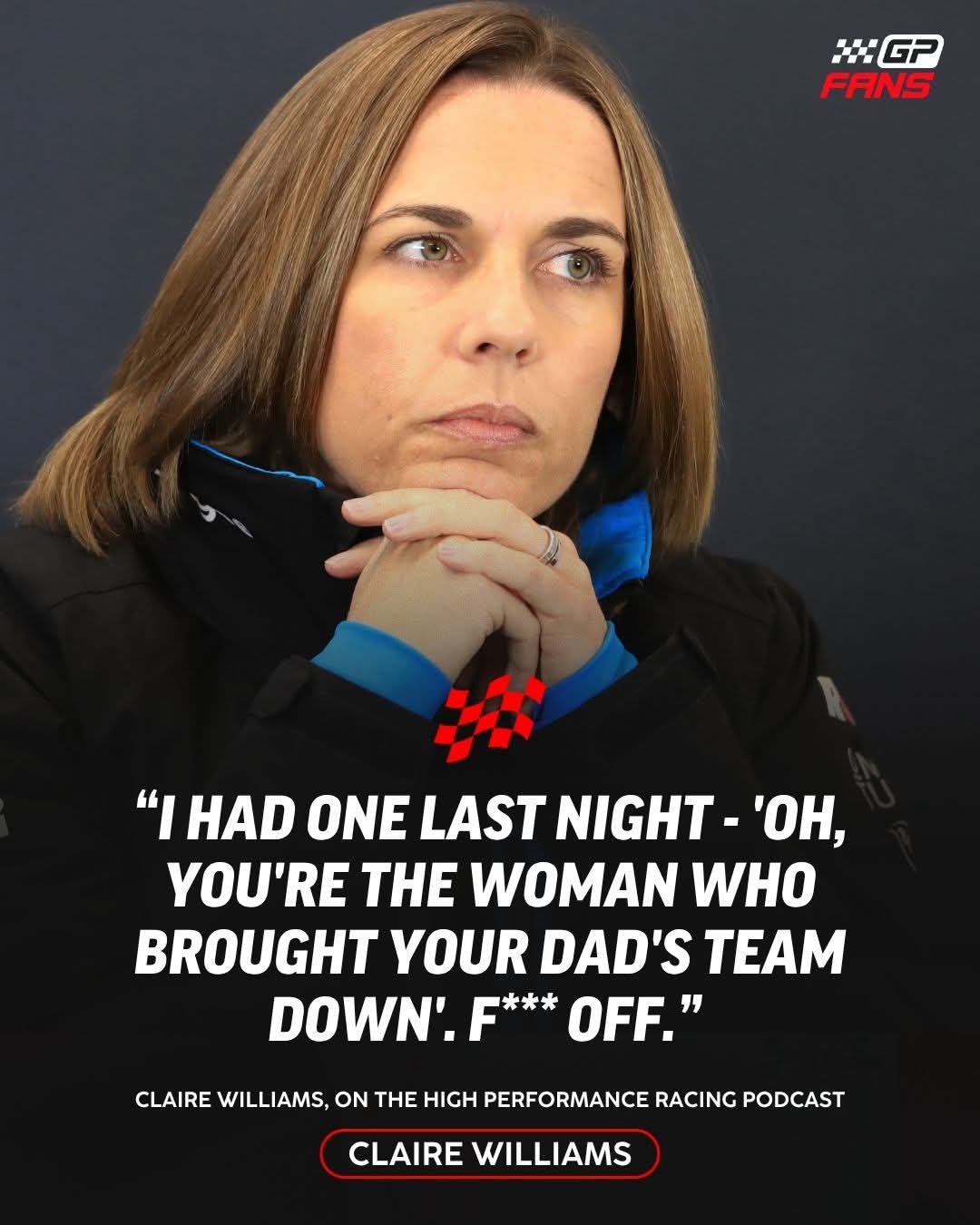
Former Williams team boss has become the latest high-profile Formula 1 figure to speak out against online abuse, revealing that she continues to receive hateful messages despite stepping away from the sport’s front line six years ago.
Her comments have reignited an important discussion about criticism, accountability, and the growing culture of online hostility that has affected drivers, team personnel, broadcasters, and even family members throughout Formula 1.
The issue extends far beyond one individual. It raises serious questions about how the sport’s rapidly expanding digital audience interacts with the people who dedicate their lives to Formula 1.
CLAIRE WILLIAMS REMAINS A POLARIZING FIGURE IN F1
Few names carry as much historical significance within Formula 1 as Williams.
As the daughter of legendary team founder , Claire Williams inherited one of the most iconic legacies in motorsport. During her leadership role between 2013 and 2020, the team experienced both competitive highs and painful lows.
Williams secured multiple podium finishes during the hybrid era and briefly re-established itself as a midfield contender. However, the team later endured one of the most difficult periods in its history as financial struggles and declining performance pushed it toward survival mode.
The COVID-19 pandemic ultimately accelerated the need for new investment, resulting in the sale of the team and Claire’s departure from the organization.
Despite no longer being involved in the daily operations of the team, she remains a frequent target for criticism from sections of the Formula 1 fanbase.
THE PROBLEM GOES FAR BEYOND RESULTS
Formula 1 has always been a sport driven by passion.
Fans invest emotionally in their favorite drivers, teams, and rivalries. Debate is part of what makes motorsport compelling. However, there is a clear distinction between passionate discussion and personal abuse.
Williams recently revealed that she still receives messages blaming her for the decline of the Williams team, years after her departure.
The situation highlights a broader issue within modern sports culture.
Social media has created unprecedented access between fans and public figures. While this can strengthen connections and increase engagement, it has also made it easier for anonymous individuals to direct personal attacks at people they have never met.
In many cases, those targeted are judged solely by results, with little appreciation for the complex realities behind the scenes.
RUNNING A FORMULA 1 TEAM IS FAR MORE COMPLICATED THAN FANS REALIZE
One reason Williams’ comments resonate is because they expose a common misunderstanding about Formula 1 leadership.
Success in Formula 1 is rarely determined by a single person.
A modern Formula 1 team consists of hundreds, sometimes thousands, of employees working across engineering, aerodynamics, strategy, manufacturing, operations, and commercial departments. Every result is influenced by countless factors, many of which are invisible to the public.
When Williams struggled competitively, the problems were not caused by one individual.
The team faced financial limitations, fierce competition from manufacturer-backed rivals, and one of the most technologically demanding eras in Formula 1 history.
While leaders naturally carry responsibility, reducing years of complex challenges to a single person oversimplifies reality.
F1’S ONLINE ABUSE PROBLEM IS GROWING
Claire Williams is far from the only person to raise concerns.
Drivers, journalists, broadcasters, and team personnel have increasingly spoken about receiving abuse through social media platforms. High-profile figures such as , , and numerous media personalities have all faced intense criticism and personal attacks online.
As Formula 1’s audience expands globally, the challenge of managing fan behavior becomes increasingly important.
The sport thrives on passionate rivalries, but there is growing recognition that healthy competition should not come at the expense of basic respect.
Many within Formula 1 believe stronger moderation tools, greater accountability, and improved digital education may become necessary as the sport continues to grow.
WHY THIS MATTERS FOR THE FUTURE OF THE SPORT
The discussion extends beyond protecting public figures.
Formula 1’s long-term success depends on attracting talented individuals into leadership, engineering, media, and driving roles. If those positions increasingly come with relentless personal abuse, the sport risks discouraging future generations from participating.
The paddock already operates under immense pressure.
Drivers face constant scrutiny over performance. Team principals are judged on every strategic decision. Engineers work under intense deadlines where fractions of a second can determine success or failure.
Adding personal attacks to that environment serves little constructive purpose.
Creating a healthier culture benefits everyone involved in the sport.
CLAIRE WILLIAMS’ LEGACY DESERVES A FAIRER ASSESSMENT
History will likely view Claire Williams’ Formula 1 career with more nuance than many online critics do today.
She inherited one of the sport’s most challenging leadership positions during a period of enormous financial and competitive change. While the team ultimately struggled during her tenure, she also played a key role in keeping the Williams name alive during some of its most difficult years.
Without the decisions made during that period, the team may not have survived long enough to begin its current rebuilding process.
That does not mean every decision was perfect. No Formula 1 leader escapes criticism.
However, there is a significant difference between evaluating leadership and engaging in personal attacks.
A LESSON FORMULA 1 CANNOT IGNORE
Williams’ comments serve as a reminder that the people behind Formula 1 are human beings, not merely characters in an ongoing sporting drama.
The growth of the sport has brought incredible opportunities, but it has also created new responsibilities for fans, media platforms, and the wider motorsport community.
Constructive debate will always be part of Formula 1. Rivalries will continue. Controversies will emerge.
But if the sport wants to continue attracting the best talent and maintaining its positive momentum, respect must remain part of the conversation.
Claire Williams may have left the pit wall years ago, but her message remains highly relevant today: criticism is part of sport, personal abuse should never be.