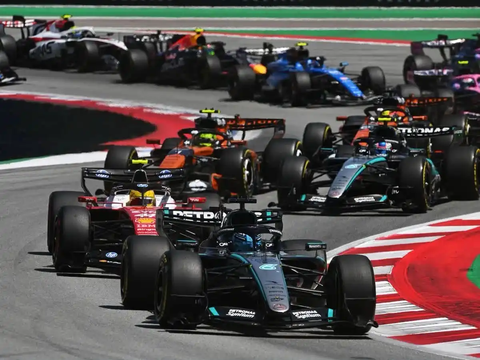
Formula 1 has found itself at the center of another officiating controversy after a late FIA ruling altered the final classification of a race long after the checkered flag had fallen. What initially appeared to be a settled result quickly became one of the most heavily debated stories of the season, with teams, drivers, and fans left questioning how and why such a significant decision arrived hours after the event had ended.
The incident has once again highlighted the delicate balance Formula 1 must maintain between enforcing regulations accurately and delivering clear, timely communication to its global audience. While the FIA insists its procedures were followed correctly, the aftermath has reignited concerns about consistency, transparency, and the growing impact of post-race investigations on championship battles.
WHAT TRIGGERED THE FIA REVIEW?
According to the FIA, officials conducted an extensive review involving technical data, race procedures, and potential regulatory infringements after the race concluded. Such investigations are not unusual in modern Formula 1, where teams operate under some of the most complex technical regulations in world sport.
However, the timing of this particular ruling proved controversial. Drivers had already completed media duties, teams had celebrated their results, and championship standings had been widely circulated before the revised classification was announced.
The delay created confusion across the paddock and among fans, many of whom believed the race outcome had already been finalized.
WHY THE DECISION HAS CREATED SO MUCH CONTROVERSY
The biggest issue for many observers is not necessarily the ruling itself, but when it arrived.
Formula 1 thrives on immediate drama. Fans invest hours watching races unfold and naturally expect the results to be confirmed shortly afterward. When classifications change hours later, it can create uncertainty and undermine the emotional moments that make the sport compelling.
Teams that initially celebrated strong finishes suddenly found themselves reassessing lost points. Meanwhile, rivals who believed opportunities had slipped away unexpectedly benefited from the revised standings.
In a championship where a single point can determine titles, even minor adjustments carry enormous consequences.
THE IMPACT ON THE CHAMPIONSHIP BATTLE
The significance of post-race rulings extends far beyond one weekend.
Every position in Formula 1 contributes to both the Drivers’ Championship and Constructors’ Championship. A late penalty or reclassification can influence strategic decisions, development priorities, and even future contract negotiations.
For leading teams battling for championships, these points swings could become decisive later in the season. History has repeatedly shown that championships are often decided by narrow margins, making every FIA decision subject to intense scrutiny.
With several teams closely matched in 2026, the latest controversy could have ripple effects that extend far beyond a single race weekend.
FORMULA 1’S GROWING COMMUNICATION PROBLEM
One of the biggest lessons from this situation is the growing importance of communication in modern Formula 1.
The sport now reaches hundreds of millions of viewers worldwide. Information spreads instantly through social media, television broadcasts, and digital platforms. When official rulings arrive late or lack detailed explanations, speculation quickly fills the gap.
Fans increasingly expect real-time updates and transparency regarding steward investigations. While the FIA may require time to thoroughly analyze evidence, many believe the governing body should provide more frequent updates during ongoing reviews.
Doing so could reduce confusion and help maintain confidence in the decision-making process.
WHY THE FIA DEFENDS THESE DECISIONS
From the FIA’s perspective, accuracy must always outweigh speed.
Officials are tasked with ensuring that every team complies with technical and sporting regulations. If a breach is discovered after a race, ignoring it simply to preserve the original result would undermine the integrity of the championship.
Supporters of the FIA’s approach argue that enforcing the rules consistently is more important than avoiding controversy. They point out that teams invest enormous resources to operate within the regulations and expect competitors to be held to the same standards.
In that sense, the governing body faces a difficult challenge: delivering justice while also maintaining public confidence.
TEAMS MAY PUSH FOR FUTURE CHANGES
The fallout from this incident could encourage teams to push for reforms in how post-race reviews are handled.
Potential solutions include stricter timelines for investigations, enhanced communication during reviews, or revised procedures that allow certain decisions to be finalized more quickly.
Team principals are likely to discuss the matter during upcoming FIA meetings, especially if similar incidents continue occurring throughout the season.
While no system will eliminate controversy entirely, there is growing recognition that Formula 1 must evolve its processes as the sport becomes increasingly global and data-driven.
WHAT THIS MEANS FOR THE SPORT GOING FORWARD
This latest controversy serves as another reminder that Formula 1’s biggest battles are not always fought on the racetrack.
As regulations become more sophisticated and competition grows tighter, stewarding decisions and technical reviews are becoming increasingly influential. The challenge for the FIA will be maintaining fairness without allowing prolonged uncertainty to overshadow the racing itself.
The revised result may now be official, but the debate surrounding it is far from over. Fans, teams, and analysts will continue discussing whether the FIA got both the decision and the process right.
What is certain is that this incident has once again placed Formula 1 officiating under the spotlight, and the pressure for greater transparency has never been stronger. As the championship intensifies, every future ruling will be examined even more closely, making consistency and communication critical factors in protecting the sport’s credibility.