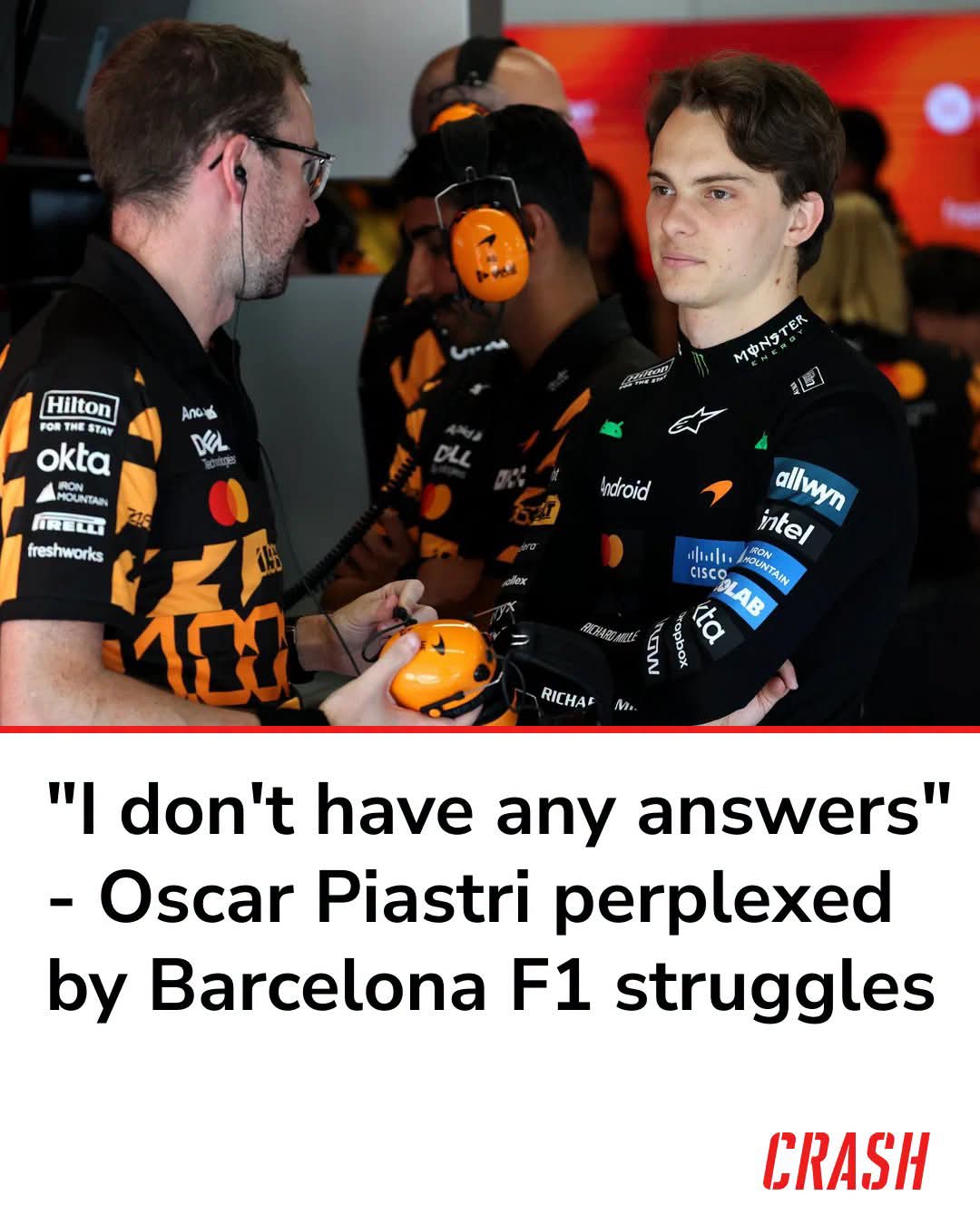
The 2026 Spanish Grand Prix was expected to be another important step forward for McLaren. After showing encouraging speed throughout practice and appearing far more competitive than they had been in Monaco, the team arrived in Barcelona believing they could challenge Mercedes and Ferrari at the front. Instead, while Lando Norris managed to salvage a podium finish, Oscar Piastri endured one of his most difficult races of the season and admitted afterward that he was left without clear answers.
Despite eventually finishing fifth after late retirements for Charles Leclerc and Kimi Antonelli, the Australian never looked comfortable throughout the race. More concerning than the final result was the fact that Piastri could not immediately identify what caused such a dramatic drop in performance. For a driver known for his calm approach and technical understanding, that uncertainty may be the biggest concern of all.
A SURPRISING DROP IN PERFORMANCE
Barcelona has traditionally been one of Formula 1’s best measuring sticks for overall car performance. The circuit demands strong aerodynamic efficiency, consistent tire management, and a balanced setup through a variety of corner types. Teams that perform well here usually have a genuinely competitive package.
That is why McLaren’s contrasting fortunes were so striking. Norris was able to remain in the fight near the front, while Piastri struggled with grip, tire degradation, and overall balance throughout the race. According to the Australian, every adjustment seemed to create a new problem rather than solve an existing one.
The result was a frustrating afternoon where he spent most of the race managing issues instead of attacking rivals. While the final classification showed a respectable fifth place, the reality was far less encouraging. Without the retirements ahead, Piastri would have crossed the line outside the top five and significantly further behind the leaders.
WHY TIRE MANAGEMENT BECAME THE BIGGEST PROBLEM
One of the clearest themes from Piastri’s post-race comments was tire performance. Modern Formula 1 races are often decided by which teams can keep their tires alive the longest while maintaining competitive pace.
Barcelona exposed a weakness that McLaren may not have fully anticipated. Cooler temperatures during Friday practice masked some of the problems that emerged during the race. The long-run simulations completed earlier in the weekend were significantly shorter than the opening race stint, meaning the team may not have gathered enough data to predict the extent of the degradation issues.
As the race unfolded, Ferrari and Mercedes appeared to understand their tire behavior far better. Lewis Hamilton’s Ferrari especially looked comfortable over long stints, allowing him to execute an aggressive strategy that ultimately delivered victory.
For McLaren, the inability to manage tire wear effectively transformed a potentially competitive weekend into a damage-limitation exercise.
McLAREN’S DEVELOPMENT DILEMMA
Perhaps the most revealing part of Piastri’s assessment was his suggestion that extracting maximum performance from the current McLaren package requires pushing the car into an uncomfortable operating window.
This is a common challenge in Formula 1 development. Teams often find extra speed by making a car more aggressive, but that can come at the cost of predictability and driver confidence.
The issue becomes especially significant when one driver adapts better than the other. Norris has frequently shown an ability to extract speed from difficult machinery, while Piastri’s smoother driving style may require a different balance. Even though the setup differences between the two drivers were reportedly minimal, small changes can have major consequences in modern Formula 1.
If McLaren wants to remain a genuine championship contender, solving this inconsistency must become a priority.
FERRARI’S RESURGENCE ADDS MORE PRESSURE
Another major storyline emerging from Barcelona is Ferrari’s apparent step forward. Lewis Hamilton’s first Ferrari victory was not simply the result of strategy or circumstance. The SF-26 looked genuinely quick throughout the weekend, particularly in high-speed corners where downforce and tire preservation are critical.
Piastri himself acknowledged Ferrari’s strength, noting that the Italian team has always been exceptionally competitive through corners and appeared even stronger in Spain.
This development creates a serious challenge for McLaren. At the start of the season, many expected Mercedes to be the primary benchmark. Now Ferrari has joined the battle in a meaningful way, creating a three-team fight at the front.
The more competitive Ferrari becomes, the less margin for error teams like McLaren can afford.
WHAT THIS MEANS FOR THE CHAMPIONSHIP
While Piastri’s fifth-place finish prevented a complete disaster, valuable points were still lost. In a season where every race could influence the title fight, weekends like Barcelona can become defining moments months later.
The encouraging news for McLaren is that the team identified clear weaknesses rather than suffering from random bad luck. Problems related to tire degradation, setup optimization, and race pace can be analyzed and potentially corrected before the next round.
However, rivals are unlikely to stand still. Mercedes remains strong, Ferrari is gathering momentum, and Hamilton’s breakthrough victory could signal the start of a sustained championship challenge.
For Piastri, the key objective now is understanding exactly why Barcelona went wrong. Elite drivers often respond to difficult weekends with some of their strongest performances, and the Australian has repeatedly shown resilience throughout his Formula 1 career.
CAN PIASTRI BOUNCE BACK?
There is little reason to doubt Piastri’s long-term prospects. One difficult race does not erase the speed and consistency he has demonstrated throughout the season. In many ways, the fact that he openly admitted he lacked answers immediately after the race highlights his determination to uncover the truth rather than make excuses.
The next few races will reveal whether Barcelona was simply an isolated setback or an indication of a deeper issue within McLaren’s development direction.
If the team can quickly understand the source of the tire and balance problems, Piastri remains more than capable of returning to the front. But if Ferrari’s progress continues and McLaren fails to unlock additional performance, Barcelona may be remembered as the weekend that shifted momentum in the 2026 championship battle.
For now, the biggest question facing both Piastri and McLaren is simple: was Barcelona an anomaly, or the first warning sign of a growing problem?